
உ
A Research report on
The Travancore History & Devaswoms
by Dr A Radhakrishnan Ph.D(HC)देवदेव कलयामि ते चरणाम्बुजसेवनम् नमोनमः
The Great Travancore Dynasty, One of the former Hindu princely state in southwestern India, now part of Kerala and Tamilnadu states. 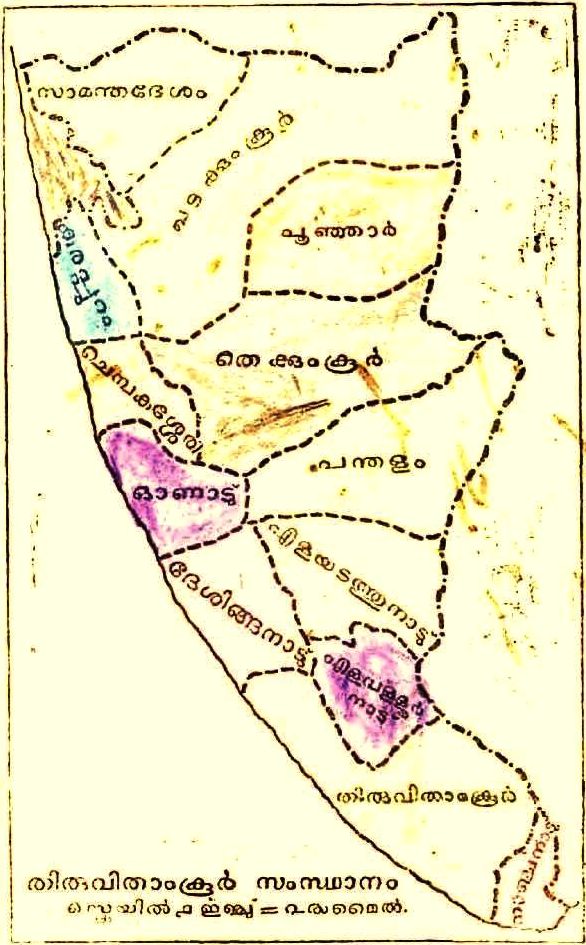 The Travancore dynasty was followers of Chera dynasty, in the early centuries CE and traded with distant parts of the world. In the 11th century the Chera region fell under the Chola Dynasty, then some period of 15th century under The Pandya Dynasty. The Vijayanagar Dynasty held it briefly in the 16th century. Then the Chera Dynasty was become Venadu Dynasty. The Dynasty was trace origin back to the Ay kingdom and the Later Chera kingdom. Upto the mid-18th century the Venad region was split into many small Native Countries – named from north to south as Saamantha Desham, Vadakkumkoor, Karapuram, Poonjaar, Thekkamkoor, Chempakashery, Pandalam, Onaadu, Kaayamkulam, Elayaththunaadu, Dhesinganaadu, Elavalloornaadu, Thiruvithaamcodu & Naanjinaadu. In mid-18th century all these small Naattu Raajyams of Venad region were unified and became the independent state of Travancore. A treaty brought it under British protection in 1795.
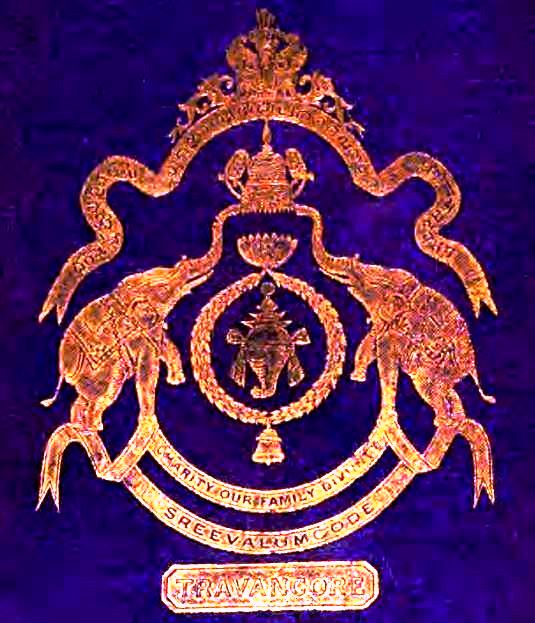
  The official flag of the state was red with a dextrally-coiled silver conch shell (Shangu Mudra) at it’s centre. The king of the state was accorded 19-gun salute, the second highest among the honorary gun salutes that were granted by the British Empire to honour the heads of the princely states.
THE HINDUISM IS A POPULAR RELIGION IN THE PRINCELY STATE OF TRAVANCORE:
 The Hinduism as observed before is a religious confederacy and a way of life to live. It represents the coalition of the Vedic Brahmins with the ruder rites of the lower castes and tribes. It is a religious federation based on worship. As the race elements have been moulded into castes so the old beliefs and religious elements have been worked up into Gods. Hence I find the Pagodas (Temple or devaswoms) in the country divided into two classes, those dedicated to superior Divinity and those dedicated to inferior Divinity. There are some pagodas of the former kind as Raajaswom or Brahmaswom and some of the latter. The Devaswoms some are under Government management (Sircar vaka); while the rest belong to Ooranmakkaars or Samudayakkaars or Maadambimaars or Karakkaars or Personal of Individuals.
The Temples or Pagodas or Devaswoms are of 5 classes : —
- Ancient temples said to have been founded by Lord Parasurama
- Temples founded by Maharajas/Maharanies.
- Temples founded by communities or leading Individuals,
- Temples founded by Sannyasis or Ascetics
- Temples formed because of Samadhi or Samadhu of divine Siddhars.
- Temlpes made for Outstanding Personalities who dedication of His life for The Dynasty or for The King.
the general superintendence of all endowments vested in the sovereign and was termed Melkoimma which meant nothing more than the right of ruling power to therefore in the case of disputes or fraudulent practice occurring and to remove and appoint trustees at his pleasure. The subjugated barons of Travancore exercise such a right by the appointment of Koimmas.
The Travancore temples are known for their antiquity, for their religious sanctity, for the excellent scenery of their sites and for their architectural beauty. It is unnecessary and cumbersome to give a detailed description, of the daily service, festivals &c in Hindu temples. The Hindus like other nations worshipped first as they feared, then as they admired and finally as they reasoned. Their earliest Vedic Gods were the stupendous phenomena of the visible world. The deities became divine heroes in the epic poems and legends and they were spiritualised into abstractions by the philosophical school.
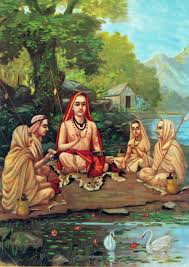 The world-renowned Sankaracharya (himself born in Travancore) has moulded the later philosophy for us into its final form and popularized it as a national religion. In the words of a great native Scholar of Indian as well as European History, ” from land’s end to land’s end he traversed the continent; wherever there was an opponent, he was ready to meet him in argument the Aristotle of his age brought all the forces of his masterly dialectics to bear on the subject, over-throwing all opposition and converting all to the cause of god and of holy writ. ”
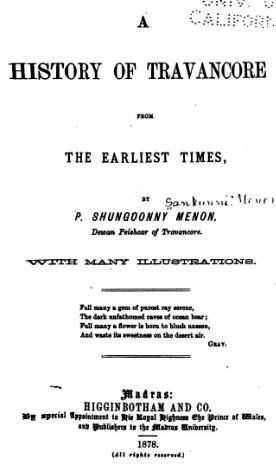 It is a remarkable characteristic of Hinduism that it neither requires nor attempts to make converts; nor is it by any means at present diminishing in numbers, nor is it at present driven off the field as might be expected by being brought into contact with two such proselytizing religions as Mohammedanism and Christianity.
Hindu gods in the Buddhist temples, there are still relics of their being originally places of Buddhistic worship. The temple at Chitral in South Travancore is one of the several instances in point. It was formerly a Buddhistic temple. The idols that we see both in and about the temple prominently suggest Buddhist sculpture. When the religion of Gautama passed from its high meridian glory in India and hastened towards dissolution, this shrine appears to have been converted into a place of Hindu worship. On the image of the 3 Rishis there, I find marks of the holy ashes. But these images are old by thousands of years. There is a pretty legend in connection with this temple.
Another characteristic of Hinduism is that it is all receptive, all comprehensive. It claims to be the one religion of humanity, of human nature, of the whole world, Hinduism has something to offer which is suited to all minds. It’s very strength lies in its infinite adaptability to the infinitive diversity of human characters and human tendencies. It has its highly spiritual and abstract side suited to the philosophical Brahmins; its practical and concrete side suited to the man of affairs and the man of the world; its aesthetic and ceremonial side suited to the man of aesthetic feeling and imagination; its quiescent and contemplative side suited to the man of peace and lover of seclusion. Nay, it holds out the right hand of brotherhood to Snake-worshippers, Fetish-worshippers, Nature-worshippers, Demon-worshippers, Animal-worshippers and Tree-Worshippers.”
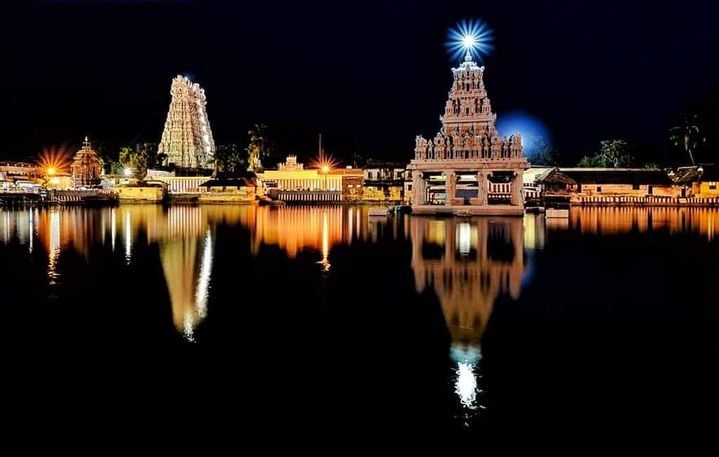
 Dhanyaathman, with blessings, This web documentation is a great way to explore Travancore Devaswoms & Temple Histories to the world wide. There is an intense inner compulsion to re-learn about heritage destinations like beautiful Kanyakumari ancient Devaswom monuments and related Caves, Inscriptions, Forts, Excavations scattered all over Kanyakumari District & Sencottah Taluk of Tirunelveli District of Tamilnadu in India. it will provide you to enjoy the Art, Archaeology, Architecture, Culture, Heritage, Rituals, Cuisines, Worships and the saga of our Great Travancore History. This web site will provide you all details of Kanyakumari District Incorporated and Unincorporated Devaswoms (“Deva“ means God and “Swom“ means ownership in Sanskrit). Thus its a social system, by which all properties of each temple are declared as personal property of presiding deity of each temple and managed through a body of trustees who bear allegiance to the presiding deity. .
In this web document, You can view all 490+ Temples by clicking the “List of Devaswoms” on the Menu. We have five groups of Devaswoms which are based on Devaswom Taluks; Boothapandy Devaswoms, Nagercoil Devaswoms, Padmanabhapuram Devaswoms, Kuzhithurai Devaswoms & Shencottah Devaswoms. The list of temples are added to each group, in bracket having (Green Colour) has attached pictures and related data & others are in process.. First Serial number is as list of devaswoms maintained by KDB administration and Bracketed Serial number is the same number which marked as the schedules devaswoms in TN HR&CE Act-22 of 1959.
|| Few words are not enough to describe the beauty of our Devaswoms ||
|| Two ears are not enough to hear the spiritual Mandras ||
|| Two eyes are not enough to witness it’s magnanimity ||
|| Two bare hands are not enough to touch and feel the Ancient Monuments ||
|| Two bare legs are not enough to walk around these ancient spiritual Institutions ||
|| Time is not enough to learn the histories of Devaswoms ||
|| The whole life is not enough to worship as a Dasa of Deities ||
|| Panjenthriyams are not enough to sense the spirits of Devaswom ||
|| Navarasams are not enough to feel the conception of Divine & Devil ||
|| Few Dedication and Devotion are not enough to get blessings of Shrine – Deity ||
|| The Administrative Power & Archives are not enough to resolve the Devaswom issues ||
|| Sarvam Para Brahma Mayam ||
.


The present Tenkasi district was a part of erstwhile Tirunelveli district. Tenkasi district was formed in 2019 as per G.O. No 427 dated 12.11.2019. The Devaswoms of Kanyakumari Devaswom Board which were clustered all over the geography of Shencottah taluk of Tirunelveli District are now fall under the judicial boundary of Tenkasi District through above G.O. and the Shencottah taluk now become Shencottah Municipality.


Many devaswoms are unknown to anyone. Some devaswoms are not existing now. In some Devaswoms The Deities are missing, In some Devaswoms totally demolished condition. some Devaswoms are in the reserve forest range. Many Devaswoms and it’s properties are under encroachment of private parties; even though our Travancore (KDB) devaswoms are assumed as Government properties. I felt the compulsion, that to be taken in to the knowledge of the authorities with Genuine Honest Officials. This web document was created with the cooperation of honest friends and a few sincere officials and employees of the Kanyakumari Devaswom Board (Kanyakumari District Temples).
The event that led to the creation of this web document in acknowledgment.
Attn: The Scholars and Viewers are requested to contact / whatsapp with web admin @ +91 9446467129 – {Click here}.
This web document is configured with Tab, Laptop or PC or android big screen.. not for mobile phone. Your visit, encouragement and support are a big boost for the devotees who were involved in this initiative. This web site is not officially affiliated.
 ©️www.490kdbtemples.org
(© i added the cover pages and snaps extracted pages of documents which i referred for this research topic. © all credits on some pictures and videos is reserved to the respective owners  )
)
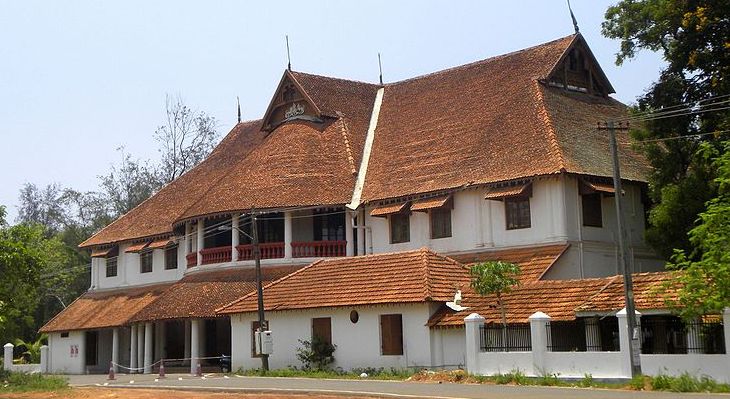
The Padmanabhapuram Palace an Ariel view -பத்மநாபபுரம் அரண்மனை 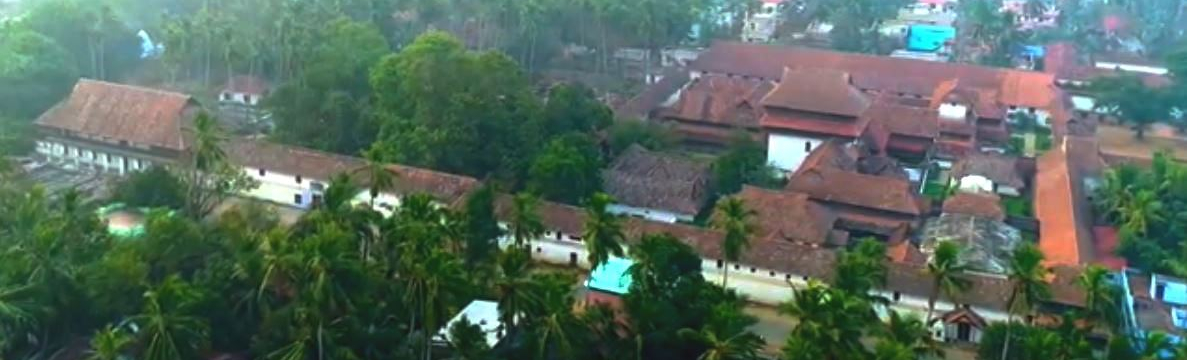
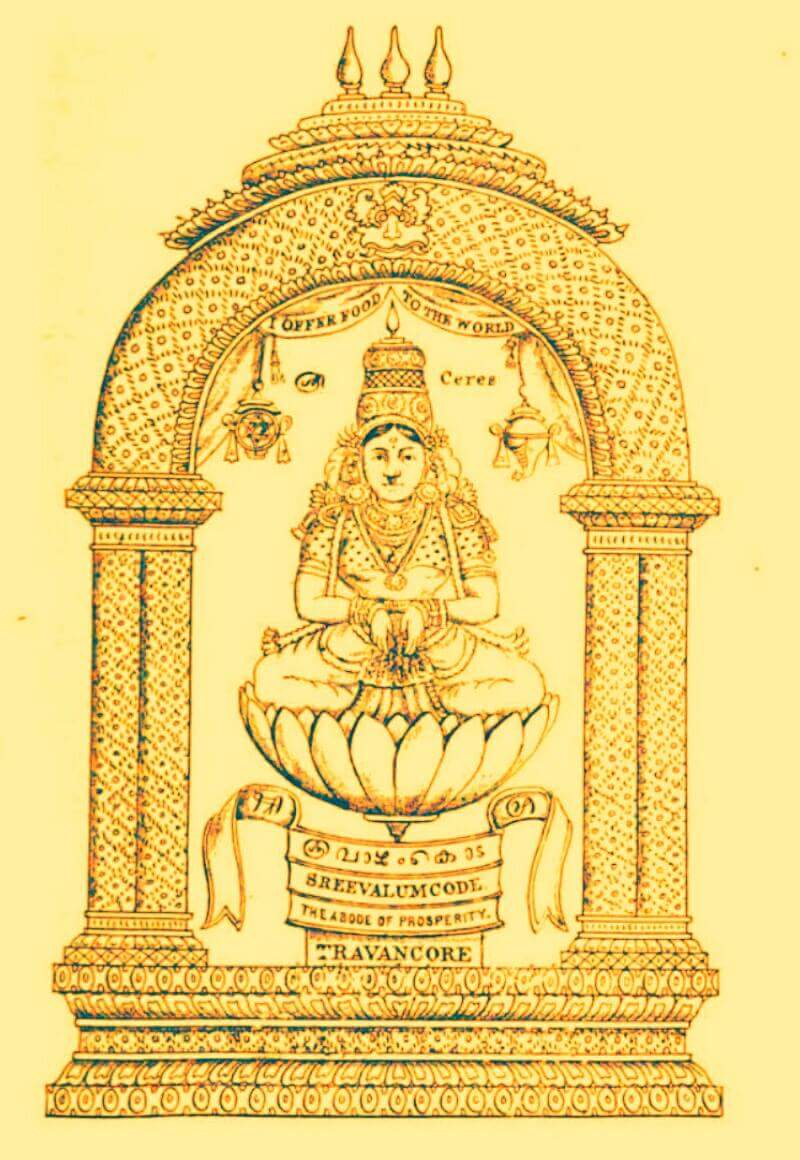 The objective of this effort to making web site is to analyse the major issues in the area of temple administration and examines how far it is detrimental to the development of temples of Kanyakumari Devaswom Board (Administration). Many Devaswoms as a cluster which falls under its direct Devaswom administration or by private bodies as well as families. But, Now a days, the temples in KDB faces several issues, they are political and economic rather than Spiritual. Politicisation of temple administration is and it’s impact on the temple administration is also analysed. Hope the Golden days will come back for our amazing Travancore Devaswoms as it was in the Royal period.
|| श्री पद्मनाभा रक्षिथो ||
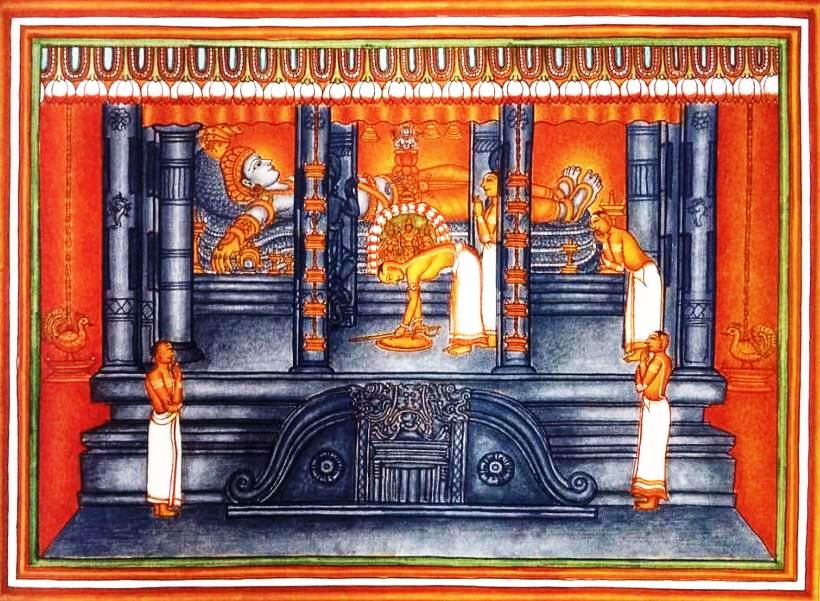
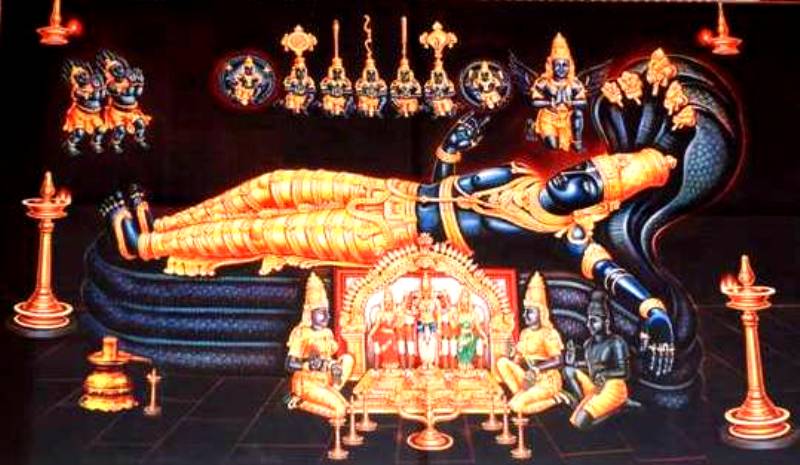
Making Lord Padmanabhaswamy as the King of Travancore – Thrippadidhanam
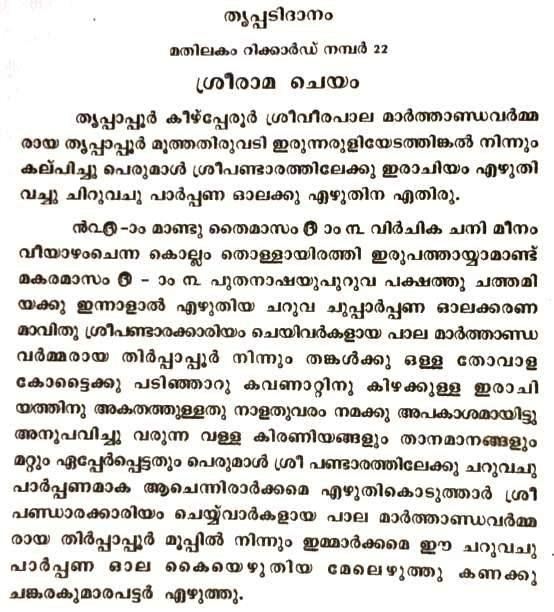 The King His Highness Sree Anizham Thirunal Veera Marthanda Varma (1729 – 7 July 1758) inherited the small feudal state of Venad and built it into Travancore, one of the most powerful kingdoms in southern India. The His Highness Sree Marthanda Varma Maharaja
 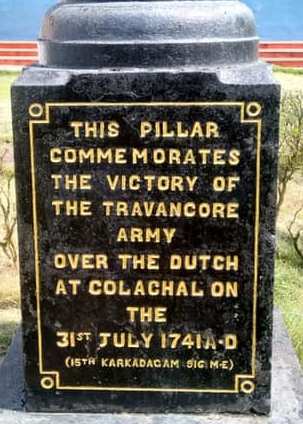 led the Travancore forces during the Travancore-Dutch War, which culminated in the Battle of Colachel. In January, 1750, His Highness decided to surrendering his kingdom to His Lord Thiru Anantha Shayana Padmanabha Swamy (Sree Maha Vishnu), this function is known as “Thrippadidhaanam – തൃപ്പടിദാനം – த்ரிப்படிதானம்”. after that Sree Padmanabha Swamy is the owner of Thiruvithamcore state; the total Travancore region becomes “God’s Own Country” and thereafter His Highness rule as the deity’s “vice-regent” and renamed as
 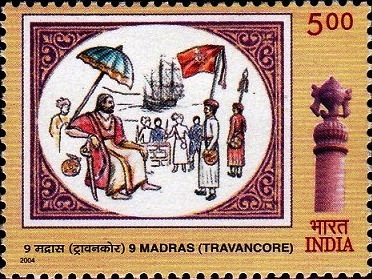 Sri Padmanabhadasa Vanchipala Maharajah Sri Anizham Thirunal Marthanda Varma Kulasekhara Perumal, and “Padmanabha Dasa” meaning the Servant of Lord Padmanabha, continued in large measure by his successor, The His Highness Sri Padmanabhadasa Vanchipala Maharajah Sri Karthika Thirunal Rama Varma Kulasekhara Perumal (“Dharma Raja”) (1758–98) and further on…
The Thirippadidanam is the Dedication of Travancore to Sri Padmanabhaswamy – For the better safety of his ancient house and the consolidation of his acquired dominions so as to make internal disturbances in the country impossible and make his own position secure, the thoughtful Maharajah determined upon the bold step of dedicating his kingdom to Sri Padmanabhaswamy, the tutelary deity of the Royal house of Travancore Accordingly on the morning of the 5th Makaram 925 M.E. (January 1750 A.D.), accompanied by the heir-apparent and all the other male and female members of the Royal family, the Maharaja with his Prime Minister proceeded to Sri Padmanabha’s temple where all the priests and Yogakkars had also been summoned. His Highness laid his State sword before the God on the Ottakkal mantapam and made over the whole territory to the Devaswam and assumed its management as the vassal of that deity. From this day forward he styled himself Sri Padmanahha Dasa, meaning ‘’the servant of Sri Padmanabhaswamy. “This stroke of policy had the desired effect and the people of Travancore have ever after regarded the country as the possession of the God and the person of the sovereign as His representative to them on earth. None of them would dare to do or speak ill of their sovereign for by so doing they would be guilty of Swamidroham or blaspheming the deity. Thus the kingdom of Travancore became Sri Pandaravagai and the State servants Sri Pandara Kariyam Chaivargal and the denomination of the Taluqs was changed into Mantapathumvathukkal, literally the door way of the God’s mantapam for the first revenue Cutchery was held in front of Sree Padmanabhaswamy’s mantapam. – TSM
The evolution of administration on Incredible Travancore Devaswoms from the period of Travancore Royal Dynasty ; a brief look…… on both TDB & KDB….
- from 1812 onward all listed Devaswoms in the legal boundary region were came under the control of Travancore Land Revenue department as Sirkar Devaswoms & Uoranma Devaswoms,
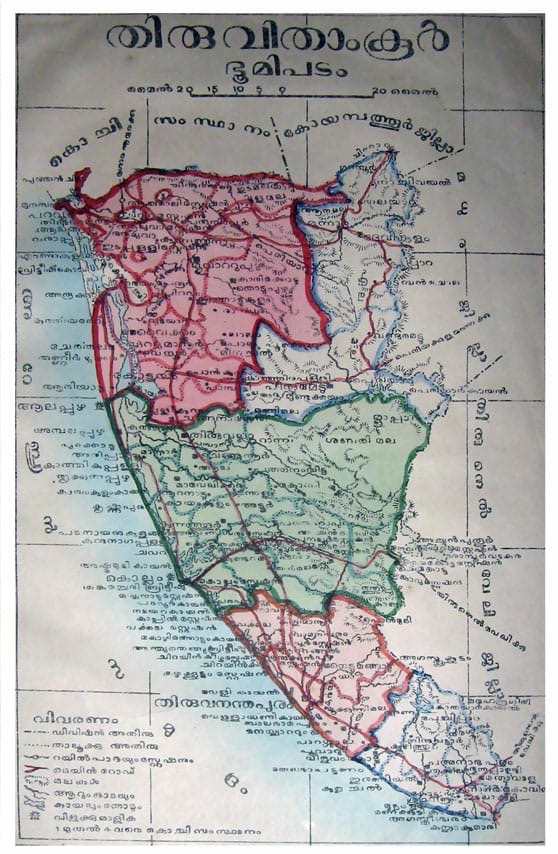
- from 1922 (M.E.1097) onward it came under the control of The Travancore Devaswom Department,
- from 1949 onward it came under the control of The Travancore Devaswom Board (TDB), in the United states of Thiru-Kochi.
- “The States Reorganisation Act-1956” came into effect from November 1st, 1956 and consequently, the Tamil speaking area of Thovalai, Agastheeswaram, Kalkulam, Eraniel & Vilavancode Taluks of Thiruvananthapuram District and Sengottai Taluk of Quilon District were transferred from The United states of Travancore – Cochin (Kerala) to Madras (Tamilnadu) state including 490+ Travancore Devaswom Board temples.
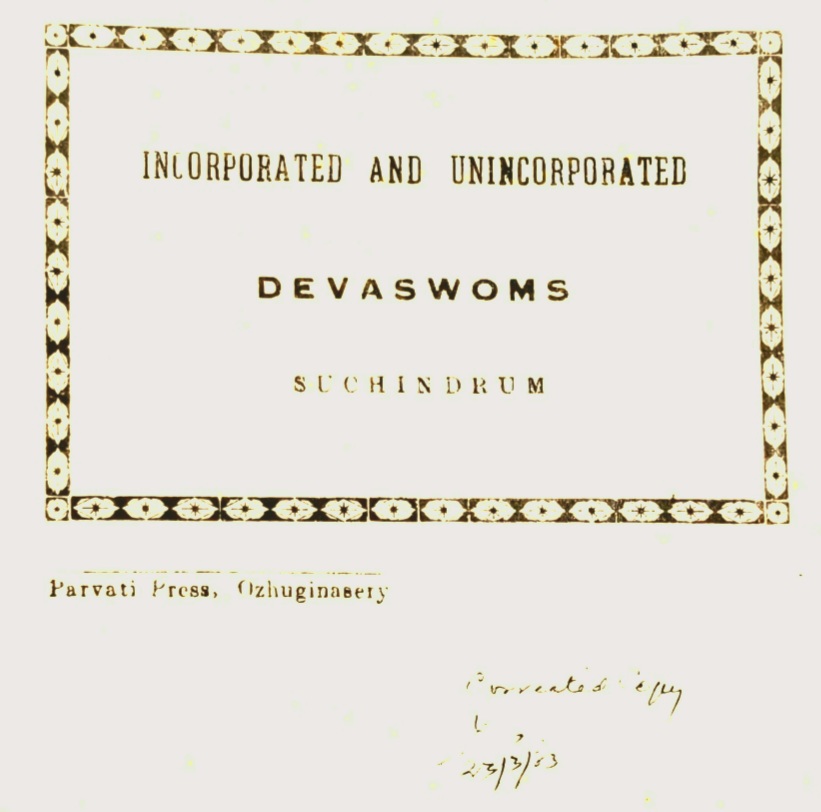
- As per the Madras Act 30 of 1959, The Tamilnadu Transferred territory Incorporated and unincorporated Devaswoms Act,
 1959 (Act,30 of 1959) was passed by the Madras legislature, the Kanyakumari Devaswom Board was established on 1st April 1960.
 - since 1960 The Kanyakumari District Incorporated and Unincorporated Devaswoms came under the Administration of Kanyakumari Devaswom Board (KDB) and
- from 01.01.1975 onward the KDB & it’s 490+ Devaswoms were come under the control of Tamilnadu Hindu Religious and Cultural Endowment (TN HR&CE) Department. The Title of Kanyakumari District Incorporated and Unincorporated Devaswoms are re-Titled as Kanyakumari District Temples.
- இத்திருக்கோவில்களானது, திருவிதாங்கூர் அரசாட்சிகாலத்தில் சர்க்கார் தேவஸ்ம் துறையின் கட்டுப்பாடில் செயல்பட்டு வந்ததும், மேஜர் தேவசம், மைனர் தேவசம், ஊராண்ம தேவசம், சங்கேத தேவசம், ஸ்ரீ பாதம் தேவசம் மற்றும் பி டி (தன்வைப்பு) தேவஸத்திற்கு உட்பட்டதும், அதன் பின் திரு-கொச்சி சமஸ்தானமாக இருந்த பொழுது திருவிதாங்கூர் தேவஸ்வம் கழகத்தின் கீழ் செயல்பட்டு வந்ததும்,…
- கன்னியாகுமரி மாவட்டம் உருவாகிய பின்னர் கன்னியாகுமரி மாவட்ட இணைக்கப்பட்ட மற்றும் இணைக்கப்படாத தேவசம் சட்டம் 30/1959 இன் படி சுசீந்திரம் தலைமை இடமாக கொண்டு செயல்படும் கன்னியாகுமரி தேவஸ்வம் கழகத்தின் அல்லது கன்னியாகுமரி மாவட்ட இணைக்கப்பட்ட மற்றும் இணைக்கப்படாத திருக்கோவில்கள் நிர்வாகத்தின் கட்டுப்பாடில் இரூக்கவேண்டியது.
- ஆனால் தற்பொழுது கன்னியாகுமரி மாவட்ட திருக்கோவில்கள் என்று KDB நிர்வாகத்தின் தலைகெட்டை மாற்றி தமிழ்நாடு இந்து சமய அறநிலைத் துறை கட்டுப்பாடில் கொண்டுவரப்பட்டது. கன்னியாகுமரி மாவட்ட திருக்கோவில்கள் என்ற KDB நிர்வாகத்தின் சீருகீடுனால் மேல்ப்படி பெரும்பான்மையான திருக்கோவில்கள் தினசரி பூஜைகள் இல்லாமல் நிர்வாகத்தால் முறையாக பராமரிக்காமல் சிதிலம் அடைந்த நிலையில் உள்ளது.
- தற்ப்பொழுது பல திருகோவில்களும் செல்ல பாதை கூட இல்லாமல் திருக்கோவில்கள் உட்பட அனைத்து அசையும் மற்றும் அசையா சொத்துக்களும் பல நபர்களின் பெயரில் போலியாக சட்ட விரோதமாக ஆவண பரிமாற்றங்கள் செய்யப்பட்டுள்ளது.
- கன்னியாகுமரி மாவட்ட திருக்கோவில் நிருவாகத்தின் இந்த திருக்கோவில் தமிழ்நாடு இந்து சமய அறநிலைய மற்றும் கொடைகள் சட்டம் 22/1959 மற்றும் அதன் திருத்த சட்டம் 50/1974 பிரிவுகளில் உள்ள இணைப்பு பட்டியலில் சேர்க்கப்பட்டுள்ள திருவிதாம்கூர் 490 தேவஸங்கள்….
- தமிழ்நாடு இந்து சமய அறநிலைக் கொடைகள் சட்டம் 1959 (சட்டம் 22/1959) பிரிவு 6(12) மற்றும் 6(23)-ன் கீழுள்ள அட்டவணைகளில் குறிப்பிட்டுள்ள கன்னியாகுமரி மாவட்ட திருக்கோயில்கள் இணை ஆணையர் பிரிவுக்கு உட்பட்டதும்;
- தமிழ்நாடு இந்து சமய அறநிலையத்துறை நிர்வாகத்தின் கீழ் நூறு ஆண்டுகளுக்கும் மேல் பழமையான 3470 திருக்கோவில்கள் வரிசை பட்டியலில் சேர்க்கப்பட்டதும், மதிப்பிற்குரிய திருநெல்வேலி இணை ஆணையர் பிரிவுக்கு உட்பட்டதும் ஆகும் மேல்ப்படி 490 KDB திருக்கோவில்கலள்..
- தற்பொழுது நிர்வாகத்தின் பல திருக்கோவில்கள் மாயம்; பல திருக்கோவில்களில் மூலவரும், உப தேவர்களும் மாயம்..!!! யாரிடம் சொல்வது….. இந்த அவல நிலையை…!!!
- തിരുവിതാംകൂർ ദേവസ്വം വകുപ്പ് രൂപീകരണത്തിന് പിന്നിൽ ദിവാൻ കേണൽ മൺറോ.
- കേരള സംസ്ഥാനം ഉണ്ടാകുന്നതിന് മുൻപ് തിരുവിതാംകൂറിൽ ഇന്നത്തെ രീതിയിലുള്ള ദേവസ്വം വകുപ്പിൻ്റെ ആദ്യരൂപം 1811ൽ അന്നത്തെ തിരുവിതാംകൂർ മഹാറാണിയായിരുന്ന റാണി ഗൗരി ലക്ഷ്മിഭായി പുറപ്പെടുവിച്ച ഉത്തരവിൻ പ്രകാരം ഉണ്ടായതാണ്.
- അന്നത്തെ ദിവാനായിരുന്ന കേണൽ മൺറോയും ഇതിന് പിന്നിൽ പ്രവർത്തിച്ചിരുന്നു ഇതിൻപ്രകാരം 348 പ്രധാന ദേവസ്വങ്ങളും 1123 ചെറിയ ദേവസ്വങ്ങളും
സർക്കാരിൻ കീഴിലായി. - ക്ഷേത്ര സംരക്ഷണം കൈകാര്യം ചെയ്യാൻ പണ്ടാരവകുപ്പ് എന്ന പുതിയ വകുപ്പുമുണ്ടാക്കി ഭരണചുമതല റവന്യൂ വകുപ്പിന്റെ കീഴിൽ തഹസിൽദാർക്ക് നൽകി. പിന്നീട് ക്ഷേത്ര ഭരണം സർക്കാരിനു തലവേദന സൃഷ്ടിച്ചു.
- അതിനാൽ 1888 ൽ ശ്രീമൂലം തിരുനാൾ മഹാരാജാവിൻ്റെ കാലത്ത് ദേവസ്വം ഭരണത്തെ റവന്യൂ വകുപ്പിൽ നിന്നും വേർപ്പെടുത്തുന്ന നടപടികൾ ആരംഭിച്ചു.
- 1912 ൽ തിരുവിതാംകൂർ ദേവസ്വം വകുപ്പ് സ്ഥാപിതമായിക്കൊണ്ടുള്ള പ്രഖ്യാപനം വന്നു.
- 1949ൽ ഇന്ത്യൻ യൂണിയനുമായി തിരുവിതാംകൂർ ലയന ചർച്ച നടക്കുമ്പോൾ തിരുവിതാംകൂർ ദേവസ്വം വകുപ്പിന്റെ കീഴിലുള്ള ക്ഷേത്ര ഭരണത്തിന്റെ ഭാവിയെക്കുറിച്ച് ആശങ്ക പൂണ്ട ചിത്തിരതിരുനാൾ മഹാരാജാവ് തിരുമനസു കൊണ്ട് ലനത്തിനു മുൻപായി ഇന്ത്യൻ യൂണിയനുമായി ഉണ്ടാക്കിയ Covenant വഴി ക്ഷേത്ര നടത്തിപ്പിന് ഗ്രാന്റും ആവശ്യപ്പെട്ടിരുന്നു.
- ഇതു വഴി നിലവിലുള്ള ക്ഷേത്രഭരണം പഴയപടി ദേവസ്വം വകുപ്പിന്റെ കീഴിൽ തന്നെ നില നിർത്തുകയും രാജാവിനു ക്ഷേത്രത്തിൻ്റെ മുകളിലുള്ള അധികാരം ഇന്ത്യാ ഗവൺമെന്റിനു കൈമാറുകയും ചെയ്തു.
- ഉടമ്പടി പ്രകാരം പുതുതായി രൂപം കൊള്ളുന്ന സംസ്ഥാനത്തിന്റെ മേൽനോട്ടത്തിൽ ദേവസ്വത്തിന്റെ കീഴിൽ ക്ഷേത്രഭരണം നടത്തണം.
- കേരള സംസ്ഥാനത്തിൻ്റെ രൂപീകരണ ശേഷവും വലിയ മാറ്റങ്ങളില്ലാതെ ദേവസ്വം ഭരണം പഴയപടി തന്നെ തുടർന്നുപോകുന്നു.
- ഇന്ത്യൻ യൂണിയനിലേക്ക് ലയിപ്പിച്ച ഏറ്റവും വലിയ ക്ഷേത്ര സ്വത്ത് തിരുവിതാംകൂർ രാജ്യമാണ് തൃപ്പടിദാനത്തോടുകൂടി മാർത്താണ്ഡവർമ്മ രാജാവ് രാജ്യം പൂർണ്ണമായും ക്ഷേത്രത്തിന് സമർപ്പിച്ചതുവഴി തിരുവിതാംകൂർ പൂർണ്ണമായും ക്ഷേത്ര ദേവസ്വം സ്വത്തിന്റെ ഭാഗമായി.
- അതിനാൽ ശ്രീപത്മനാഭസ്വാമിയുടെ എഴുന്നെള്ളിപ്പിന് മഹാരാജാവിന് നൽകുന്നതായ എല്ലാ അകമ്പടികളും നൽകിയിരുന്നു.
- നിയമപ്രകാരം ശ്രീപത്മനാഭ സ്വാമിയാണ് രാജാവ് ഇതും ദേവസ്വം ചരിത്രത്തിലെ ഒരു ഭാഗമാണ്
(അറിവ് : Travancore Royal Family)
|| श्री आधिकेशवा रक्षिथो ||
Saga of The Great Travancore Dynasty
The Formation of Thiruvithancore Sirkar Devaswoms

 The Melkanganam and Sanketham departments were entrusted with the upkeep of revenue from the ‘Sree Pandara vaka’ lands owned by the Sree PadmanabhaSwamy temple (Melkanganam office was in Thiruvananthapuram and Sanketham Office was in Thuckalay). The Petty Devaswoms in the state were mostly under the management of private bodies (Samudhayam) are categorised as Uraanma vaka Devaswoms. some Devaswoms its properties managed by private family are surrendered to Sirkar are known as Personal Deposit (PD) Devaswoms. The PD Devaswoms are categorised as Unincorporated Devaswoms whereas all Major, Minor & Petty (small) Devaswoms come under Incorporated Devaswoms .
Incorporated Devaswoms (സംയോജിത ദേവസ്വങ്ങൾ – இணைக்கப்பட்ட திருக்கோயில்கள்):
These are Devaswoms that are specifically listed in a schedule (Schedule I) of the Travancore-Cochin Hindu Religious Institutions Act, 1950. They are managed by a Devaswom Board, such as the Travancore Devaswom Board or the Cochin Devaswom Board or the Kanyakumari Devaswom Board. These boards have specific powers and responsibilities regarding the administration, supervision, and control of these Devaswoms.
Unincorporated Devaswoms (അസംയോജിത ദേവസ്വങ്ങൾ -இணைக்கப்படாத திருக்கோயில்கள்):
These are Devaswoms that are not specifically listed in the schedule of the Travancore-Cochin Hindu Religious Institutions Act, 1950. They may be managed by other entities or under different administrative structures.
Devaswom Boards: In Tamilnadu, Kanyakumari Devaswom Board is the only one kind of this. But.. In Kerala, there are several Devaswom Boards responsible for managing temples and religious endowments. Examples include the Travancore Devaswom Board, Cochin Devaswom Board, Guruvayur Devaswom Board, Malabar Devaswom Board, and Koodalmanikyam Devaswom.
These boards have a statutory duty to ensure proper administration, supervision, and control of the temples and endowments under their jurisdiction.
 In the Brahmaswom system, each temple and all of its assets are considered to be the private property of its chief priest, normally from Brahmin and Namboothiri families. Rajaswoms are where the properties belong to ruling feudal lords or Nair families or even small royal families. This system has created intense corruption as well as political rivalry, especially in case of Rajaswom ruled temples, thus losing sanctity. In many cases during wars, the rival army target the temples, as the opening of the temple gates to a rival army signals the defeat of ruling family.
 Brahmaswom were also challenged, on the grounds that many Namboothiri families started misappropriating temple monies into personal funds which sometimes grew to rival that of the ruling families, which was considered a sign of arrogance and disrespect. With their great wealth some Namboothiri families started meddling in politics, helping to decide who would be the next ruler by supporting one of the rival families…
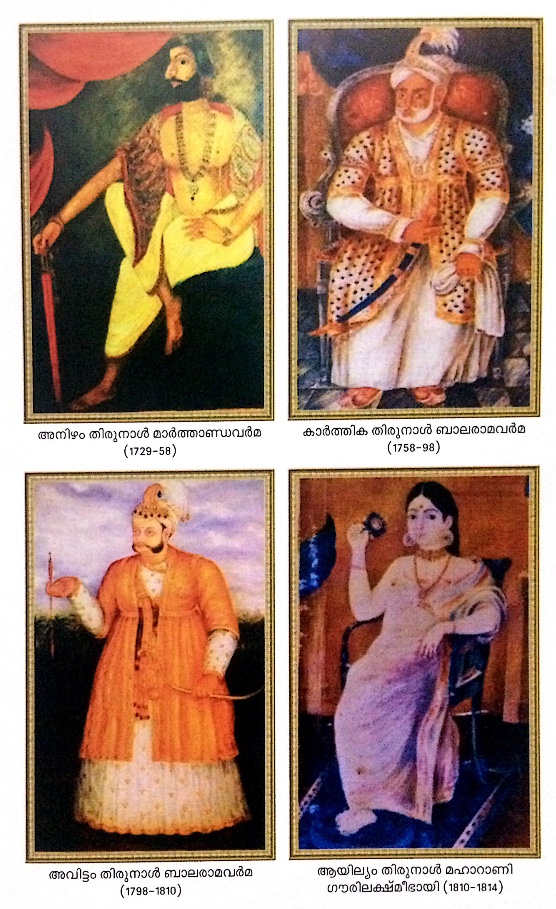
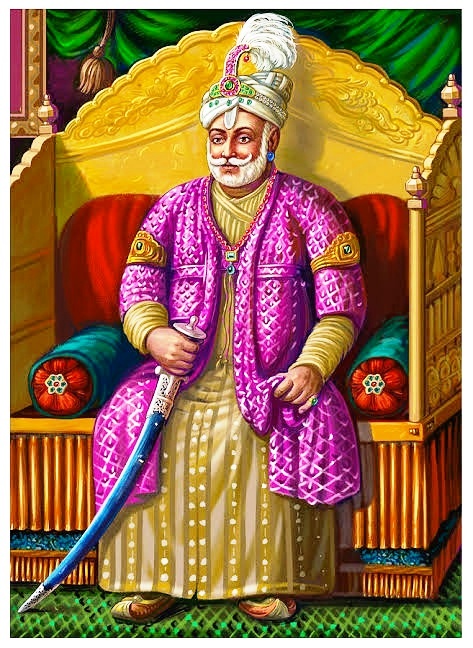
The formation of Travancore itself can be attributed to the misuse of powers of the Rajaswom of Sree Padmanabhaswamy Temple by Ettuveetil Pillai, which attempted to overshadow the powers of reigning Venad king and his kingdom. This generated an opportunity to Marthanda Varma, who finally succeeded in curbing the Ettuveetil Pillai and completing the annexation of the temple, which in turn led to the formation of the Travancore kingdom. The History of Great Travancore Kingdom speaks; The Avittom Thirunal Bala Rama Varma Kulasekhara Perumal (c. 1782 – 7 Nov 1810) was a unpopular ruler of the Indian princely state of Travancore from 1798 to 1810, succeeding his uncle Sree Padmanabha Dasa Vanchipala Maharajah (The King) Karthika Thirunal Rama Varma (Dharma Raja) Kulasekhara Perumal on 12 February 1798.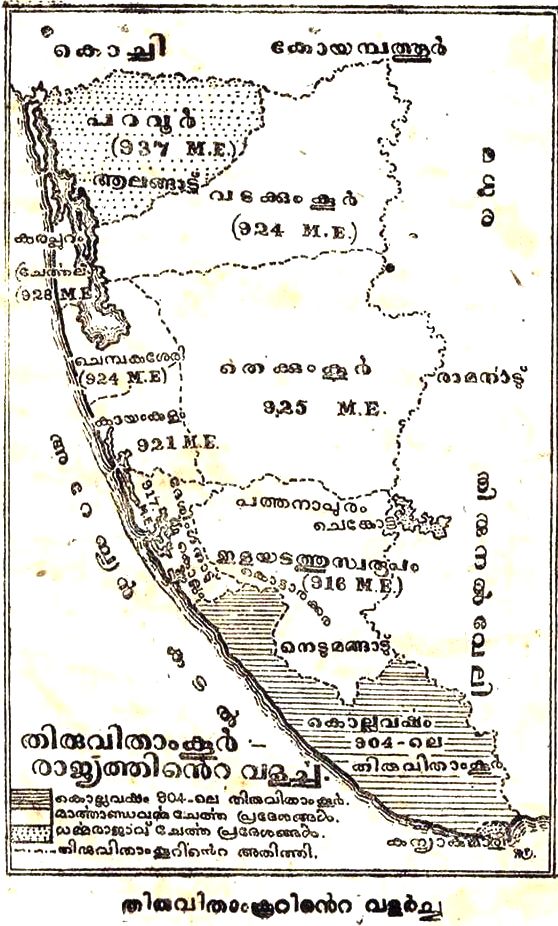 His reign was a time of disturbances with internal and external problems. During the reign of Dharma Raja, Marthanda Varma’s successor, Tipu Sultan, the de facto ruler of Kingdom of Mysore and the son of Hyder Ali attacked Travancore as a part of the Mysorean invasion of Kerala; this led to the famous Third Anglo-Mysore War, as Travancore had already allied with the British to seek protection from the potent assault from Tippu. Tippu Sultan planned for the invasion of Kingdom of Travancore for many years and as a start he tried to invade the defence fortification (Nedumkotta or Travancore Lines) at the northern border of Travancore Kingdom.
 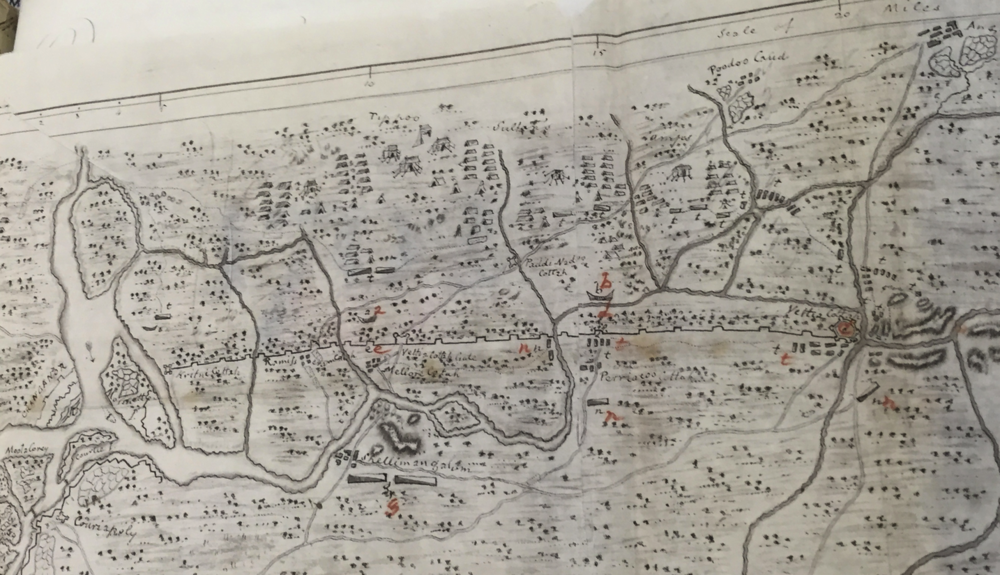 The fort was defended by a few Travancore Warriors stationed, and they used pounder gun as a cover followed by sword fight. Constructed using clay and mud, with reinforcements using stones, laterite and granite at strategic places, this historic defense line stretched almost 48 km long from the Krishan Kotta on the west coast to Annamalai Hills of the Western Ghats.
 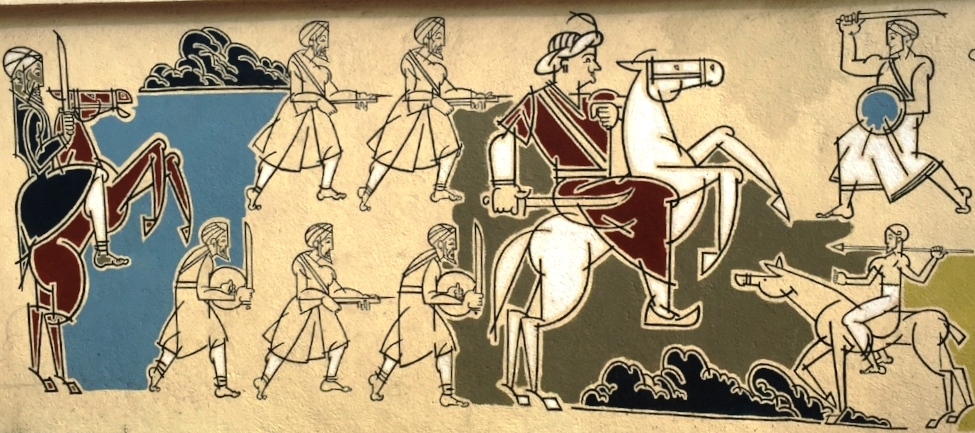 Tipu Sultan’s top commanders were severely wounded and Tipu Sultan himself got severely injured, which, it is believed, made him lame for the rest of his life. Tipu Sultan’s army faced severe casualties and the rest of the troops retreated. Felt terribly humiliated over his ignominious defeat, Tipu Sultan returned with reinforcements and advanced by conquering the fort and further invaded areas of northern Travancore.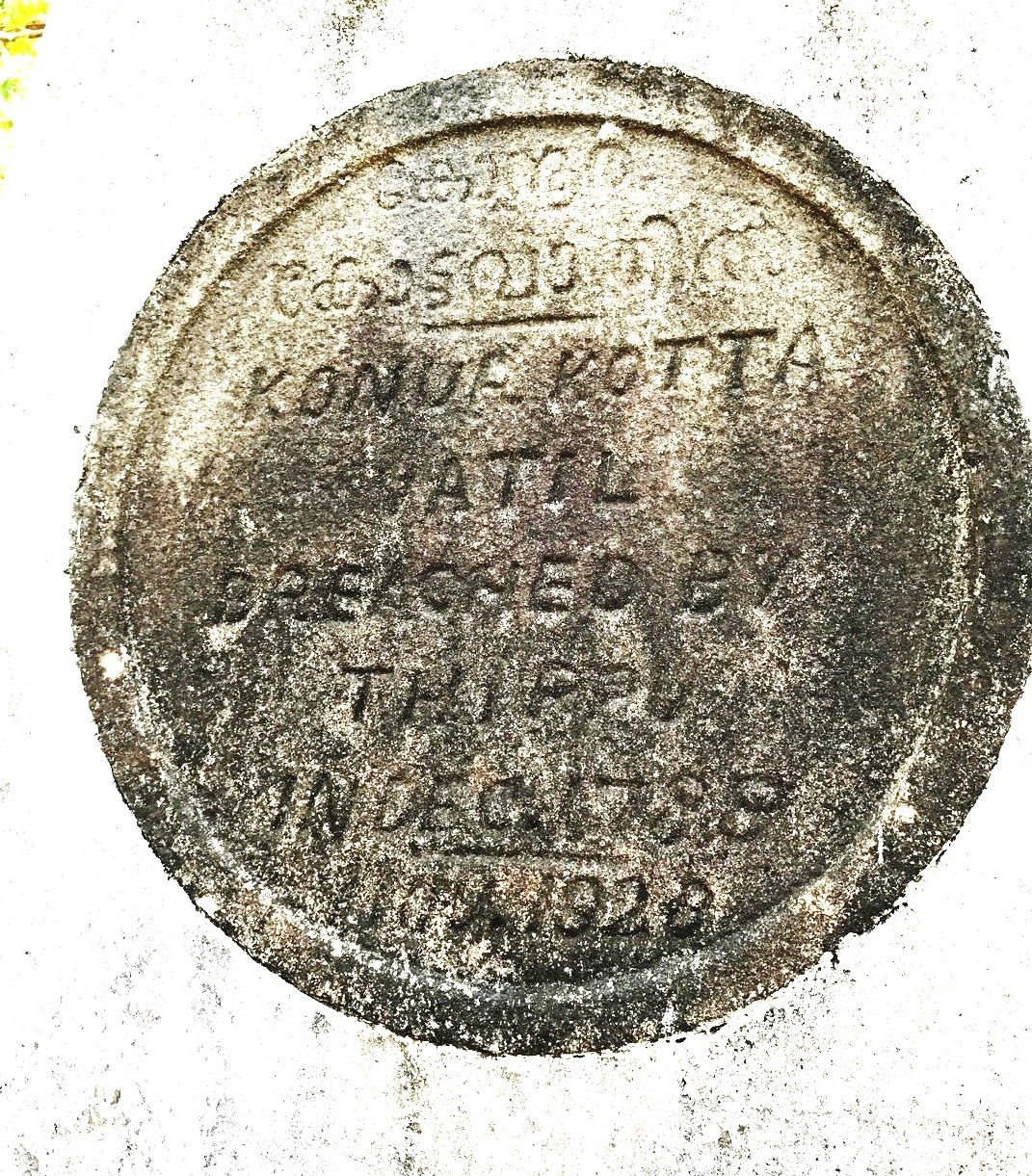
 Tipu Sultan’s army now devastated the whole of northern Travancore, set houses on fire, plundered and destroyed whatever they could lay their hands on, committed various atrocities, desecrated temples. Finding it impossible to resist Tipu Sultan’s invasion the two commanders of Travancore army, Kunju Kutty Pillai and Vaikom Padmanabha Pillai, both of Nandyat Kalari of Vaikom, of Travancore army with their fighters pulled out some large boulders from the natural dam Bhoothathankettu resulting in breaking the dam.
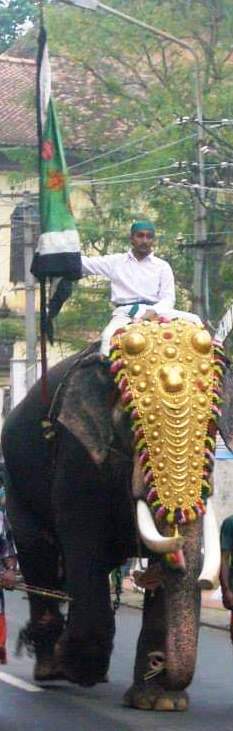
  Water burst out resulting in massive flash floods washing away Tipu Sultan’s arms and troops. Meanwhile Travancore army was able to rope in reinforcements and was prepared to obstruct Tipu Sultan from proceeding further into Travancore. Tipu Sultan found it difficult to further proceed to Travancore and feared of losing the battle to the Travancore Army and retreated. Its from very famous Araatu procession of annual festival in Sree Padmanabha Swamy Temple. The Green flag carried on elephant as memory of victory over Tippu sultan. Who attacked Travancore and threatened to rob Temple. Maharaja fought bravely and Tippu ran away carrying injuries.
The Ramayyan Dalawa, the Prime Minister of Marthanda Varma, also played an important role in this consolidation and expansion. Travancore often allied with the English East India Company in military conflicts. In 1808 Travancore witnessed an armed rebellion against the British under the leadership of Velu Thampi Dalawa, the Prime Minister of Travancore, but was successfully quelled with the help of the British. The revolt of Velu Thampi Dhalawa (who as Dewan negotiated the formal alliance between Travancore and the British East India Company) occurred during his rule. In AD 1810, His Highness The Maharajah of Travancore, Sree Balarama Varma was followed by Her Highness The Maharani (Queen) of Travancore, Sree Padmanabha Sevini Vanchipala Dyumani Raja Rajeshwari Ayilyom Thirunal Gouri Lakshmi Bayi. 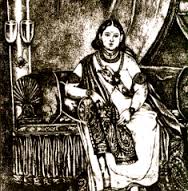 She became the ruler because of the interference of the British. Otherwise, Kerala Varma who had been adopted by Balarama Varama would become the ruler. Col. Munro had been appointed as the next Resident in Travancore before the death of Balarama Varma (October 1810). While appointing him as the Resident of Travancore, Munro was informed of the conditions in which he was appointed to the post. In the dispatch dated 23rd March, 1810, Falconer, Chief Secretary to the Madras Government, wrote: “The nature of the past transactions and the existing state of affairs in that quarter render the situation of the Resident at the court of Travancore in a high degree important, difficult and delicate, and His Lord-ship in council is satisfied that in selecting an officer possessing all the requisite qualifications for an office so arduous, he fully provides for the public interests in confiding the trust to you.” Dewan Nanupillai in his manuscript ‘Sketch of Travancore’, wrote about the affairs in Travancore,
  when Col.Munro assumed charge as Resident thus: ”The Maharaja Balarama Varma was the Ruler, and Ummini Thampi, who had been appointed the Diwan in March, 1809, the premier. Corruption, abuse of power and irregularities pervaded the whole service. The country was deep in debt. The service was starved and the subsidy to the East India Company fell greatly in arrears, owing to serious financial embarrassment. Anarchy and administration were the order of the day. The minister’s predominant passion was ambition which influenced him to a degree that he almost usurped the Raja’s power. The inability of the ruling power so to administer the state as to avert financial difficulty in the payment of the subsidy, went so far as to evoke the threats of the paramount power that it would assume the direct management of the country for the security of the funds destined to such subsidy. The young prince of Mavelikkara was a favorite of the Maharaja and passed with the title one Elaya Raja, though in fact he was not the heir apparent.
 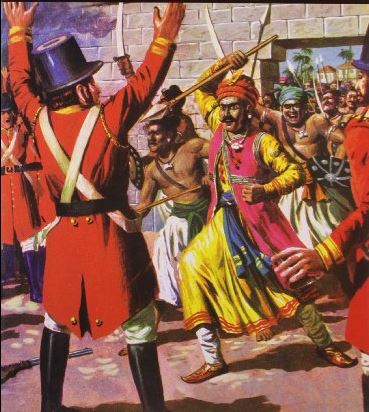 His antecedents were far from anything but irreproachable, as he had been suspected of connivance at, if not playing second fiddle to the rebellion raised by Velayudhan Thampi (Velu thampi). He has supported Diwan Velu Thampi. When Colonel Munroe, assumed charge as British Resident in Travancore in October, 1810, he found Maharaja Balarama Varama, a weak ruler, overshadowed by his Dewan, Umnini Thampi. The finances of the state were in utter disarray owing to the large arrears of subsidy to the East India Company. In addition to this, the Madras Government now imposed a war indemnity of 1,89,877 pagodas, on account of the expenses connected with Diwan Velu Thampi’s revolt.

and even the Dewan’s life was threatened. Kerala Varma, the adopted son of the Raja created a strong party in the palace against the Dewan. The Company’s Government warned the Raja that any harm done to the Dewan would be considered an act of hostility against them. One of the major problems that aroused on the death of the Maharaja Balarama Varma was about the succession. In 1789, the Raja adopted two princesses Bharani Thirunal and Attam Thirunal from the Kolattunad family. Bharani Thirunal later gave birth to two daughters. Ayilyam Tirunal Gouri Lakshmi Bai and Uttrtathi Thirunal Gouri Parvati Bai. in 1791 and 1810, respectively. So,
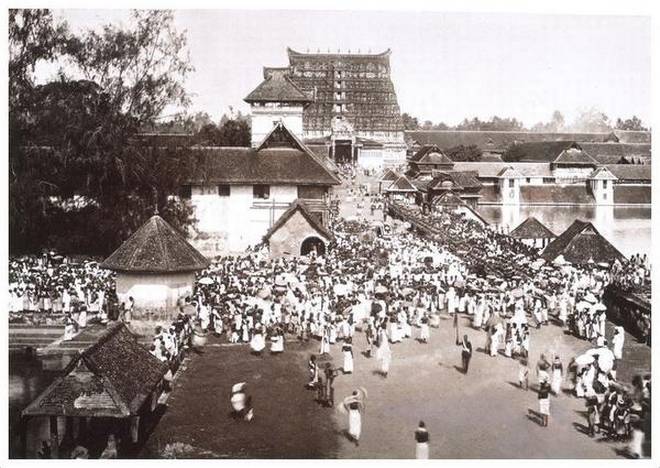 on account of the absence of male heirs in the royal family, Balarama Varma had adopted Prince Kerala Varma of the Mavelikkara branch of the Kolattunad Swaruparn on 22nd Chithirai 974. M.E. and his adoption rites (padi and padiyerram) were performed. The alleged support given to Velu Thampi by Kerala Varma and the machinations of Urnmini Thampi, had made Col. Macaulay to enquire in to the legitimacy of the adoption. After making some preliminary enquiries, he recommended that the prince should be sent away from the court but the king refused to do so and insisted on Kerala Varma’s continuance at the court. In the meantime Col. Macaulay retired and was succeeded by Col. Munro.
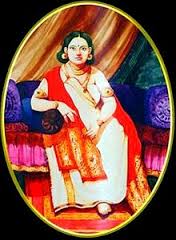
The first problem Munro had to face was the succession problem, Munro appears to have been determined to exclude Kerala Varma from succession. He wrote to H.H.Baber, Judge and Magistrate of North Malabar regarding the succession procedures in the country. Baber wrote back that the rule of descent in Malabar was not from father to son but through sister’s son. In case of failure of male issues, it was usual to adopt a princess from some other family and the male child born of this adoption enjoyed the right to succeed to the throne.  Apart from the report of Baber, Munro had obtained the opinion of the Principal Sastris, Pandits and senior state functionaries in Travancore. They unanimously submitted that Kerala Varma was duly adopted into the royal family by Balarama Varma. Munro who was wanted to eliminate Kerala Varma, threatened if an amicable solution was not for the coming, the Company would take over control over Travancore, where upon the large number of emoluments and perquisites enjoyed by the Brahmins under the then Government would be lost. Then the Brahmins and other dignitaries changed their opinion and favored the succession of Gouri Lakshmi Bai Thirumanasu.
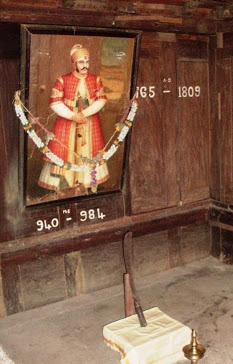
When Munro came to Travancore in October 1810, he saw the country was in a state of anarchy and confusion, on account of the plots of rival factions, the evil effects of the recent war, the heavy debts with which the Sircar was burdened and the inability of the Government to cope with them.” The state had to pay a heavy debt to the Company towards the expenses incurred of the Madras Government consequent on the insurrection of Velu Thampi in 1808-1809. Besides even the annual subsidy due to the Company had fallen in to arrears. According to the opinion of Munro, the country was full of abuses. This situation would be ameliorated, the attachment of the people secured and future commotions prevented by the justice, moderation and humanity of the Rani’s government, acting under the immediate direction of the British Government. Rani’s one of earliest acts was the dismissal of the unpopular and corrupt Dewan Ummini Thampi and the appointment of Resident Col. Munro as Dewan also. His assumption of charge as Dewan, finally Colonel Munroe appointed in 1812 as Diwan of the Cochin and Travancore kingdoms, was responsible for bringing effective controls on temples. 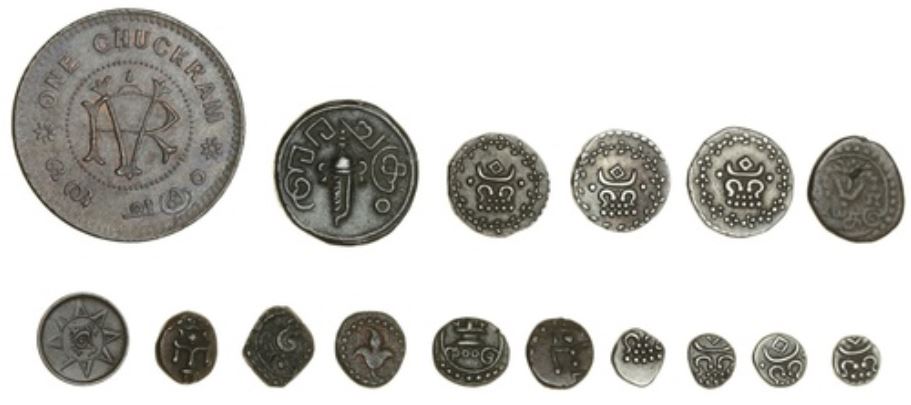 Munroe recommended that all Devaswom properties be treated as government properties and the revenue from Devaswom be merged with the general revenues of the state. In addition, for the purpose of meeting the expenses of the temples, Pathiv (that is, a scale of expenditure on uthsavams, remuneration to temple staff, maintenance charges etc.) was proposed. though sanctioned by the Madras and Bengal Governments, was disapproved by the Court of Directors, but by the time their dispatch reached him only in 1814. He was the Dewans during the period of the two Ranies with varying degrees drew their inspiration from and were profited by the advice given, the influence exerted, the example set, and even the fear infused by the Resident.
 The Rani reposed fall confidence in Col. Munroe and the British Government. She stated that there was no other institution or persons so truthful and justifiable as the English East India Company. Munroe was ambitious and anxious to establish and maintain an efficient government and he worked hard to accomplish this objective. He sought to introduce in Travancore the system of administration which was in vogue in British India. The Rani also wished to establish the Government on a “solid basis of order, justice, moderation and good Government” and give protection to life and property to all classes of people. Munroe also wanted to correct the abuses and corruption and kept the whole authority concentrated in his own hands.
Prior to 1811 AD the Devaswoms ware under the control of Yogakkars, Karalars and Uralars: The Yogakkars enjoyed enormous power. They maintained the temple, gave paddy for the day-to- day puja in the temples, which was collected from the tenants. The „Kaimukku ordeal‟ was a conducted at Suchidram (Thanumalaya Temple) with the presence of the Yogakkars. The temple ‘Locker’ was opened in the festival times to take out ‘Thiruvabaranams’ (Jewels) only after getting the consent of Yogakkar. Like all Devaswoms in the region were under the adminitration of the local Yogakkars or Samudhayams, or Oorlars or Karakkars of different cast and comminities. The administration of some major Devaswoms and its properties was carried out by a body called Yogakkar, consisting of Potties (Brahmin priests).
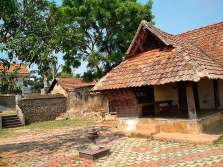
Uralar: Uralar were normally Brahmins or Namboothiris having the sole authority in temple administration and its lands and they looked after the entire temple activities.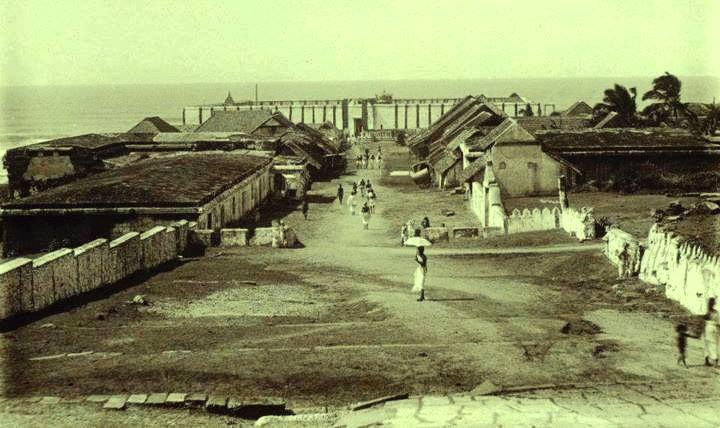 The temple during medieval Kerala is concerned it acted in many roles. It was the center of power and center of production and distribution and acted as the royal treasury. The Janmi System is one of the most dominant features of Kerala society during the medieval period.The medieval Kerala society was dominated by the land owning Brahmin class who worked as an imperium in imperious. The origin of the word Janmi, There is no such word in Sanskrit having the connotation of land owner.
Karalar or Karakkar: Venad’s agrarian structure was the result of the mutual relationships of Uralar, Karalar intermediaries, hereditary occupational groups and ryots and their rights on resources of production and commodities.  The term Uralar is used to describe the land owning class while the word Karalar is used to describe the temple tenants. Uralar is the head of the Ur. Families of large land owners are also called Uralar. The villages in which they live and assemble are called Ur. A person becomes Uralar by membership of this body. Uralar also functioned as the managing body of the temple centre in the Ur. Uralar gave land on rent (pattam) to Karalar. Karalar is expected to gave a fixed sum of the produce of the land to Uralar. Kaaraanma / Kaaraayma right (Hereditary right) cannot be transferred.
 It naturally could go to the descendant. The land of temple functionaries other than Uralars called viruti would also be held as Kaaraanma. However they have no rights over the land. Land lord tenant relations were complete with Uralar and Karalar. Devaswoms are vested with the ownership of lands. They earned huge income as Pattam. Such incomes were redistributed among temple functionaries for expenses connected with offerings, feedings etc. The Karalar had to bear the burden of all these expenses.


The combination of the powers of Resident and Dewan in Col. Munroe gave him a free hand to use his zeal for social reform which was very much needed in Travancore. He stepped in to the field of social reform to lay the foundation of a modern Travancore, entirely different from that of the past. He carried out reforms intended to lessen the power of local officers and leaders. Then he built up a centralized form of administration conducted by the Dewan from headquarters with the co-operation of a staff of assistants of whom the most important were two Diwan Peshkars newly appointed. He withdrew the judicial functions from Taluk officers, who had hither to enjoyed civil and judicial powers. 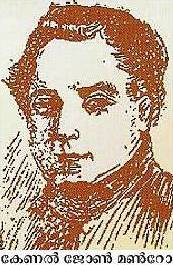 Munro renamed these officials as Tahsildars. An important policy which Col. Munro pursued was to make the transaction of business both at the Huzur and subordinate offices as open and public as possible. Men of all parties were appointed to prevent their being united by common interest and check upon the proceedings of the authorities acting under the Resident. In order to remove the confusion in administrative system, Munro abolished Pravartikars under him. The plan admitted of no evasion in complying with orders and the duties of Tahsildars being confined to the collection of land revenue. Thus Munro separated the revenue department from the judiciary in Travancore with commendable courage. Munro also separated financial department from the Huzur.
  The former was invested with the function of maintaining a correct account of all receipts and disbursements, of examining and checking the expenditure of the state, created the posts of a superintendent and a deputy superintendent of finances and payments. Munro was the first Resident who pleaded for the introduction of English education. He established schools at public expense in all the districts to impart English education.
Proclamation of 1811 – The Devaswoms assumed by the Sirkar were managed since 1811 by Revanue Department: 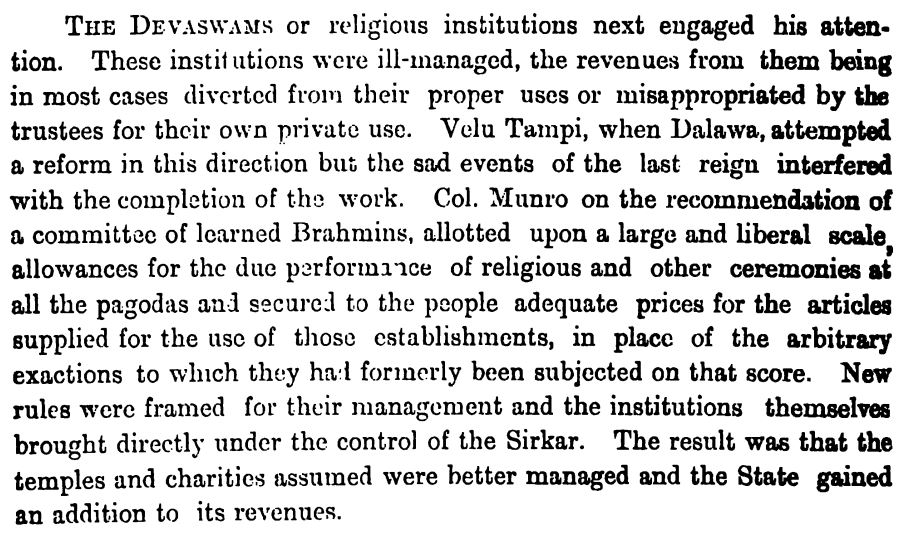 The Yogakkars or Samudhayams, the Oorlars or Karakkars with the passage of years, abused the Devaswoms and misused their properties.
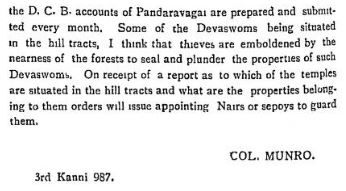
  Mismanagement and maladministration of the Devaswom affairs and misappropriation of the Devaswom funds become the rule. The faithful and honest fulfillment of the noble and benevolent desires of the forefathers who founded the Devaswoms becomes an exception. In brief a state of anarchy was prevailed. During the reign of Rani Gowri Lakshmi Bai, Col. Munro, the British resident in Travancore accepted the Dewanship of the State in 1811. A shrewd statesman and an able administrator he saw the gross neglect duty and the moral and intellectual degeneration of the class of persons in charge of the Devaswoms and their properties. Mismanagements and the political pretensions of these people urged him to set right the military affairs of the country. On the 3rd Kanni of 987 Malayalam Era (1811) he issued an executive order declaring the assumption by the state 348 major and 1123 minor Devaswoms movable and immovable.
  These major Devaswoms as they have detailed accounts of expenditure and the rest “No Ezhuthu theeruva” Devaswoms. Further, the properties of these Devaswoms were treated as Sirkar (Government) properties and the income there from and the expenditure in the Devaswoms was mixed up with State Revenue and Expenditure. They were on the account called “Incorporated Devaswoms”. Again as they were listed in the schedule to the subsequent proclamations, they were also denoted as “Scheduled Devaswoms”. In the following years also more Devaswoms were assumed exercising the Melkoima rifght of the Sovereigm.
One of the most important events during the period of Col.Munro’s dewanship was the take over of the Devaswams by the Government (1811). Several temples possessed enormous wealth and property which were mismanaged by the Uralar (Executive Committee of the Temples, which consisted of mainly Brahmins).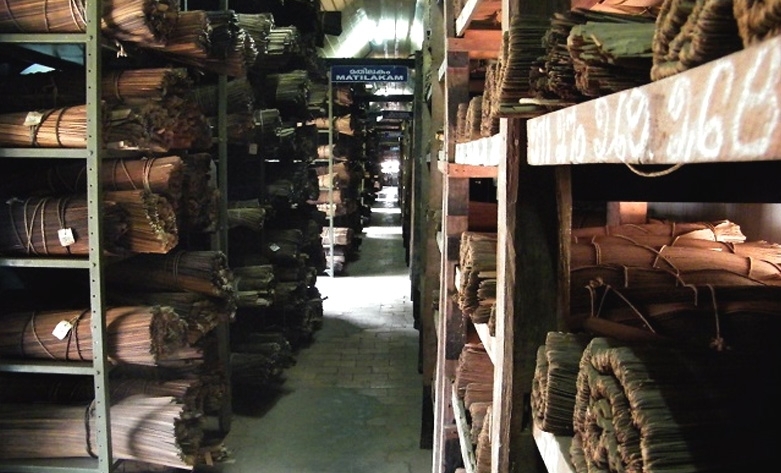 The Temple lands were given on Pattam to the tenants for making provision for goods and services to the temples. There was corruption in renting temple properties also. Munro’s order regarding the take over, stated that it was by virtue of its right as Melkoyma that the Government was taking over the management of the Temples, to prevent their mismanagement. The fact the revenue collection from the Temples rose from Rs.2802 in 1807 to Rs.446600 in 1812-13 clearly showed that there was serious mismanagement. But the real intention of Munro in the take over was to clear the long standing and heavy arrears of subsidy payable to the British Government.
 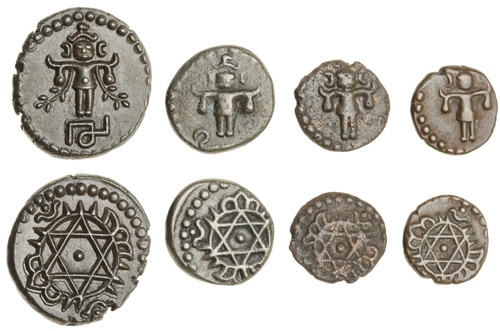 The Madras Government, while posting him as the Resident has pointed out the necessity of paying off the subsidy arrears at the earliest. By making use of the excess income from the Temples, Munro was able to pay off the subsidy arrears within a short time. Thus the mismanagement of Temple funds by the Uralar was conveniently utilised by Munro to take over the Properties of the temples. One of the great administrative measures of the period was the Revenue Settlement of 1812. Munro had the holdings measured, their taxes ascertained and recorded in Pattas (title deeds) issued to the riots, so that each land-holder may know the revenue for which he is liable. He established separate courts for each taluk to hear disputes about the amounts entered in the ‘ Pattas’.
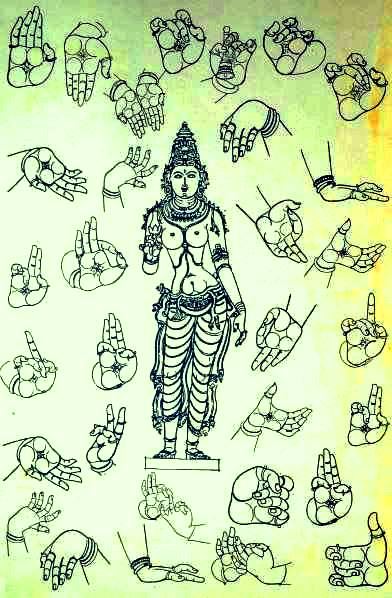 It may be that in good old days, before the assumption of ‘378 odd temples with landed properties and 1171 temples with’ no landed property by Colonel Munro, the Dewan of Travancore, in 1811-12 A. D., when the annual yield of Devaswom lands was 18 lakhs parahs of paddy and Rs. 80,000/- (Vide the Devaswom Handbook, page 126), the rituals in the major Devaswoms that owned properties included large offerings of Nivedyam. But they cannot be claimed as immutable. Since then, circumstances have changed largely: the Devaswoms have now to survive on the fixed money grant of the State and the prices of things required for services in temples have shot up tenfold and above. Even before the Act, several reductions in rituals had been made and several ceremonies stopped by the Government and the Ruler of Travancore, who were then in control of the Hindu Religious institutions.


Munro became the savior who protected the state when it was in serious peril. Her Highness Rani Lakshmi Bai of Travancore wrote: 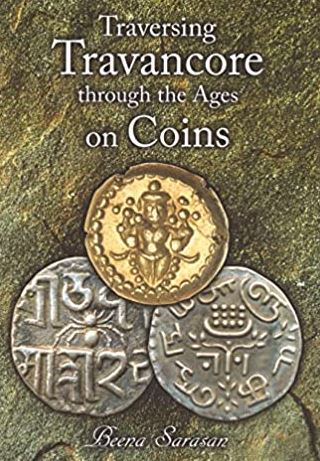 “you conciliated the attachment and respect of the people; you paid the debts of the state to the amount of more than twenty five lakhs of rupees and you preserved inviolate all the ancient institutions for religious worship and public charity; Within a few years he had by cautious, enlightened, and liberal policies thrust Travancore on a new course. His period was one of great activity and progress to which the people trace the origin of everything good in the state and considered it the golden age of Travancore. After the modernisation of administration and the practical recognition of English as official language of the state, Col. Munro who had laid down the duties of the office of the Dewan even in the earlier reign continued to give the new Regent his advice and support. Her Highness was served by native Dewans who followed in the foot-steps of Munro and tried their almost to unproven the administration.
During the regency of Her Highness Rani Parvathi Bai,  Travancore became completely subservient to the British. Munro who relinquished the post of Diwan in 1814 continued to guide the administration of the State till he laid down the office of the Resident in 1818. It was with his support she introduced many progressive reforms in Travancore. She discussed each and every aspect of the administration with Munro and obtained his consent. The suggestions made by Munro were passed without any deviation. Thus indirectly, at that time, the administration was carried on by the British. According to the recommendation of Col. Munroe, Raman Menon was appointed as Dewan. Earlier, it was decided to appoint Subbayan Sankara Narayana Aiyar as Dewan. But the decision of Col. Munroe was put in to effect. Here, the British interest was protected. In the middle of 1819 A.D. Col. Munro retired and Col. Mcdowall was appointed as Resident in the same year.Thus during the period of Rani Parvati Bai, no new developments took place in Travancore. The reforms introduced by Col. Minroe, continued with out any deviation. It was at the time of these two Ranies, the British got the opportunity to tighten their grip on Travancore administration.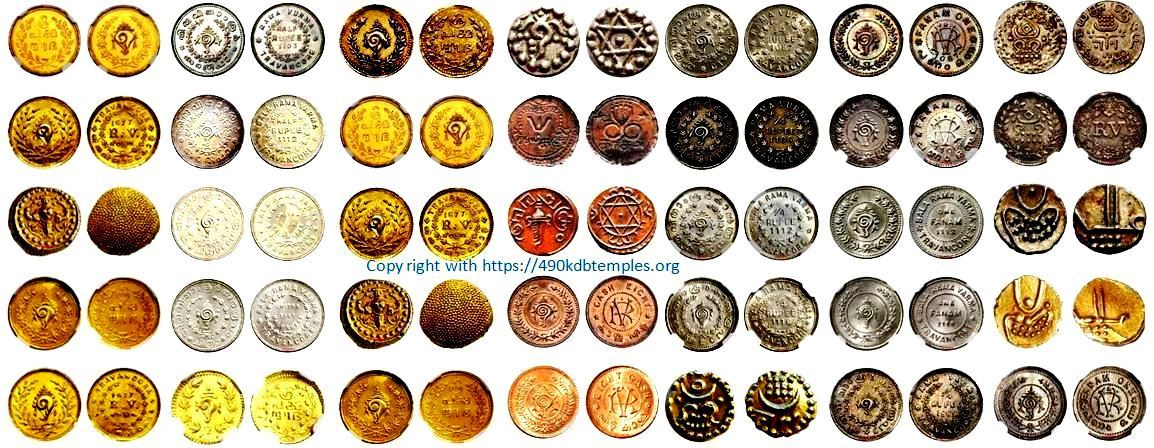
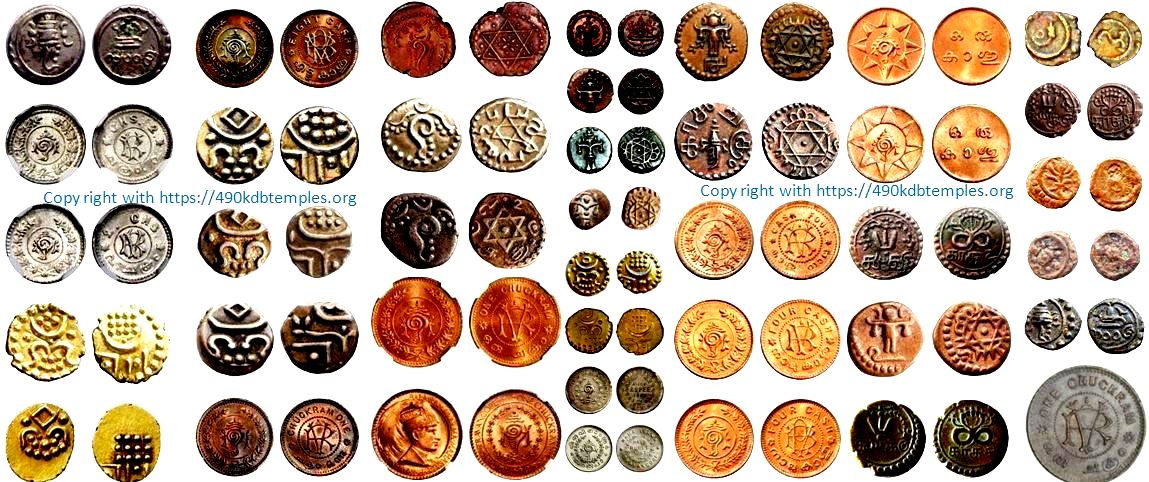
Anantasayanam and Thirai Cash of Venad and Travancore – Barbara Mears


The Travancore contained a large number of Devaswoms or Temple Corporations that held vast areas of land and controlled most of the important and wealthy temples in the country. These Temple corporations [More than six hundred of the Major & Minor temples (Cirkar Devaswoms) and more than thousand Petty Temples (Uraanma Devaswoms)] were declared as Government institutions {Sirkar Devaswom } by The Maharani (Queen) of Travancore, Sree Padmanabha Sevini Vanchipala Dyumani Raj Rajeshwari Ayilyom Thirunal Gouri Lakshmi Bayi by the recommendation of Dewan and The Travancore State was Paid all its dues to East India Company (British Government) by using the our Hindu Temple’s funds & saved Our Thiruvithamcore State from British attack.


About the back history of The Travancore Royal Dynasty, 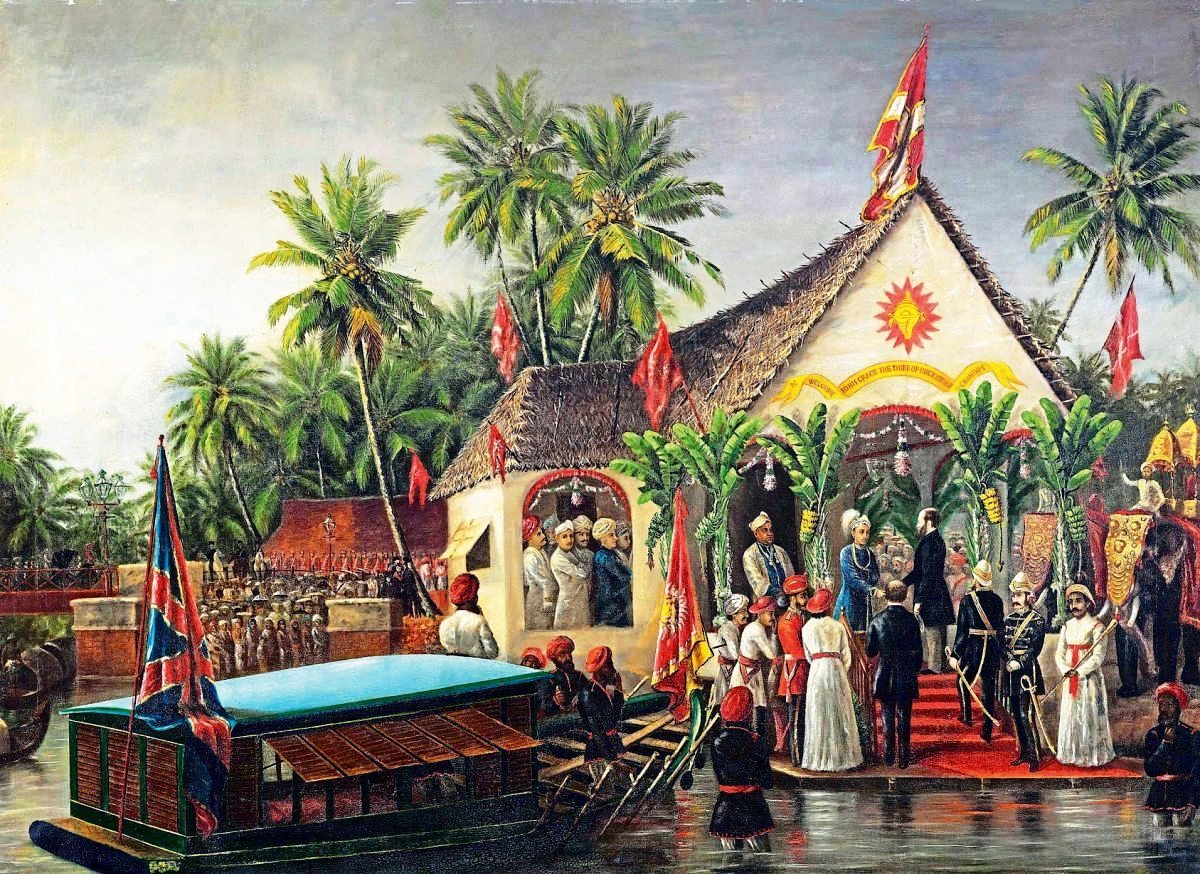 Since there are insufficient records of when these buildings were erected, the only material evidence left is in the Temple Architecture and the scant references made to them in separate encyclopaedic records like the Travancore State Manual. The author has made a classification of Travancore as belonging to three periods, influenced by changes in the socio-political and cultural sphere:
 i) The Early Colonial period (1830–1860) when the capital of Travancore was shifted from Quilon (which is present day Kollam) to Thiruvananthapuram, with the reign of Swati Thirunal that commenced, followed by H.H.Uttram Thirunal.
ii) The Model State period (1860–1885) under H.H.Ayilyam Thirunal’s reign, when the British government conferred Travancore the distinction of being the ‘Model Native State’, which was continued by his successor H.H.Visakham Thirunal.
iii) The Modern Period (1885–1947) from the beginning of H.H.Mulam Thirunal’s rule in 1885 up to 1947 when the area witnessed socio – political transformation with the rise of educated class of men and women and the changing dynamic in the existing power systems.


The 5 Divisions & 33 Mandapathum Vaathukkal (Taluks)
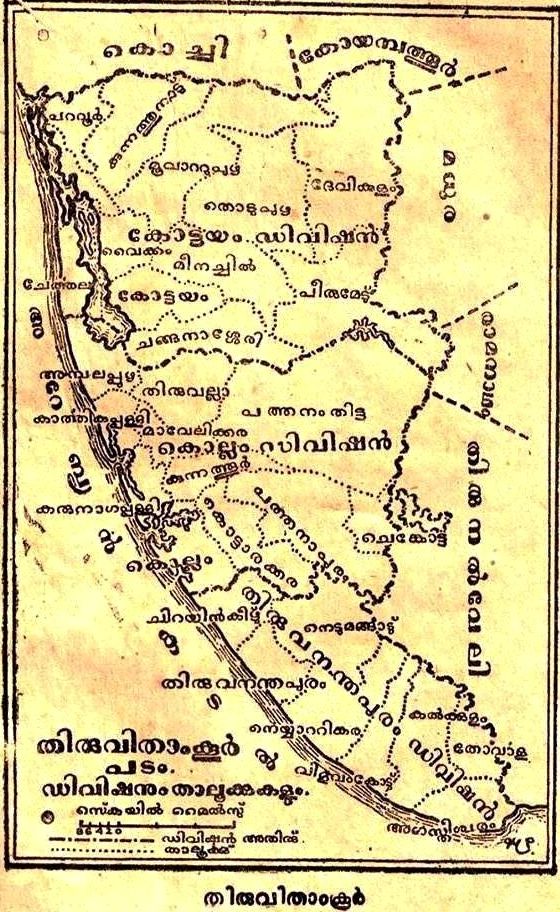
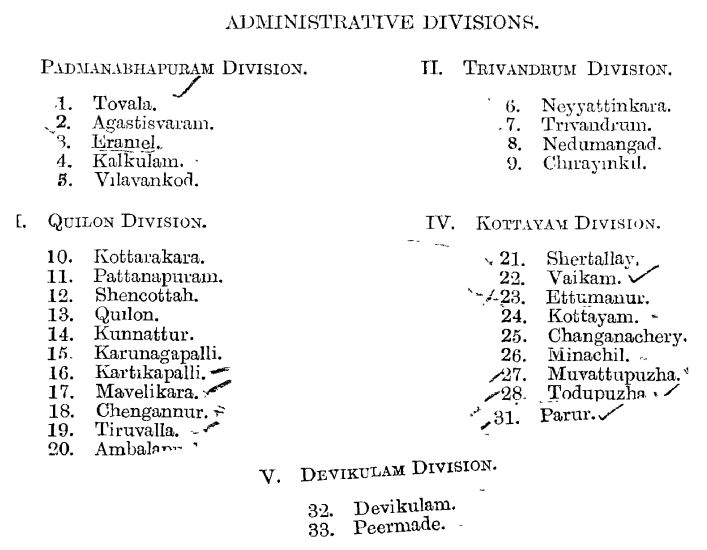
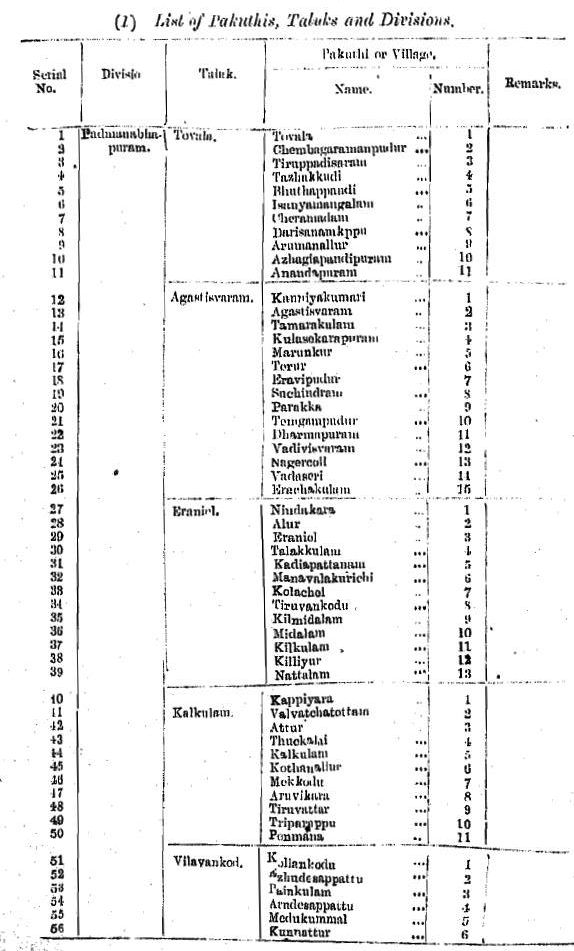
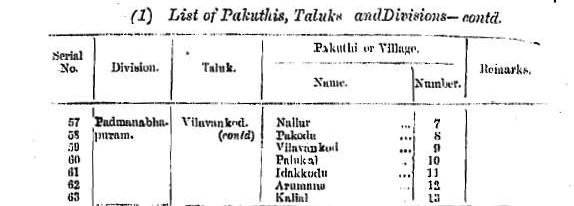
The Southern Division or Padmanabhapuram Division 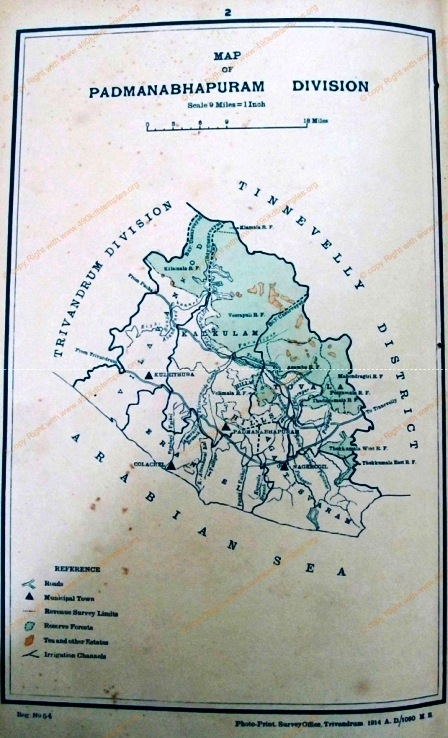 was the first administrative subdivisions of the princely state of Travancore. It covered the five taluks of Agastiswaram, Eraniel, Kalkulam, Thovalay and Vilavancode and was administered by a civil servant of rank Diwan Peishkar equivalent to a District Collector in British India. The Southern division was predominantly Tamil-speaking in contrast to the other three divisions except Devikulam where Malayalam was spoken. In 1920, the neighboring Trivandrum was also merged with the Southern division. In 1949, The headquarters of the Southern Division were at Padmanabhapuram.
The Trivandrum Division was the second administrative division of the princely state of Travancore.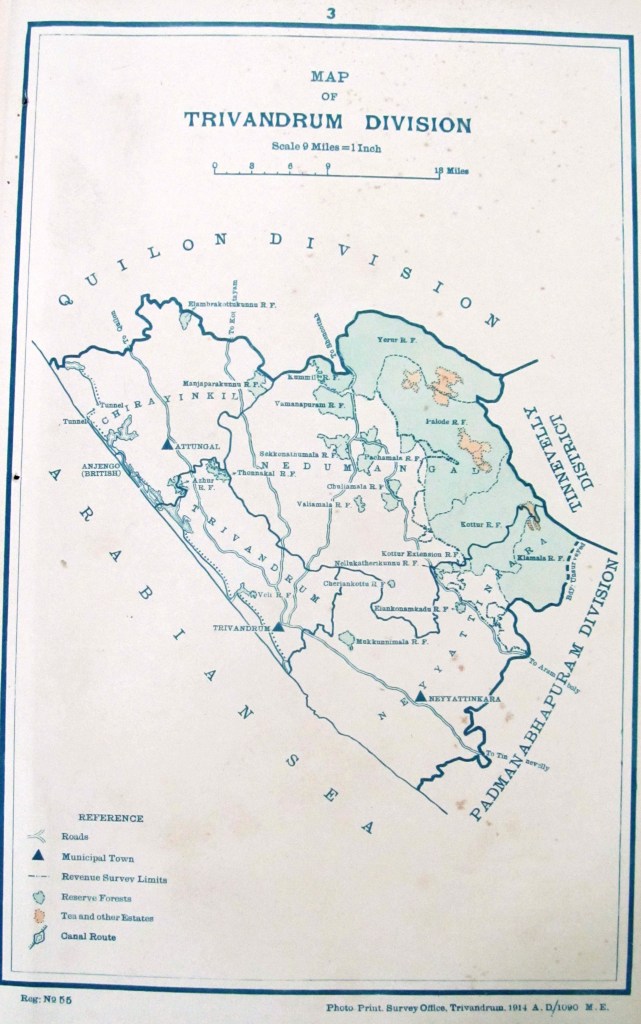 It was composed of eight taluks — Chirayinkir, Kottarakara, Nedumangadu, Neyyattankara, Pattanapuram, Shenkotta, North Trivandrum and South Trivandrum and was administered by a civil servant of rank Diwan Peishkar equivalent to a District Collector in British India. The administrative headquarters were at Trivandrum which was also the seat of the Travancore government and the residence of the Maharajah. In 1921, the eight taluks of Trivandrum were merged with Southern Division. Since then, the Southern Division was called Trivandrum Division.
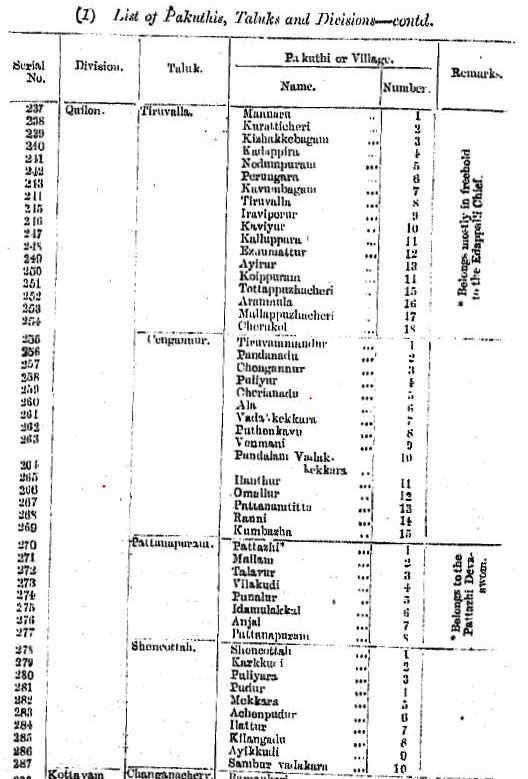
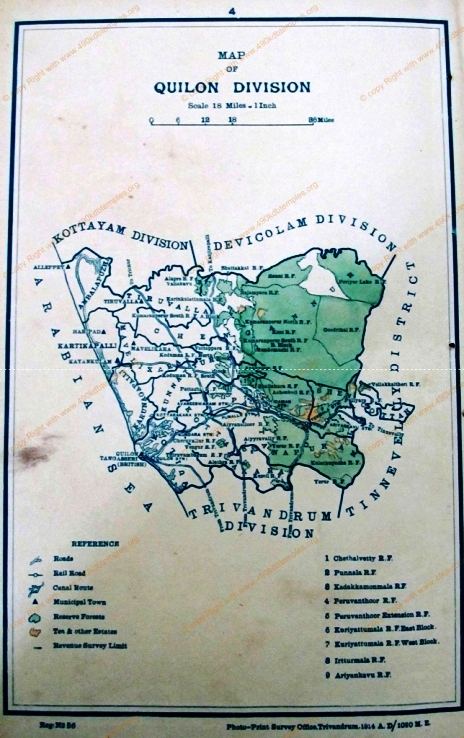 The Central Division or Quilon Division was third administrative subdivisions of the princely state of Travancore in what is now Kerala. It was administered by a civil servant of rank Diwan Peishkar equivalent to a District Collector in British India and consisted of eight taluks – Kottayam, Karthikapally, Changanacherry, Thiruvalla, Pathanamthitta, Ambalappuzha, Chengannur, Kunnathur, Karunagappalli, Adoor, Mavelikkara, Quilon and Kottarakara. The headquarters was the town of Quilon.
The Northern Division or Kottayam Division was the Fourth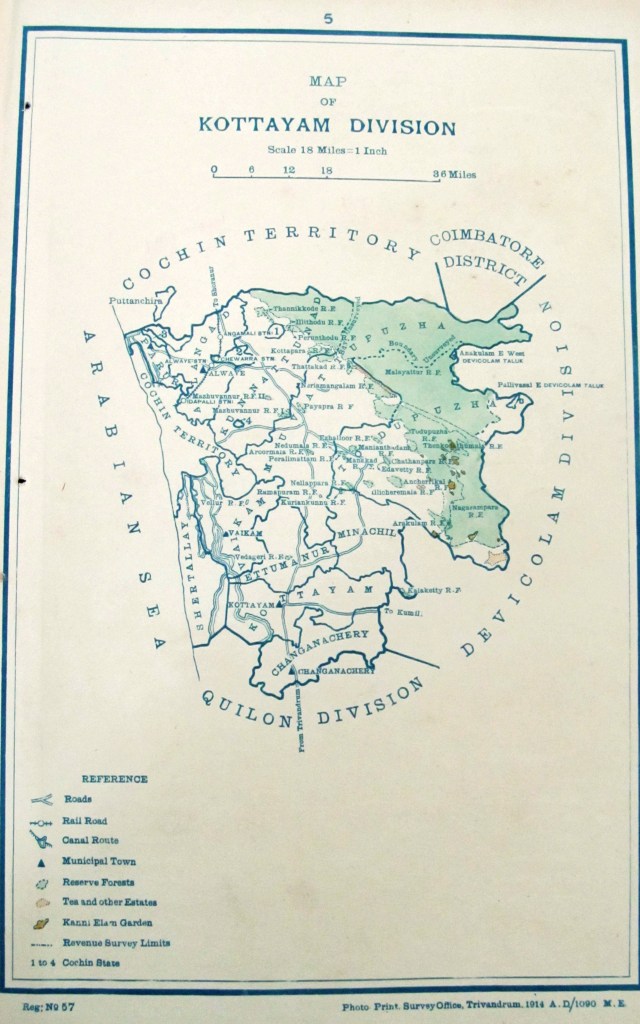 administrative subdivisions of the princely state of Travancore in British India. It was established in 1856 and covered parts of Kottayam, Ernakulam and Idukki. The division was administered by a Diwan Peishkar, a civil servant of rank equivalent to a District Collector. The division was sub-divided into the taluks of Alangadu, Kunnatunadu, Meenachil, Muvattupuzha (including Kothamangalam), Paravur, Thodupuzha and Vaikom. The headquarters of the division was first located at Cherthala, and later got shifted to Kottayam.
The High Range Division or Devikulam Division was the Fifth administrative subdivisions of the princely state of Travancore in British India. 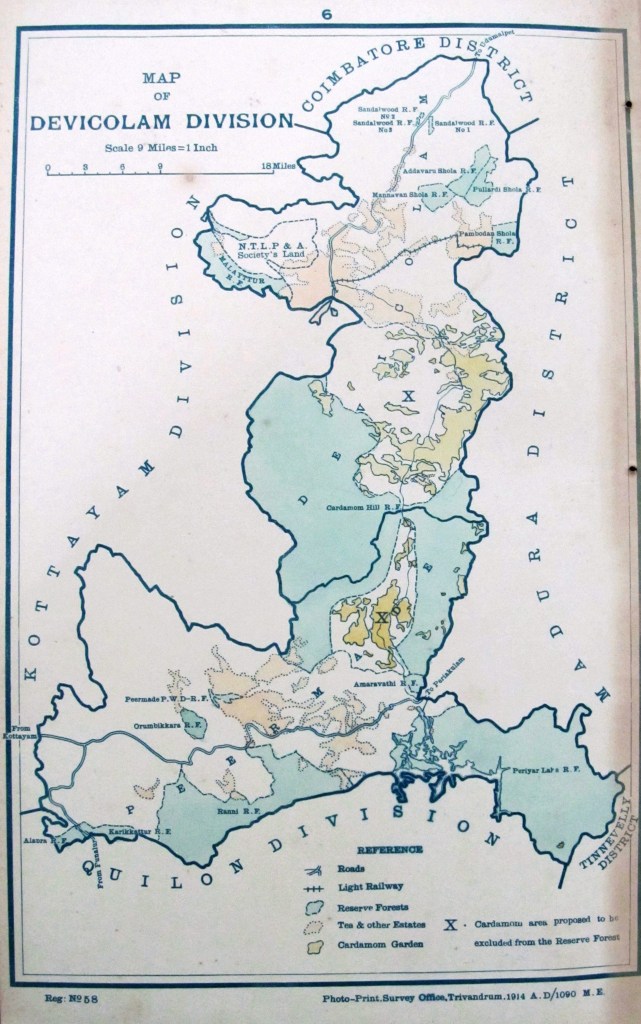 The division was administered by a Diwan Peishkar, a civil servant of rank equivalent to a District Collector. At the turn of the Century, there were four Revenue Divisions in Travancore State. Though not a revenue unit, Cardamom Hill was treated as a separate Division for magisterial, general, planning and census purposes.
 In 1909, a fifth Division in the State viz., Devikulam was newly carved out taking regions of adjoining Taluks of Kottayam Division and pruned Devikulam was renamed as High Range Division and mostly was predominantly Tamil-speaking. In the next decade, there were no changes in jurisdiction. However, during the period 1931-41, the High Range Division was amalgamated with the Northern Division. The division was sub-divided into the taluks of Devikulam and Perumadu. The headquarters of the division was first located at Devikulam. the following are the Pakuthis (villages) of Transferred territory of Travancore region in Madras state.
கன்னியாகுமரி மாவட்டத்தில் ஆறு குடைவரைக்கோயில்கள் உள்ளன.
அவை: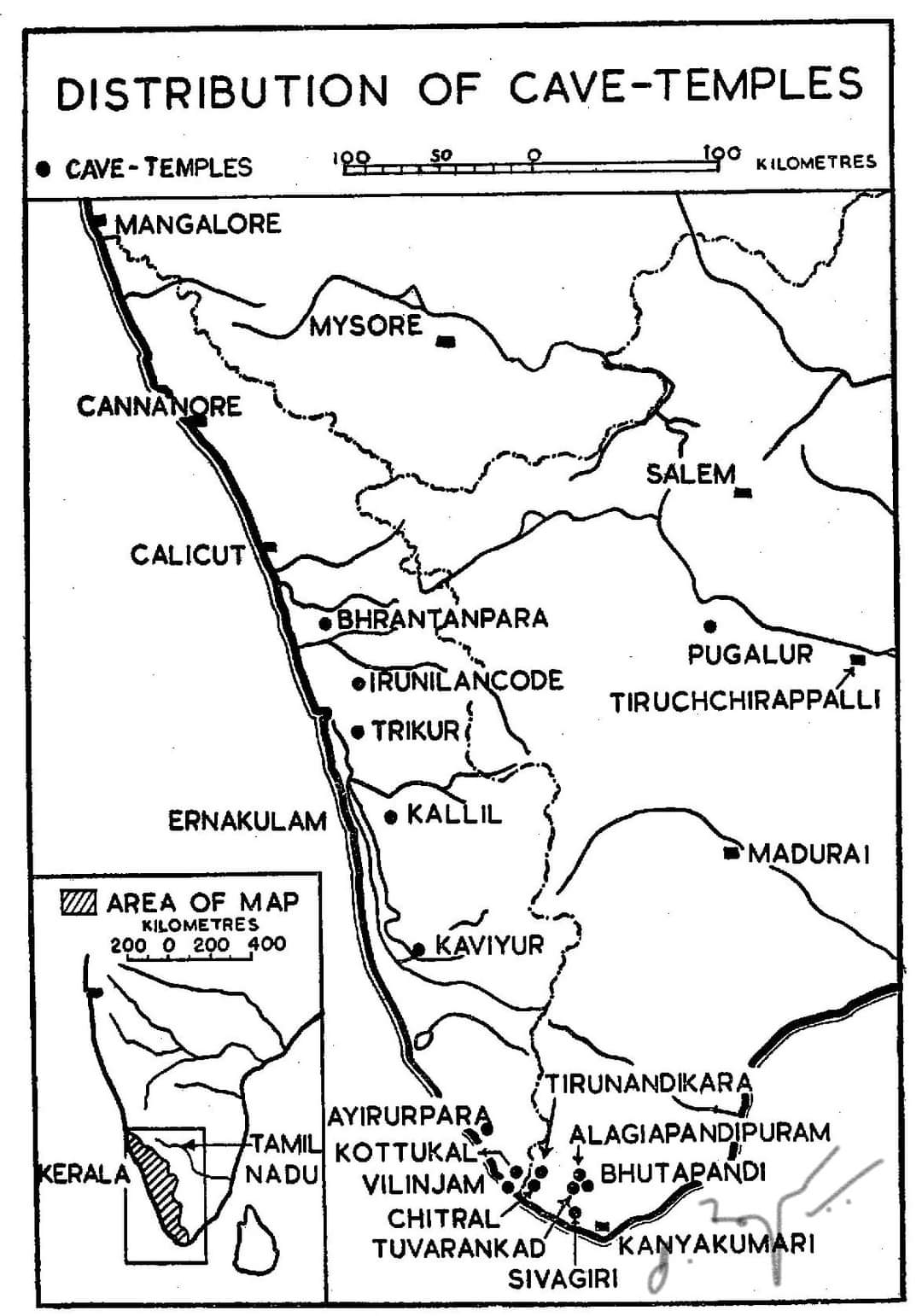
1) திருநந்திக்கரை
2)அழகியபாண்டிபுரம்(குரத்தியறை)
3)பூதப்பாண்டி
4)துவரங்காடு
5)சிவகிரி
6) சிதறால்.
இதில் அழகியபாண்டிபுரம் மட்டும் விஷ்ணுக்கோயில் பிற சிவன் கோயில்கள் ஆகும். இவை அனைத்தும் பாண்டியர்/ ஆய்க் காலத்தைச் சார்ந்தவை. இவற்றுடன் சிதரால் குகைக்கோயில் என சில அறிஞர்களால் கருதப்படுகிறது. பாண்டிநாடு என்பது விழிஞம் வரை இருந்திருக்கிறது. பாண்டிய/ஆய்மன்னர்களின் குடைவரைக்கோயில்கள் தென் கேரளாவில் காணப்படுகின்றன. கேரள, குமரிமாவட்டக் குடைவரைக்கோயில்கள் வரைபடம். – Sri. Ananda subramanian.
Formation of Travancore Devaswom Department
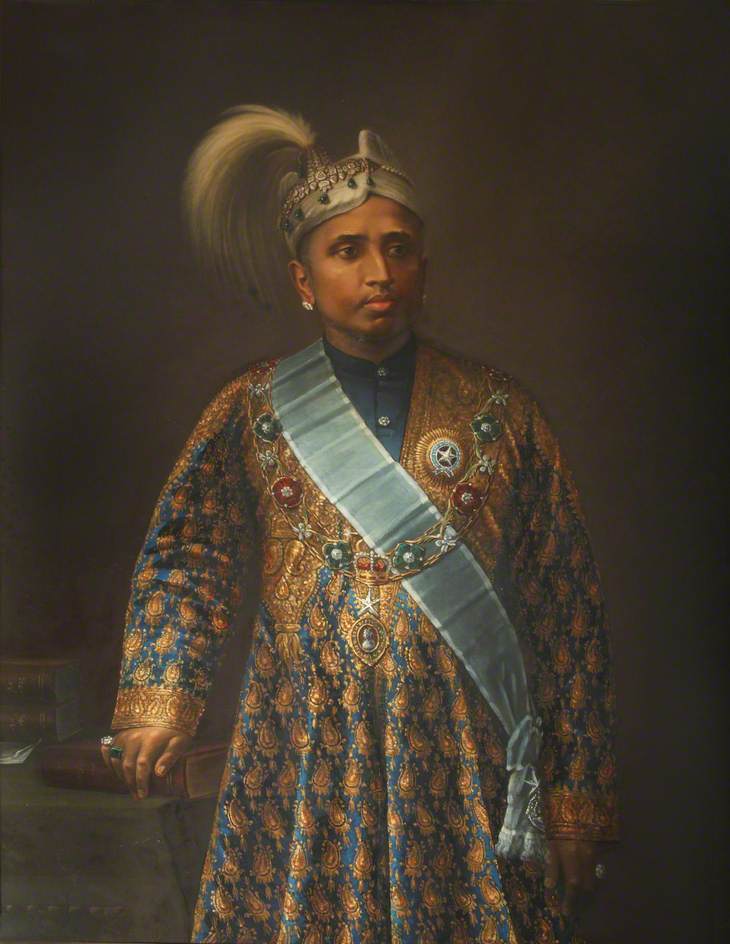
His Highness The Maharajah of Travancore Sree Padmanabhadasa Vanchipala Sree Moolam Thirunal Rama Varma VI was the ruling Maharajah of the Indian state of Travancore between 1885 and 1924, succeeding his uncle Maharajah Visakham Thirunal (1880–1885). In course of time the temples, particularly major temples, came to possess immense wealth contributed by devotees which included many rulers, administrators, and the public.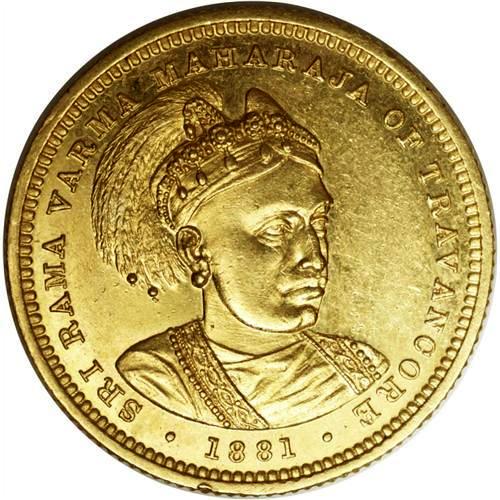 The managers of temples enacted rules and customs for temple administration, basically favourable to them and not for the benefit of temples. The state did not interfere in the internal management of temples. Temples were autonomous institutions in the middle Ages. Corruption and mismanagement prevailed in their administration. All these led rulers to assume the management of devaswoms by virtue of their inherent melkoima right as the spiritual head of the state.
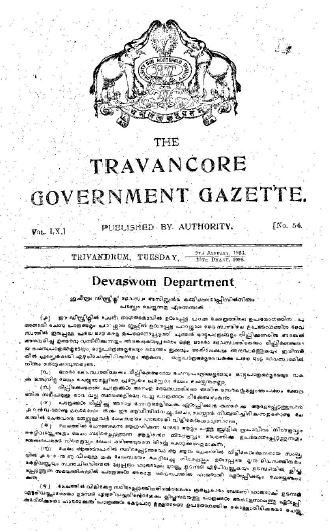 As mention earlier, The British took keen interest in the control of the administration of temples in the beginning of nineteenth century. In 1811 col. Munroe, the Diwan of Travancore, decided that the government would take over the administration of Hindu temples along with their properties. The assumption of temples by Munro is a major landmark in the history of temple administration. The major criticism leveled against Munor’s action was that he transferred income from temples for proselytism activities. Initially separate accounts were maintained for temples taken over by the Government. After a short span of period it became difficult to separate revenue of temple lands with Government lands.
 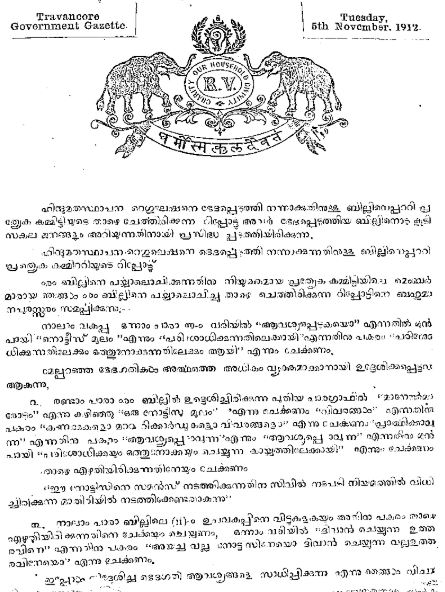 Thus temples lost their properties and income and they had to depend on the mercy of the Government for their survival. In course of time large number of private temples was taken over on the basis of Hindu Religious Endowment Regulation act of 1904 (Malayalam Era 1079). the regulation was passed laying down the procedure to be adopted for raking of the Devaswoms. which empowered the state to intervene in the affairs of temples whenever deemed necessary. The Travancore Devaswoms were maintained under the Travancore Land Revenue Department. The Cliff House was constructed during the monarchy days of Travancore as the official residence of Diwan Peshkar (Secretary of the state) in charge of Devaswom affairs.
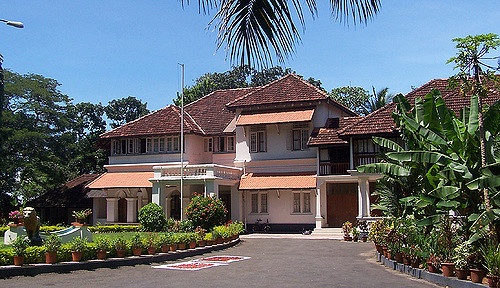 [Since the headquarters of Travancore Devaswom Office was commissioned at Nanthancode, it was decided to construct official residence of the Peshkar near to it. Post independence, the state PWD took over the house and surrounding land and refurnished as state Guest house. In 1956, it was reclassified as a ministerial residence].


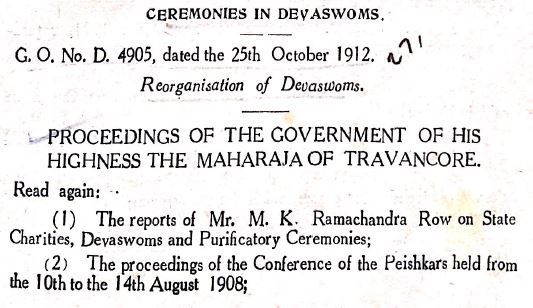
G. O. No. D. 4905, dated the 25th October 1912. A important PROCEEDINGS OF THE GOVERNMENT OF HIS HIGHNESS THE MAHARAJA OF TRAVANCORE on the Reorganisation of Devaswoms (Ceremonies in devaswoms) taking account of following :
- The reports of Mr. M. K. Ramachandra Row on State Charities, Devaswoms and Purificatory Ceremonies;
- The proceedings of the Conference of the Peishkars held from the 10th to the 14th August 1908;
- G. O. No. D. 1748, dated the 11th May 1909, passing final orders on the revision of the State Charities;
- Rules dated the 12th Mithunam 1055, regarding grants-in-aid for the construction and repair of private temples;
- G.O.No. D. 1103 dated the 6th Karkadagom 1083, abolishing Kudivellom (a gratuitous distribution of paddy) in the Suchindrum;
- G. O. No. D. 1949, dated the 7th Chingom 1084,
- G. O. No. D. 4073, dated the 4th Thulam 1085, abolishing adiyara for certain menial services in the Devaswoms;
- G. O. No. D. 4280, dated the 4th November 1909, empowering the Peishkars to get certain services in the Devaswoms performed by contractors;
- O. No. D. 1411, dated the 16th April 1911, enumerating the Devaswoms and Oottu employees who alone will come under the head of Establishment;
- G. O. No. D. 2013, dated the 23rd Edavom 1086, regarding the disposal of cattle received as nadavaravu in the Devaswoms;
- G. O. No. D. 2095, dated the 27th Edavom 1086,
- G.O.No. ID. 2879, dated the 12th Karkadagom 1086,
- G. O. No. D. 5067, dated the 4th October 1911, regarding appointment, pay, etc., of Santhicars in the Devaswoms;
- G. O. No. D. 5596, dated the I6th Vrischigom 1087,
-
G. O. No. D. 1864, dated the 27th Meenom 1087, abolishing adiyara for certain menial services in die Devaswoms;
- G, O. No. D. 4240, dated the 8th October 1911, regarding the use of elephants for processions in the Devaswoms;
- G. O. No. L R.& F. 3831, dated the 9th April 1912, directing the separation of Devaswom lands from Sirkar lands throughout the State; and
-
G. O. No. D. 3239, dated the 11th Mithunom 1087, empowering all Tahsildars to appoint, suspend, dismiss, etc., certain Devaswom employees.
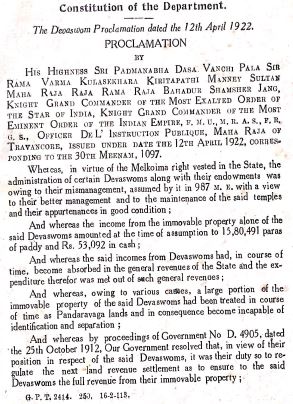
In 1919, For the purpose of Formation of Devaswom Department; The Travancore government appointed a high level Committee known as The Krishna Ayyangar Committee, after a series of analysis and studies by the Committee, which recommended to the formation of separate Devaswom Department under the direct supervision of the Government. The Royal Proclamation On 12th April 1922; The Travancore Devaswom Proclamation of 1922 (M.E.1097) was amendmented with immediate effect. On the basis of devaswom separation committee report separate Devaswom Department was created for temple management. Both in Cochin and Travancore the head of the Department – hitherto known as superintendent – 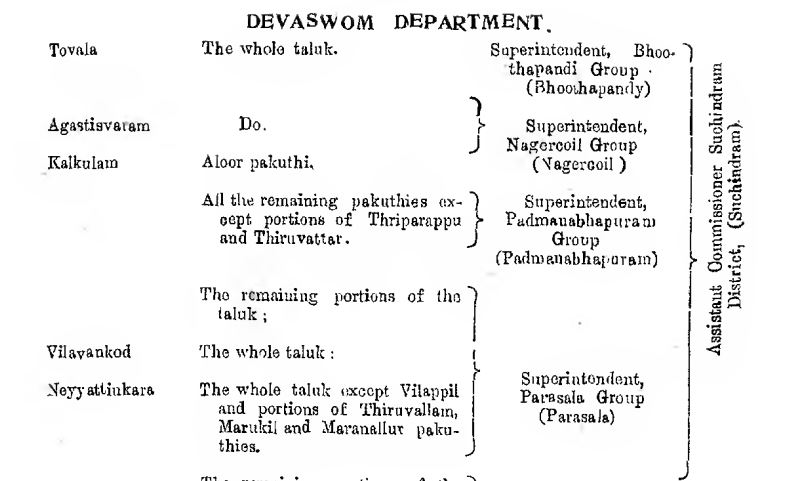 was re-designated as Commissioner on 1 November 1926. “After that so many Royal Proclamations were came for the better administration on Sirkar & Ooraanma Devaswoms as well as Brahmaswom.” – will be attached as pdf files.
 FUNCTIONING OF DEVASWOM DEPARTMENT
In pursuance of the devaswom proclamation dated 12th April 1922 (M.E.1097), the control of the sircar devaswoms which was till then vested with the land revenue department was taken away from that department and entrusted with the newly formed devaswom department.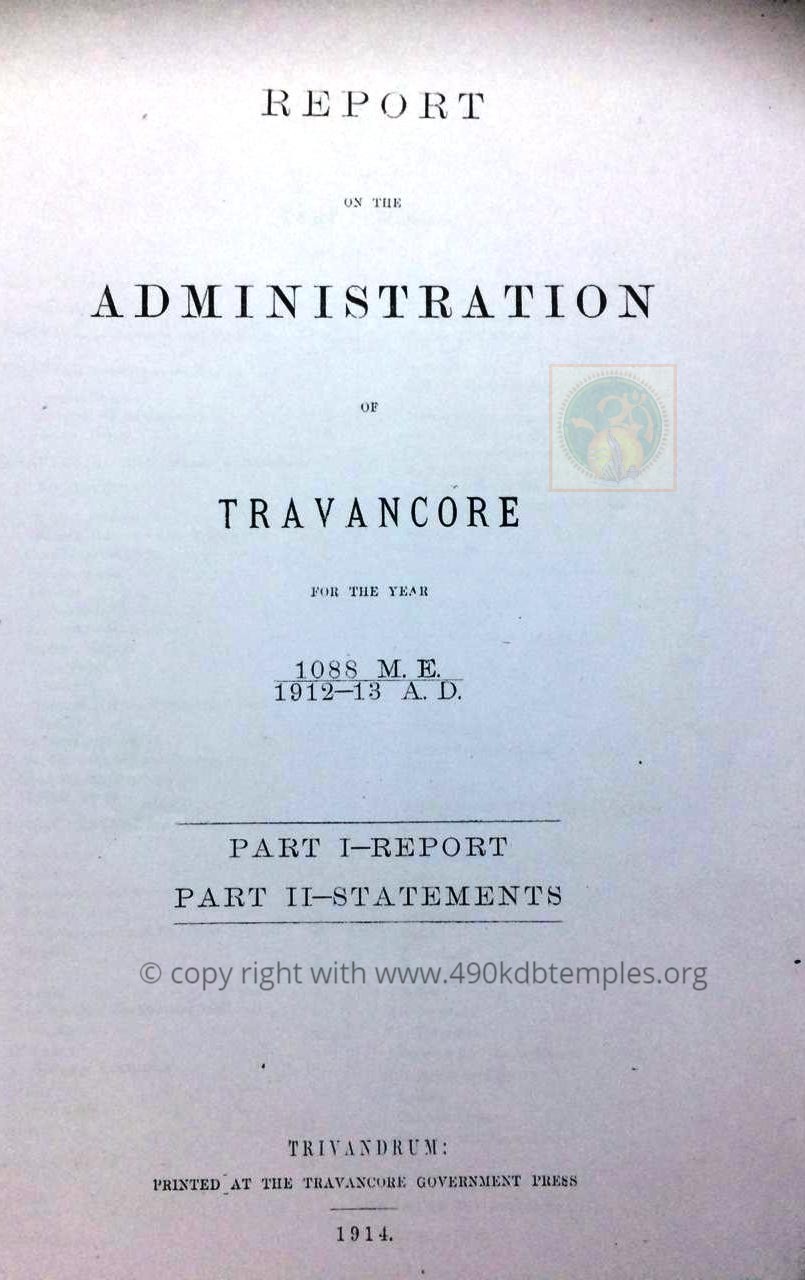 The devaswom department was given the power to administer not only the sircar devaswoms but also of japadakshina and uttus or charitable institutions. It did not include the Sree Padmanabhaswamy temple and agrasala in he Thiruvananthapuram and the personal deposit devaswoms (unincorporated devaswoms) and their properties situated in and outside the state (1. T.A.R, 1930-3l,p.223). Towards the close of 1925, the dewan was relieved of his duties and responsibilities in connection with the administration of devaswoms within the purview of the devaswom proclamation. The administration of devaswoms was directly entrusted to the commissioner who was made directly responsible to the sovereign except in certain important matters in respect of which the previous approval of the dewan had to be obtained (T.A.R., op.cit., p.232).
  But with effect from A.D 1930, this arrangement was cancelled under the command of the Maharaja and it was decided to place devaswom department under the dewan, like other department of the government, with devaswom commissioner under him as the head of the department. The bifurcation of devaswom administration from the department of land revenue and entrusting with devaswom department also gave way to the creation of a devaswom fund, allotted it to each temple according to the pathivu fixed for the respective temple (E.R.G.O No. Dis 335 of 22/G.B.). The formation of a separate devaswom department did not in any way affect the revenue administration of the devaswom lands. The proclamation of 1922 had made it clear that the devaswom lands were treated as pantarairaka lands and the collection of revenue from them was made by the government from time to time. On 31st January 1923, the government permitted the commissioner to lease out the lands belonging to unincorporated devaswom on kuthaka pattam for an indefinite period.
  The assistant commissioners of devaswom were also given power to do so, but only for a period not exceeding 12 years (G.O.R.Dis No.52 of 23/G.3, dated 31 January 1923).
  All devaswom vaka service lands were made pandaravaka property from 3rd June 1923. The entire land was divided as pandaravaka, brahmaswom and devaswom lands. The devaswom lands were exempted from taxation and such lands were known as irayilhi (tax-free). The government was entitled to the extra assessment or vilayartham of such lands (G.O.R. Dis No.461/23/G.B, dated 3 June 1923). On 1st November 1924, the superintendents of devaswom were empowered to grant kuttaka pattam leases for a period not exceeding three years.
  All departments including the devaswom department were given to lease out on kuttakappattam basis for all tarisu, thanathu chitta and purampokku lads under their control (G.O.no.1691 of 26/Revenue, dated 13 November 1926). On 30th July 1928, the government order to treat the tanatuchitta lands belonging to the devaswom department as sircar devaswom purampokku and the tax due there on to revenue department was treated as write off by the government (G.O.R. Dis No 277/28/G.B., dated 30 July 1928).
  The rules for the leases of personal deposit devaswom lands were amended so as to authorise the devaswom commissioner to sanction venpattam leases of such lands without an auction when it was found feasible and desirable (E.R.G.O.Djs No. 814/36/Dev., dated 5 December 1936). This amendment was made by the government on the recommendation of the devaswom commissioner (G.O.ROC. No.7238/36, dated 17 September 1936). With the separation of devaswoms from land revenue department and the creation of a separate devaswom department which began functioning in August 1922, drastic changes took place in the administrative machinery of the devaswoms, particularly on the establishment wing.
  The devaswom commissioner became the head of the department (Proceedings of S.M.P.A of Travancore, 1923, p.19). He was the adviser to the government in matters relating to devaswom and supervised and controlled the working of subordinate officers of devaswom department (Government Order R.O.C.No.206 of 2l/G.B, dated 2 September 1922).
  He was directly responsible to the government for the proper management and control of the devaswom and charitable institutions. Below him, the devaswom assistant commissioners and superintendents were appointed for the proper and effective administration of the temples. The network of devaswom department itself was divided into two categories of the service namely establishment service and religious service. The establishment service was meant for management of temples and religious service was for the different works inside the temple such as the ordinary daily service called nithyanithaam, extraordinary ceremonies known as masavisesham, attavisesham and ulsavams. Under the uranma system no clear-cut distinction between staff of the two services could be identified. It was because the uranmakkar who lived on temple revenues themselves undertook one or other the of these services on receipt of fixed income (V. Nagam Aiya, Report on the Census of Travancore, 1891. Vol.1, p.333) However,
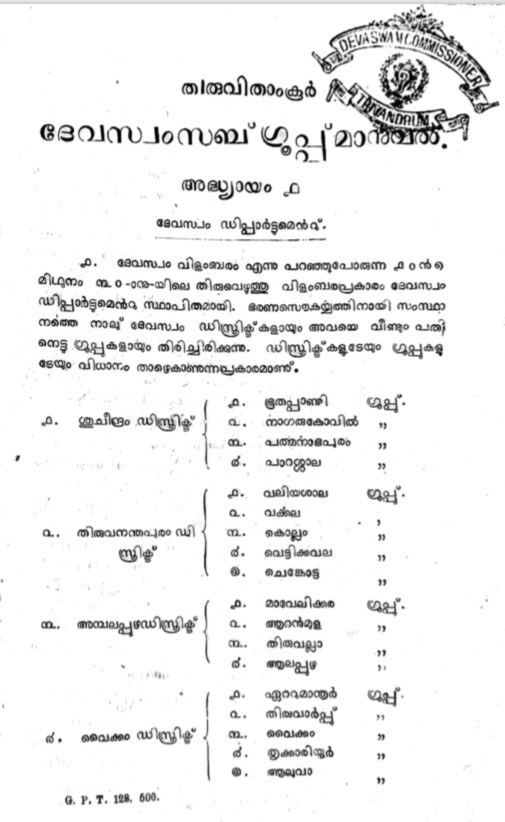
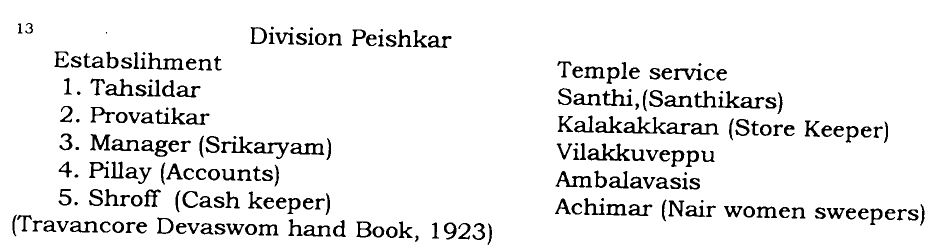
 12 officers belonging to both categories of services were well known; such as uranmakkar, melkoyma, koyma, melsamudayam, samudayam, akattemanusym, puratemanuayam, pattali, kanakkam, masapati, thantri (santhi), purattesanthi (kalakam),. But in the later stage the devaswom administration was divided into devaswom establishment servants and temple servants. In the establishment wing, there were five categories of staff and under religious administrative side also five categories staff functioned below the authority of division peishkar. (Travancore Devaswom hand Book, 1923) The officers and office bearers of the religious services were left undisturbed at the initial stage of the assumption of devaswoms. Yet later two types of employees came into existence. Additional staff was appointed for its efficient administration (Legislative File No.D.Dis. 276/1946, dated 18 July 1946, p.3). For administrative convenience the state was divided into four devaswom districts namely Suchidrum, Trivandrum, Ambalapuzha and Vaikam.
  The four districts were again subdivided into eighteen groups. Each of the four district was placed in charge of an assistant commissioner and each of the eighteen groups was to be administered by a superintendent (Legislature File No. D.Dis. 138/1933, Vol.VIII, 7 August 1934, p.20). The office of the devaswom commissioner assistant devaswom commissioner and superintendents had their own separate establishment of administrative staff.
  In view of importance and large-scale expenditure of devaswoms at Cape Comorin, Suchindrum, Thiruvattar, Haripat, Ambalapuzha, Vaikom and Ettumanoor, resident managers were appointed in each of these temples. In addition to this, the devaswom department had to carry on maramath works such as construction and repairs of temple buildings and their appurtenances. Technically qualified persons were appointed for that purpose. Aminadars were appointed and one each was attached to the offices of the assistant devaswom commissioners (Ibid.). Though the separation of devaswom was effected from land revenue department, the properties mixed with government were not restored to the devaswom department. Hence the government gave an annual contribution of 16 lakhs of rupees towards the devaswoms fund as compensation (Devaswom, File No. D.Dis. 611/.1932, dated 10 November 1932, p.1. 18 T.K. Velu Pillai, op.cit, vol.1, p.253).
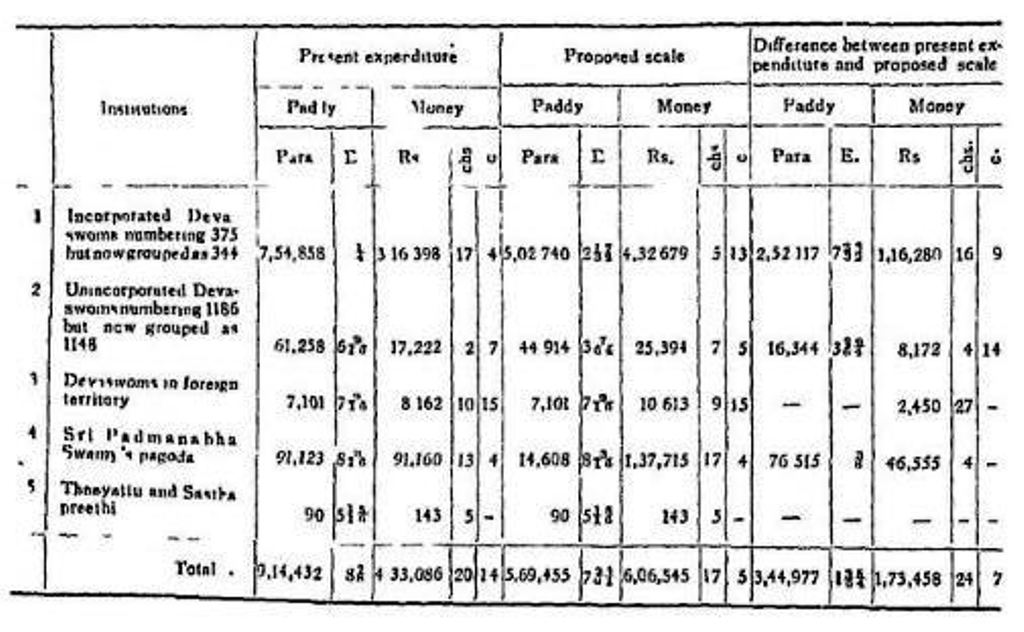
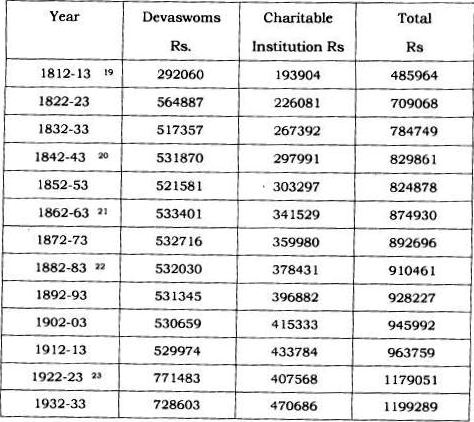
 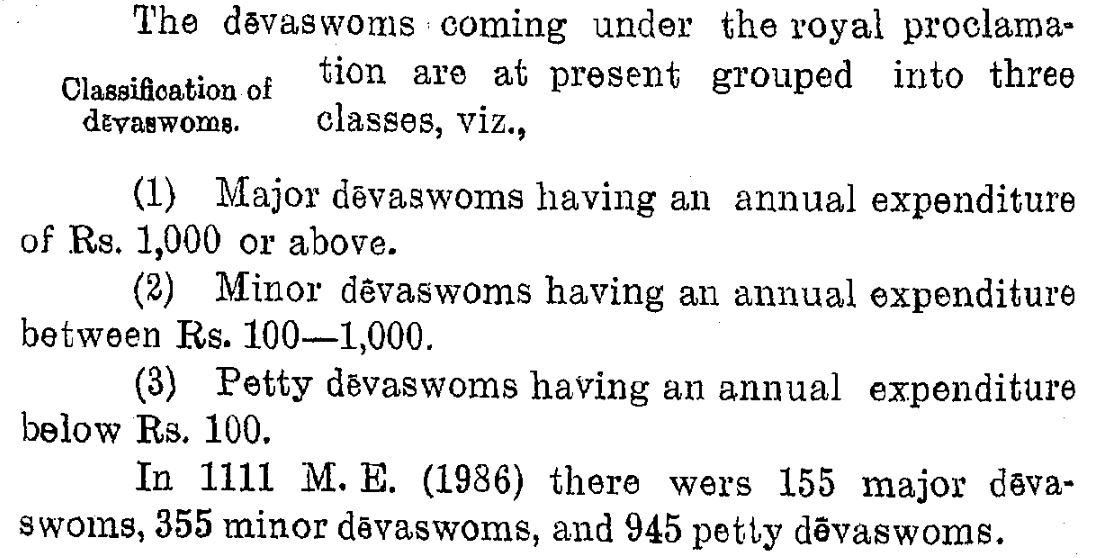 As the devaswom were further classified into major, minor and petty on the basis of their annual expenditure, the government allocated each devaswom a share from the devaswom fund. In 1936, under this classification there were 155 major, 355 minor and 945 petty devaswoms in Travancore. The major devaswoms were authorized to spend an expenditure of Rs. 1000/- or more, minor devaswoms between Rs. 100/- and 1000/- and petty devaswoms below Rs. 100/-. The table showing the expenditure to devaswoms and other charitable institutions from 1812 to 1932 (every ten years) gives a picture of gradual increase from year to year. (Source: H.C.V.R., Tiratt No.22 of 987 M.E(A.D.1812) / Political Consultations, vol.349, A.D 1842, FF. 167-168. / Political Consultations vol. 566, A.D.1556, F.54. / T.A.R. A.D 1922, p.13. / Ibid., p.19)
  Pathivu in respect of two major dévaswoms viz, the Aralvaimozhi devaswom in the Suchindram district and Kaviyoor devaswom in the Ambalapuzha district were revised during the year, involving an additional annual expenditure of Rs. 11116/-. In 1931 proposals for the revision of pathivus of two other devaswoms viz. Sambavarvadakarai and kaduthuruthy were under scrutiny when the year closed (T.A.R., 1930-31, pp.233-238). The renovation and reconstruction of temples were being systematically carried out every year. It was done according to an approved scheme from funds specially allotted for the purpose and the work was entrusted to the maramat department. A sum of Rs. 280000/- had been allotted for the year 1930-31.
  Petty construction and repair works to temples were carried out by the officers of the devaswom department. Another item of expenditure incurred by the devaswom department was for the conduct of several extraordinary ceremonies like astabandha kalasam, dravya kalasam, balabimba pratishta, naveekarana kalasam (Proceedings of the Government of Travancore, op.cit,p. 12). Every year some of the extra-ordinary ceremonies were conducted in certain temples.
 In Travancore the personal deposit devaswoms were unincorporated religious institutions which came under the government management and control at different times and under varying circumstances (T.K.Velu Pillai, The Travancore State manual, vol.1, p.559). The accounts in respect of them were not merged in the general devaswom accounts but maintained separately and independently. They had personal deposit accounts with the government treasuries. The total number of these institutions were fifty seven of which twelve were in the Suchindrum district, fourteen in the Trivandrum district, four in the Ambalapuzha district, twenty five in the Vaikam district and the remaining two under the direct control of the devaswom commissioner. In 1930 -31, the government had spent about Rs.58000/- for various temples when the management of such temples were taken over by the government. In Perumanam devaswom, uchapuja service was conducted by the Travancore government by virtue of the right of take over of the management of that temple.
 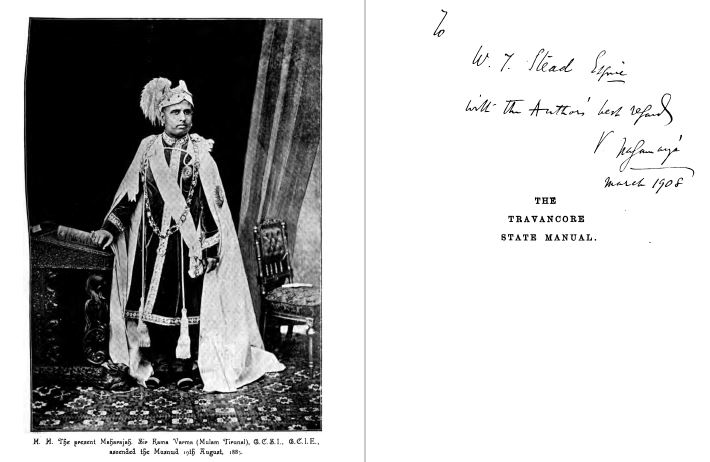 The renovation work of the Mannadi temple in the Pattazhi devaswom for which an estimate for Rs.7600/- was sanctioned. The renovation of temple tank and repair to the vilakkumadam attached to Turavur devaswom was completed. The surplus funds of these devaswoms aggregated to Rs. 4.5 lakhs at the close of the year (T.A.R., 1930-31, p.236). The sree pandaravaka and agrasala were outside the control of the devaswom department. They were directly under the supervision of the government. The former related to the Sri Padmanabhaswamy temple. The agrasala attached to this temple dealt with daily feeding of the brahmins. The expenditure under these two items was not included in the expenditure controlled by the devaswom department headed by devaswom commissioner. The devaswom department not only concentrated in the general administration, devaswom land revenue etc but also paid attention in the management of income and expenditure of the devaswoms.
  It also worked for social and cultural causes and for the development of the society. Soon after the formation of a separate devaswom department, the government felt the need for codifying certain devaswom rules, proceedings, statues and general reports. The devaswom commissioner was assigned to take up the work. He prepared a devaswom handbook, which was published in 1923 (Legislature File no. D.Dis. 138/33, vol.VIII, dated 7 August 1934, p.3). Yet the inversed volume of work of the devaswoms necessitated the modification of the devaswom handbook. So the government took up the task of compilation of a well-planned and comprehensive manual for the department. In 1930, a full time officer with sufficient experience was deputed to take up this work with the assistance of two clerks and a typist (Legislature File No. D.Dis 138/1933, vol.111, dated 7 August 1934, p.3). The work was completed in 1932 and it served as systematic and effective guide to the subordinates of the department and as a text book for the devaswoms. In 1938, the printing of volume II of the devaswom manual was taken up and the work made good progress during the year.
 Large-scale devaswom maps of the state were printed and supplied to the assistant commissioners as a guide for their inspection work (T.A.R., 1937-38, p.222). In 1922, a special officer was appointed for the verification of thiruvabharanams (Legislature File No. D.Dis.138/1933, op-cit., p.3). The verification, custody and utilization of thiruvabharanams and other valuables in temples are some of the important items of work relating to devaswoms. Later the number of special officers were increased to five, one in each for the four devaswom districts and also one already sanctioned for verification work in the major devaswoms containing valuables for which the value exceeded above of 10000/- In 1937-38 an officer and two accounts were newly appointed in the office of the devaswom commissioner to deal with and expedite disposal of reports of the thiruvabharanam special officer.
  The following table shows that the work made good progress after various steps had been taken for the effective functioning of the concerned department valuables (T.A.R., 1937-1938, p.219). To keep the devaswoms in the proper perspective, the authorities inspected them frequently. The commissioner inspected the offices of assistant commissioners and verified the records and accounts (T.A.R., 1924-1925, p.90). The assistant commissioners inspected the records and accounts of the superintendents office and sent their reports to the commissioners. The superintendents in turn inspected minor and major devaswoms within their jurisdiction and sent their inspection reports to the assistant commissioners(Ibid). The inspection notes were prepared in Malayalam for the convenience of rectifying the mistakes without delay. Therefore, the inspection helped to minimise the irregularities existing in the devaswoms.
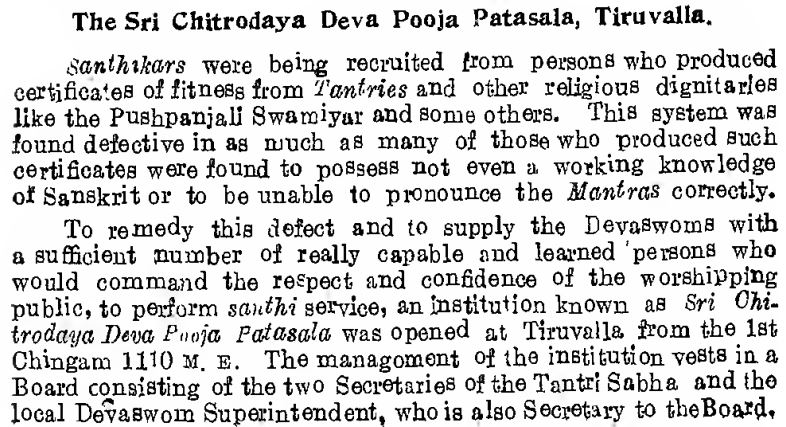
 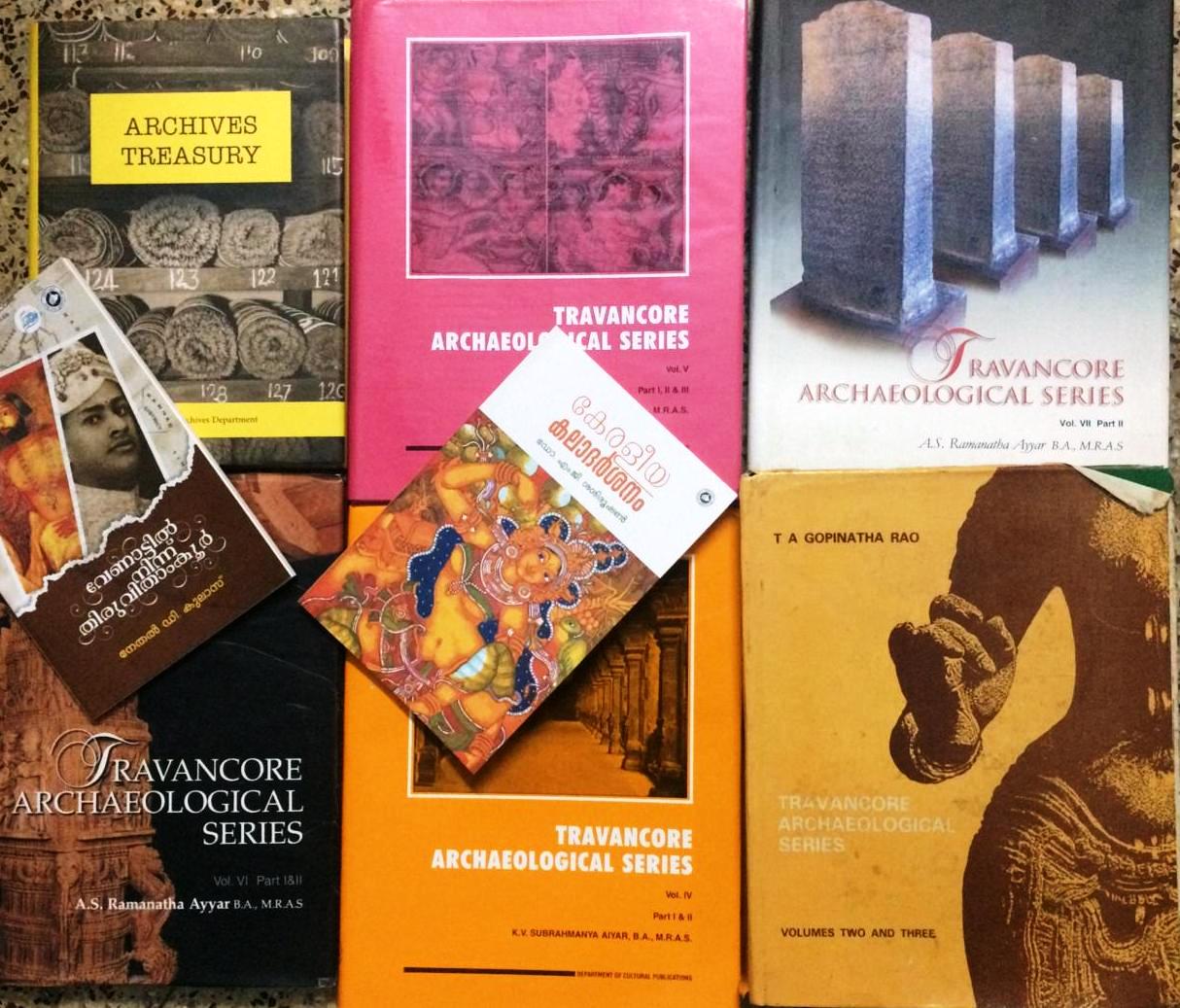 The devaswom department took steps for training the santhikars in order to perform pujas and related rites regularly in the temples as per the customs and usage (T.A.S., vol.IV, p.29). The daily pujas like abhishekam, navakom, nivedyam, sribell, namaskaram etc could be done properly only with proper training. Similarly nirmalyam, usha pooja, uchapuja, pantheeradi pooja athazha pooja, deeparadhana etc. could be performed only on the basis of agamie principles and mantra-thantra vidhikal (Proceedings of the Maharaja of Travancore No.D. 1748,dated 11th May 1909).
 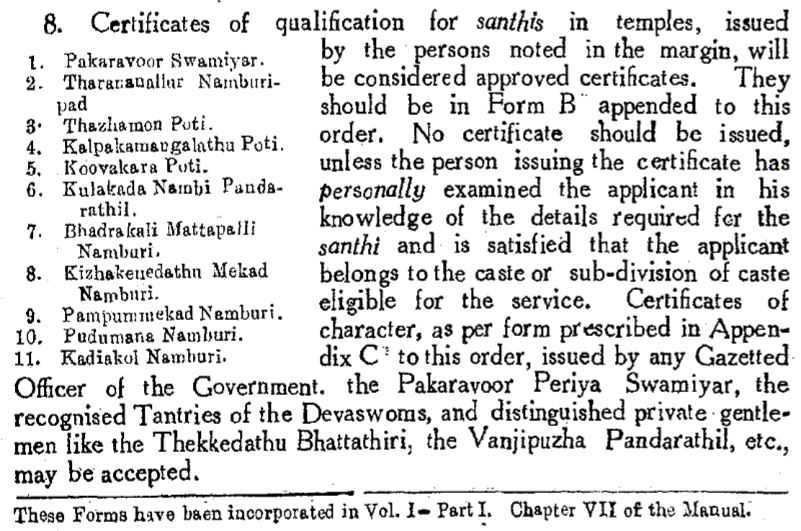 The melsanthi, kizhsanthi and thrantri (T.A.S., vol IV., p.29-30). were the members of the priestly class having the sole responsibility for conducting the pujas and rituals as per the principles laid down in sastras. Specific qualifications were also prescribed for the santhikars. They produced certificates from Thantries and Swamiyars at the time of recruitment (Travancore Devaswom Mauals & Devaswom, File No. D.Dis.5607/1911 dated 4 October 1911, p.i).
 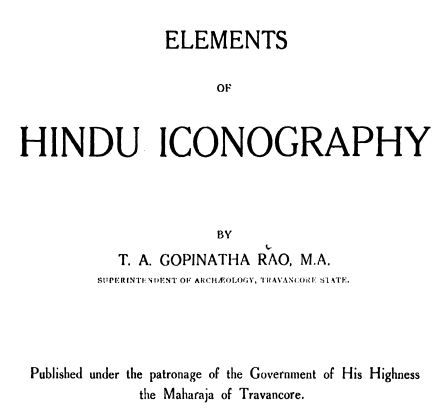 But these certificate holders had neither the knowledge of sanskrit nor able to pronounce even the mantras correctly. Hence Sree Moolam Popular Assembly and local press repeatedly urged the importance of appointing qualified men to conduct puja services as prescribed by the sastras. The assistant devaswom commissioners also discussed this matter at a special conference held for this purpose and a detailed scheme was prepared and submitted to government for approval. Consequently, Sree Chitrodaya Devapooja Paatasaala was started to impart proper training to the santhikars (Legislature File No. R.Dis.218/1935, dated 12 October 1935). A separate syllabus was also prepared for santhi School. The secretary of the tantric sabha supervised the teaching and conducted examination for the patasala (Report of the Devaswom Department for the year, 1932-33, 1934, pp. 12-13).
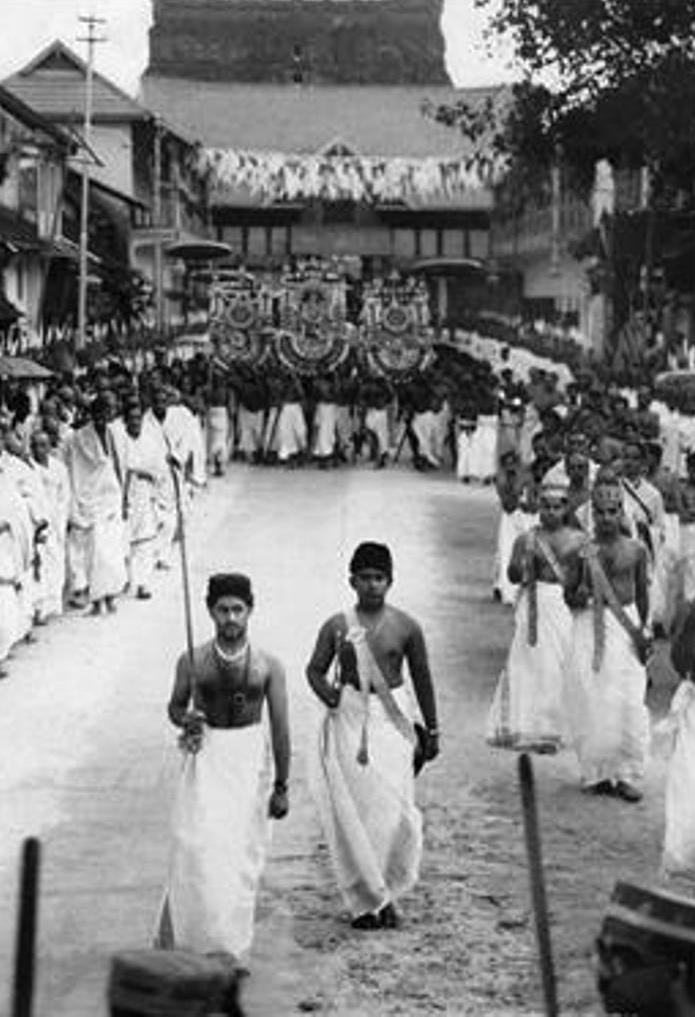 In 1932, the government increased the pay of santhikars who were employed to conduct pujas in minor and petty devaswoms (T.A.R., 1928- 1929, p.240). In 1935, nambudiri boys were selected to study vedic dharma and they were appointed in the religious services of the state (General, File No.R.Dis. 1793/1935, dated 8 November 1935). In Vedaantha Paadasaala, there are four Topics (26 types of Vedas , 36 types of Poojas, 7 types of Arts & 8 Sanskrits Language Grandhas) the students must be practiced. details are as follows..
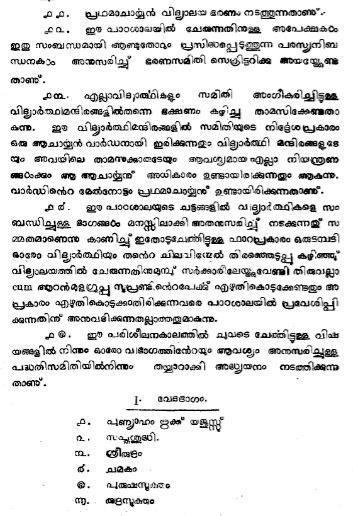
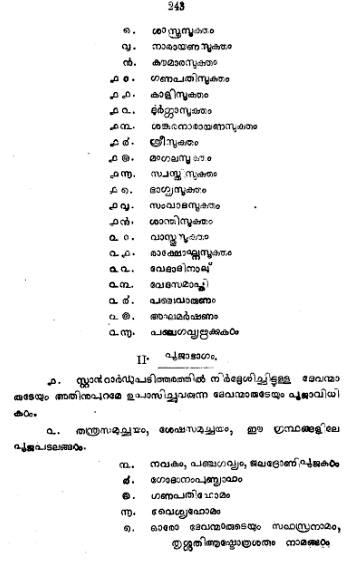
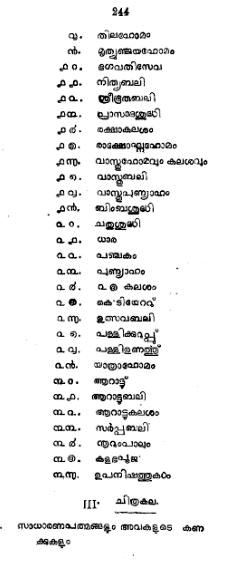
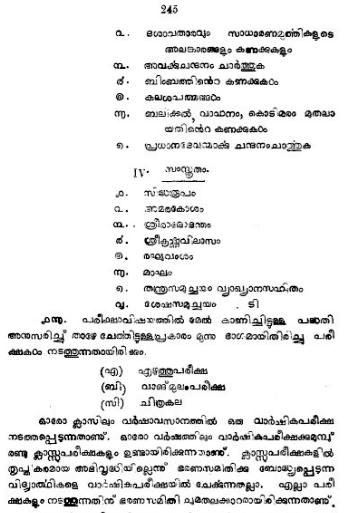
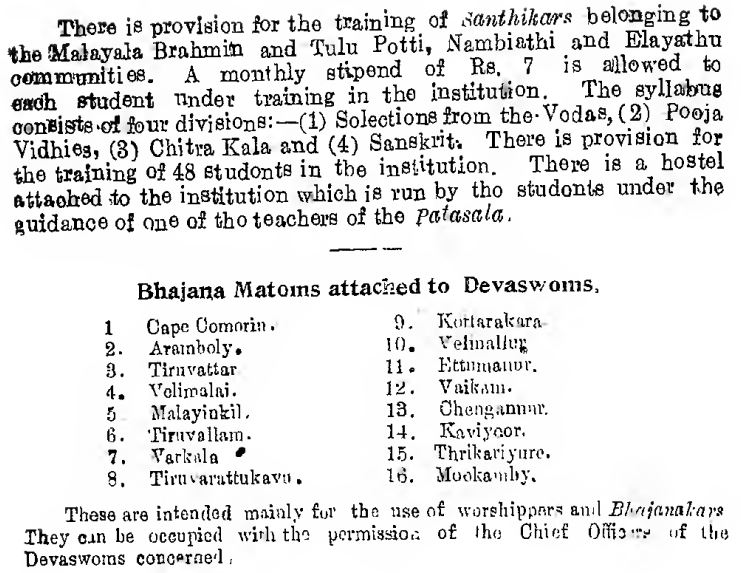
Higher salaries were provided to the employees of the devaswom department with a view to achieve greater efficiency in administration. 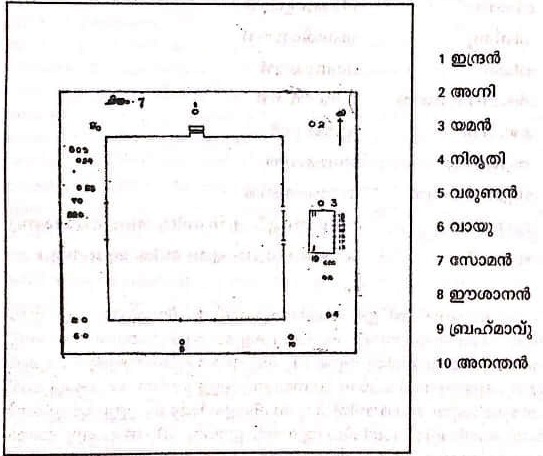 The standardisation of paditharam for purification ceremonies in temples was discussed and passed at a conference in which, Thirteen Tantries were present on invitation. The paditharams were intended to be applied to the temples governed by the malaya thantram as opposed to the paradesa tantram and fourteen devas (deities) common on the west coast (TAR., 1930-1931,p.232). For the purpose of prescribing paditharams, the devaswoms were classified into five grades. The several rites that have to be performed in the course of purificatory ceremonies in the temples were also classified.
  The articles to be used in each rite as well as dakshina to be paid therefor was also fixed (T.A.R., op.cit., p.233). These proposals were approved in general by tantries. In Travancore the temple was a multifaceted institution. Besides pujas and festivals, periodical religious discourses and harikatha were conducted in them (T.A.R., 1925-1926, p.159). A separate fund was allotted for religious discourses during annual and occasional ceremonies in temples. The public in general and the Hindus in particular appreciated these discourses and thus it became an integral part of certain important devaswoms. Holding of religious conventions in important centres like Neyyattinkara, Trivandrum, Kollam, Alleppey and Kottayam contributed much towards the religious awakening among Hindus (T.A.R., 1932-1933, p.218).
 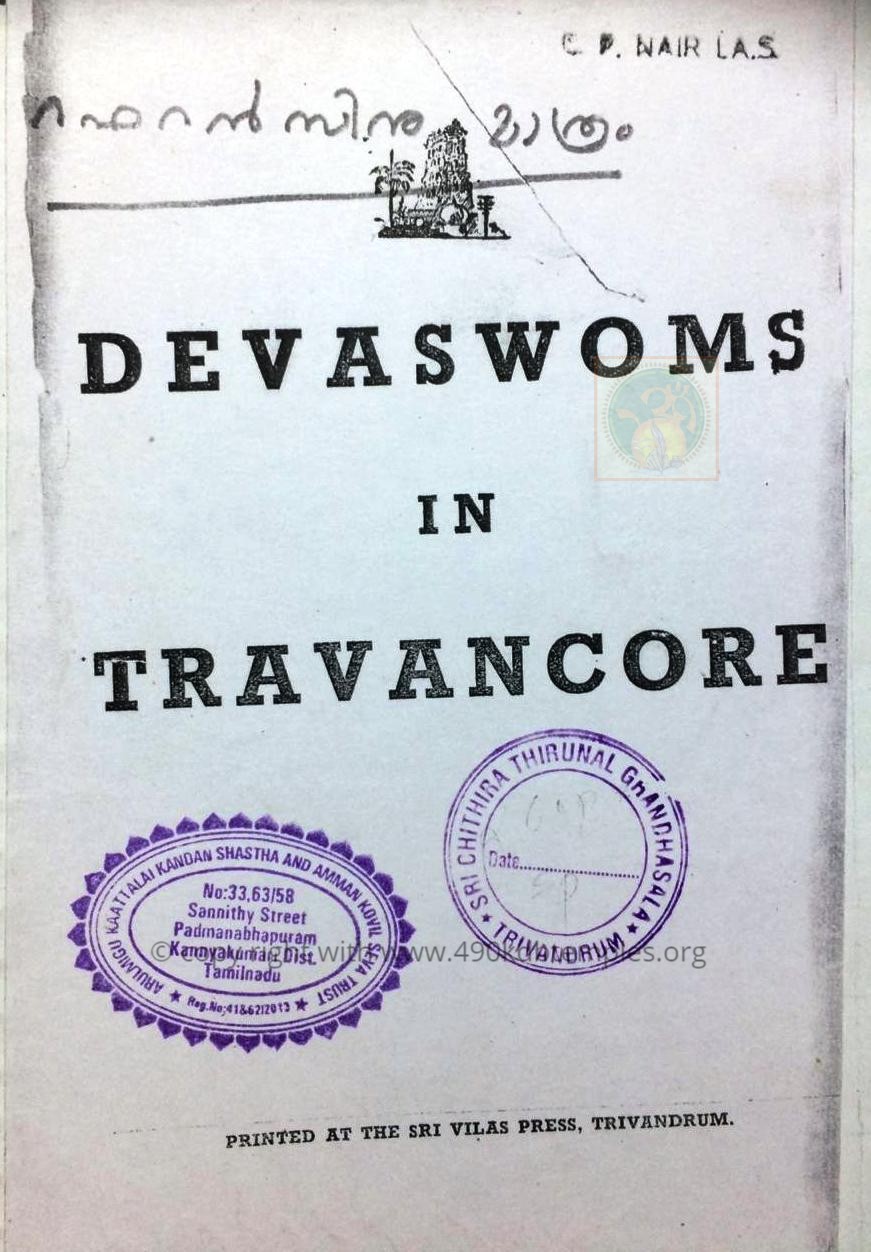 Separate budget was sanctioned to purchase books to constitute a religious library was also a landmark step taken towards the development of cultural side of Hinduism. The Sri Chitra Central Hindu Religious Library which was opened at Trivandrum in 1112 M.E (A.D. 1937) carried on very many activities. Great facilities were afforded to the reading public by the addition of 843 religious books newly purchased for the library over and above the 1525 books which it already possessed at the beginning of the year. Fifteen magazines and journals were also subscribed for (T.A.R, 1937-1938, p.220).
 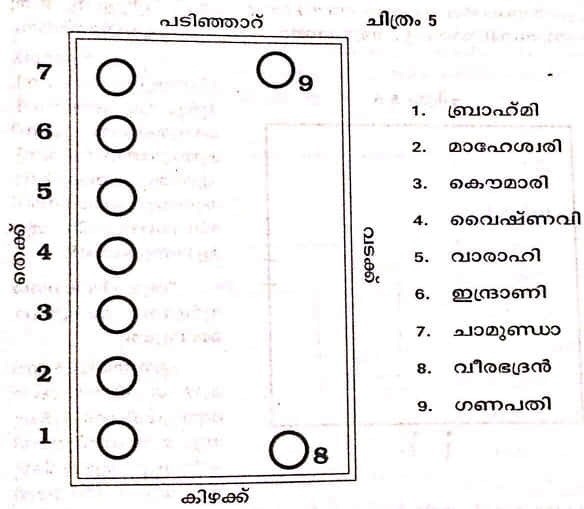 A library and lecture hail at Nagercoil was established in Suchindrum division. The opening of two new religious libraries one at Thattarambalam and the other at Kottayam was sanctioned by government during 1944 (T.A.R., 1944-1945, p.167). A large number of religious discourses were held in the library halls. The public evinced great enthusiasm and keen interest and they zealously co-operated in the endeavours of the department by making free gifts of books to the library and sometimes giving religious discourses without payment. An honorary curator was appointed for the library,
 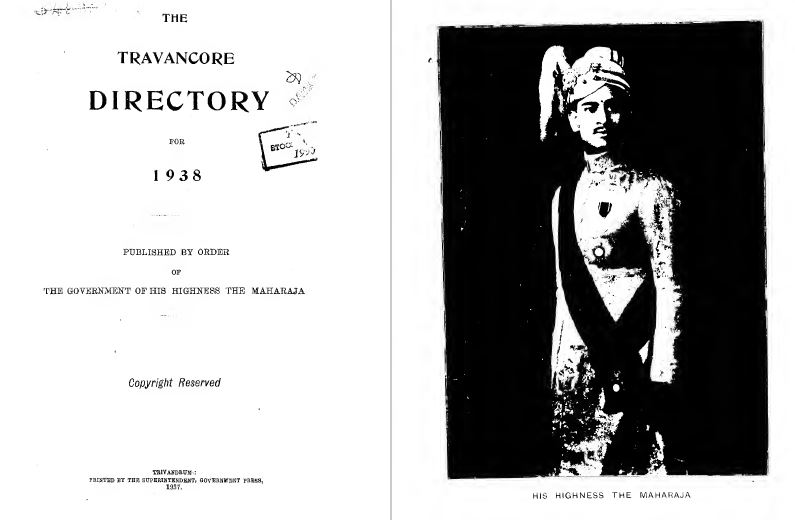 he compiled a book entitled Geetha Samgraha, the first part of which was published during the year 1938 (T.A.R., op.cit., p.220). The institution might well be said to have become a center of religious learning at the capital. In addition to the Sri Chitrodaya Deva Pooja Patasala, the veda patasala, at Trivandrum continued to work satisfactorily with seventy four pupils and two aided vedic schools at Thiruperunthurai and Mankombu were stopped since the institutions were not working properly. The Thevara Patasala at Suchindrum for teaching the recitation of devotional songs, was also established (Ibid).
 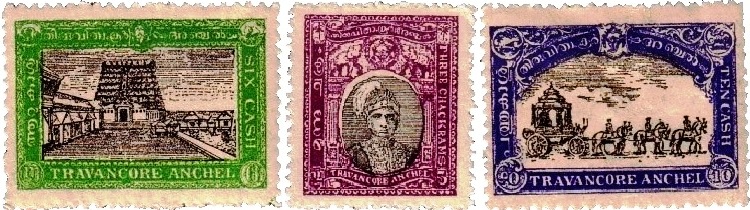 To encourage the indigenous arts like kathakali, chakkiyar kooth etc the experts were invited to perform these arts in large devaswoms (Legislature, File No. D.Dis. 138/1933, Vol.VIII, dated 7 August 1934, p.11). Thus temples in Travancore served as transmitting stations of knowledge which by and large awakened the Hindu society of the state.
  In 1933, the devaswom department organised bhajana parties from, among the worshippers in temples for singing devotional songs during puja hours (Legislature, File No. D.Dis. 138/33, Vol.111, dated 7 August 1934, p.9). Special bhajana parties were also permitted to sing on vrischika vritham and other special occasions (Ibid., p.10). The chanting of keerthanams and devotional hymns in temples created a spiritual atmosphere.
The Major Devaswoms in Travancore state:
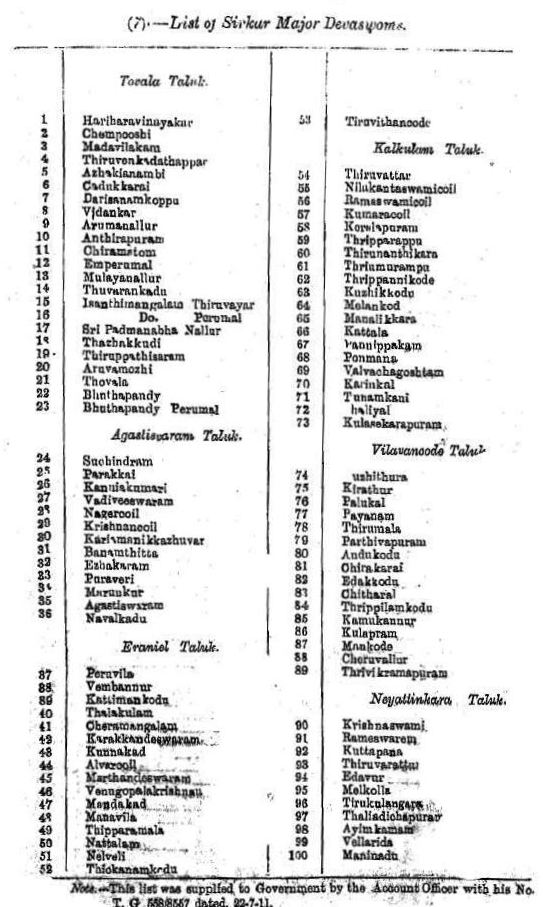
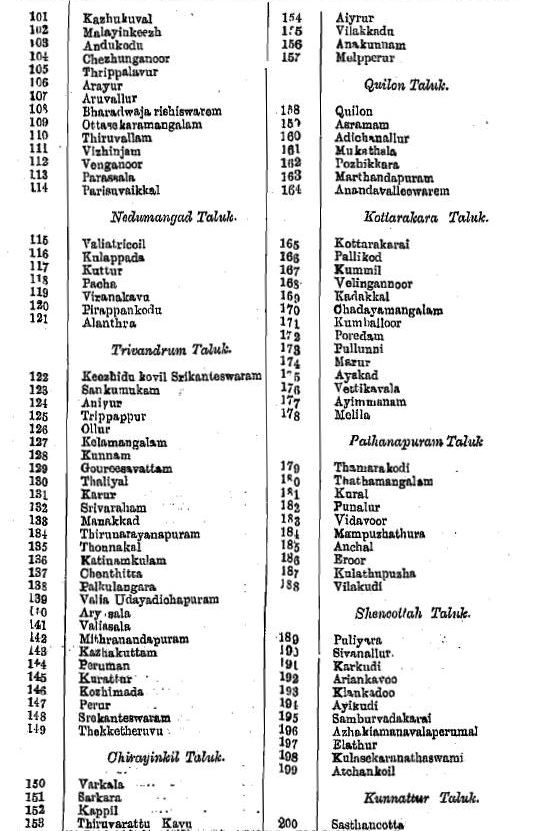
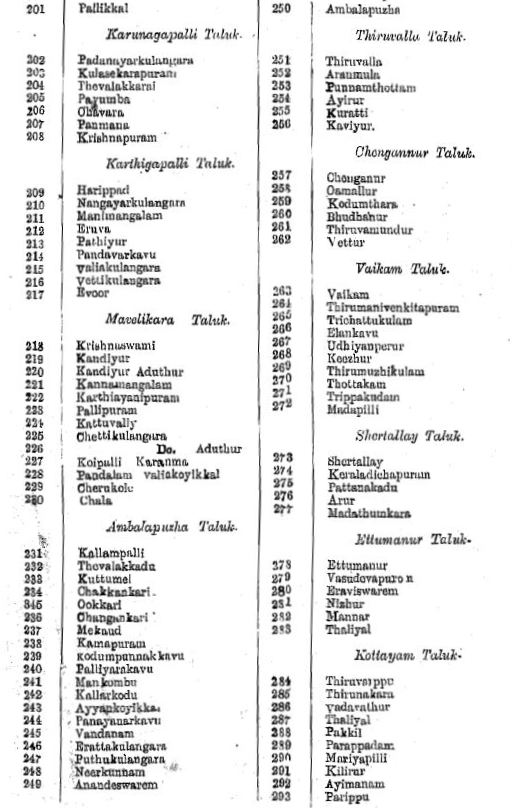
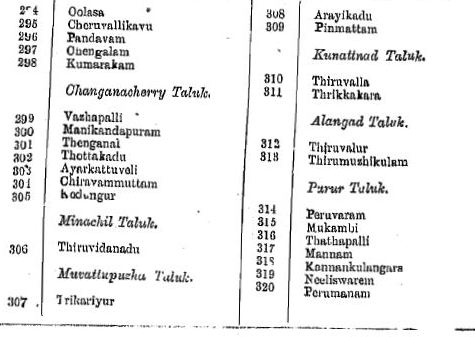
THIRUVABHARANAM, BHARANI PATRAM & PATTUMPARIVATTAM REGISTERS: REFER – TDM Vol- II & III:
Records under the direct possession of the Temples In all the temples of Kerala there are registers and generally they come under three classes : ( 1 ) Thiruvabharanam, ( 2 ) Bharani patram, ( 3 ) Pattumparivattam .
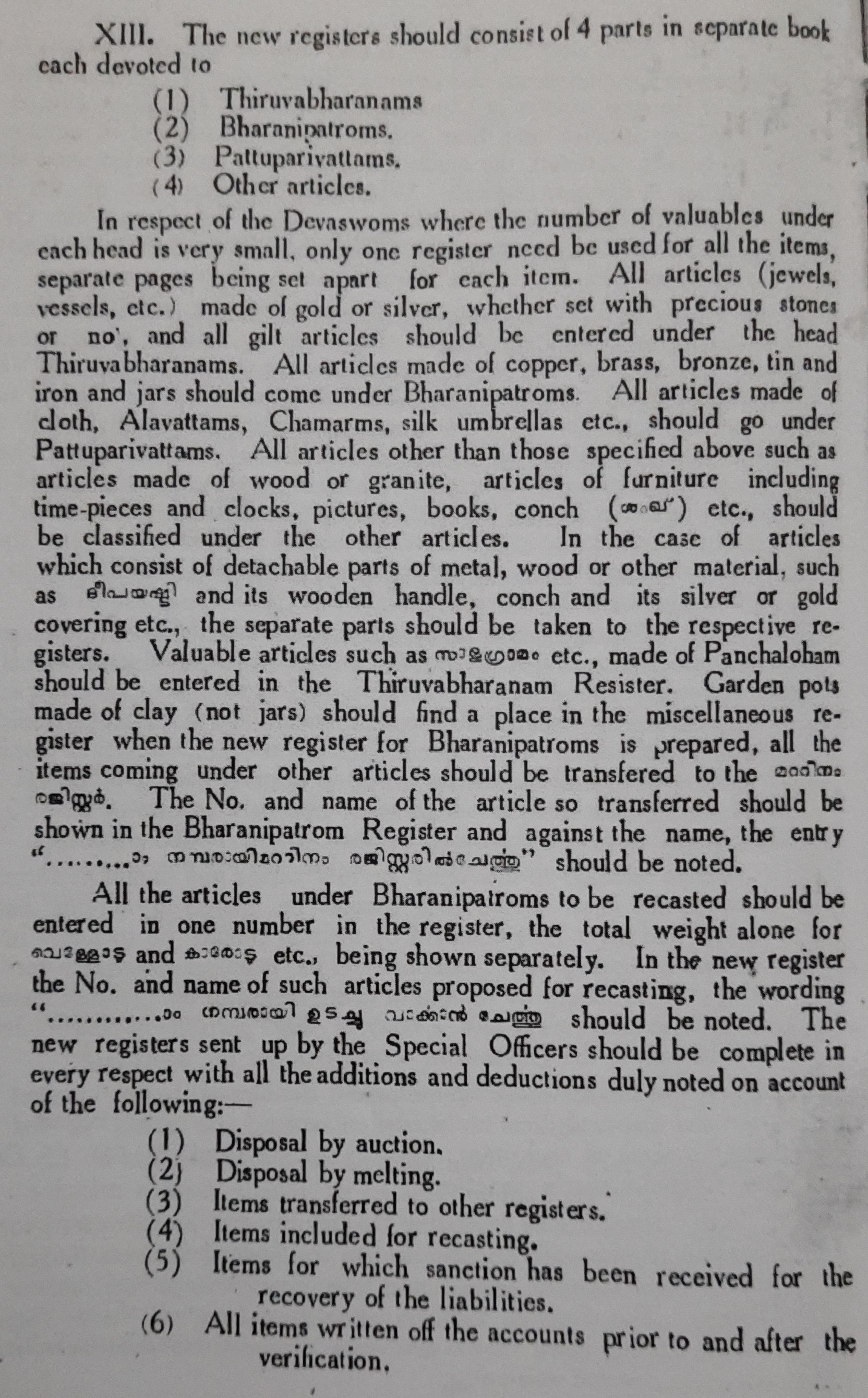
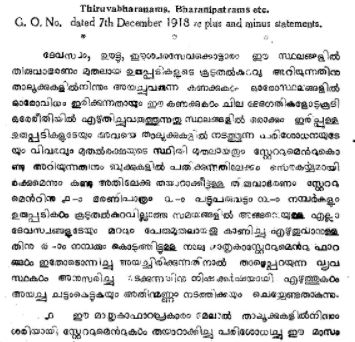
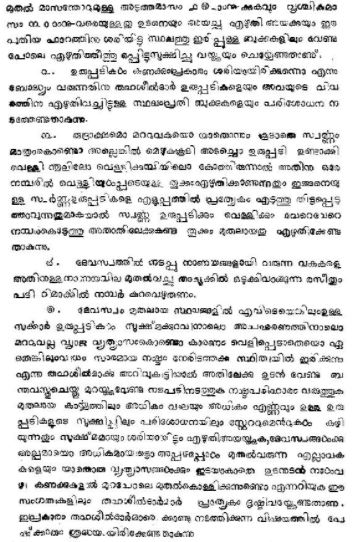


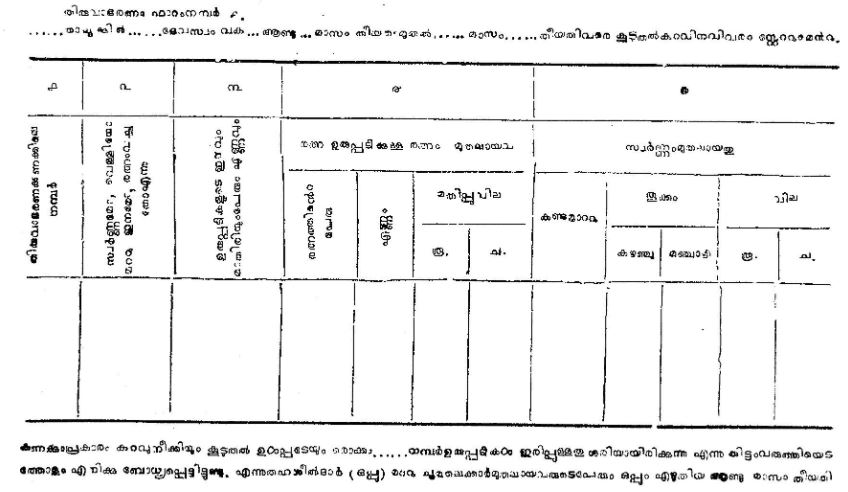
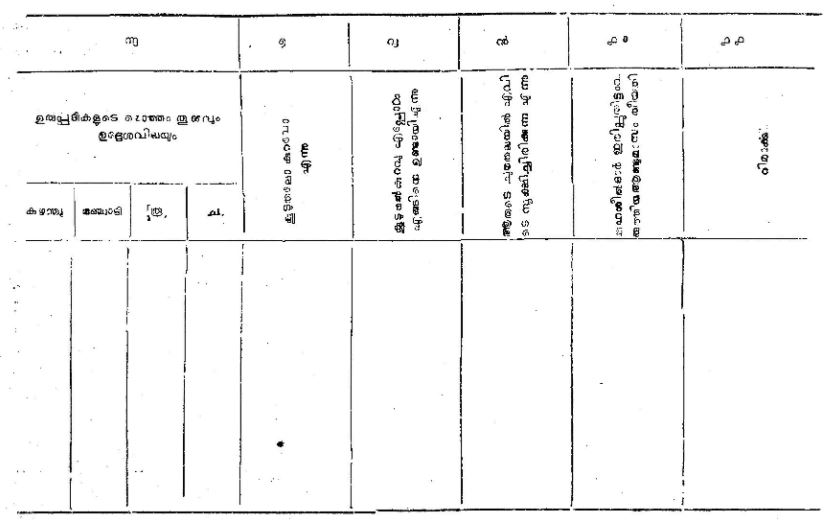
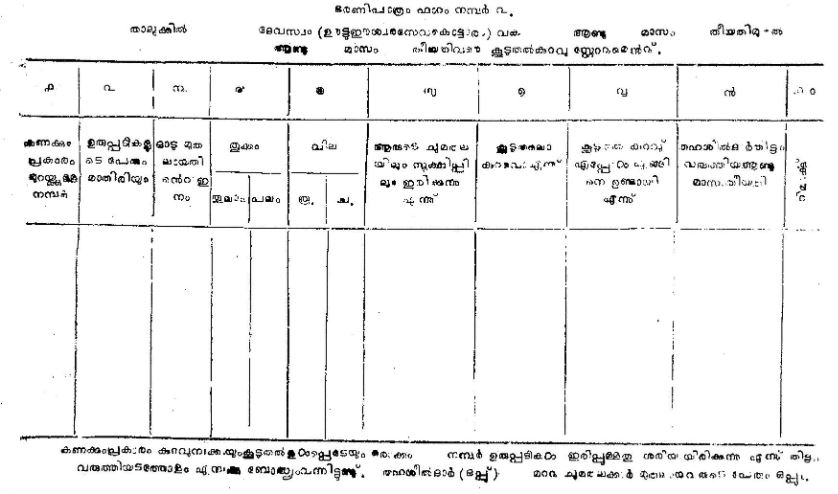
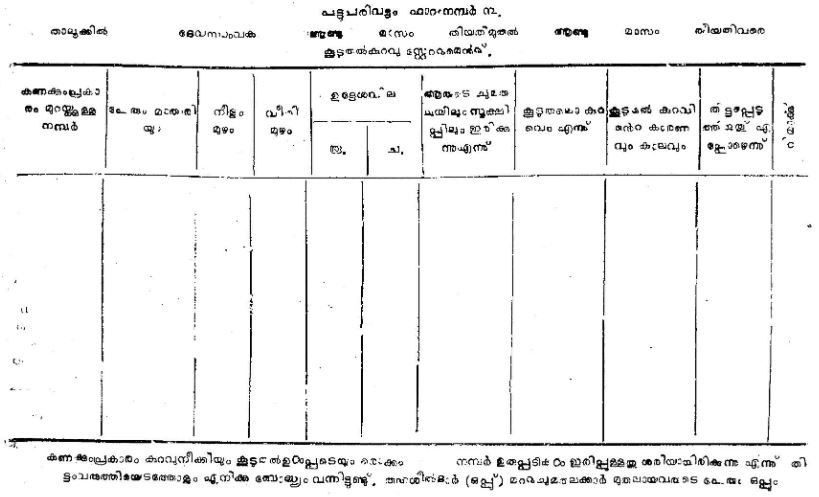
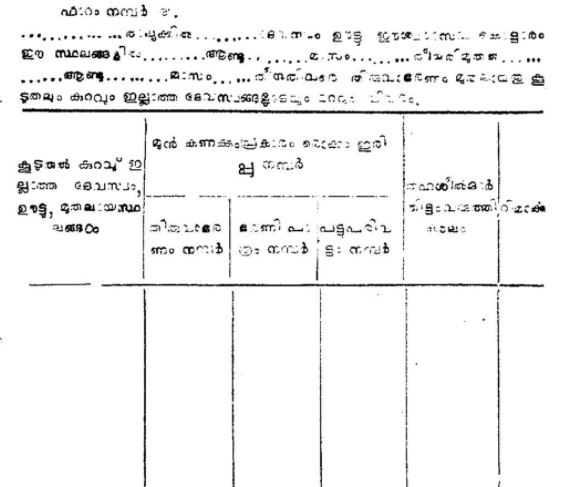

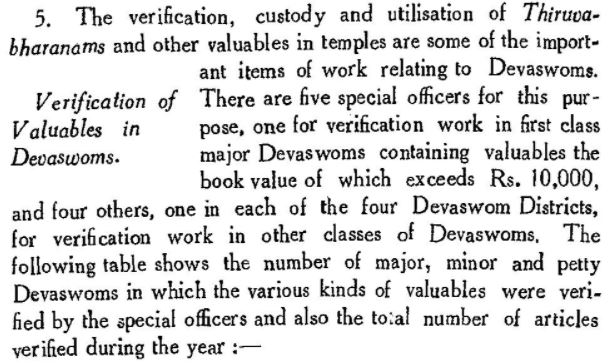
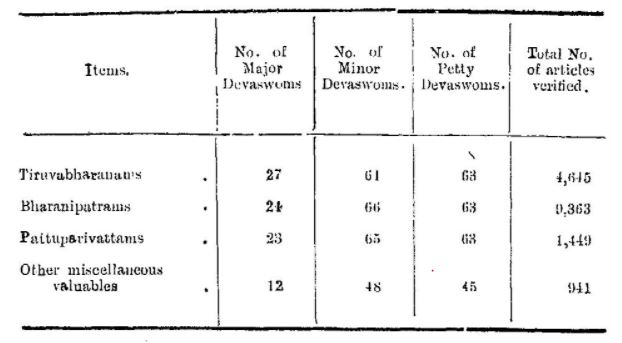
Travancore Land Revenue Manual – Ayacut Sirkar Devaswom Lands:
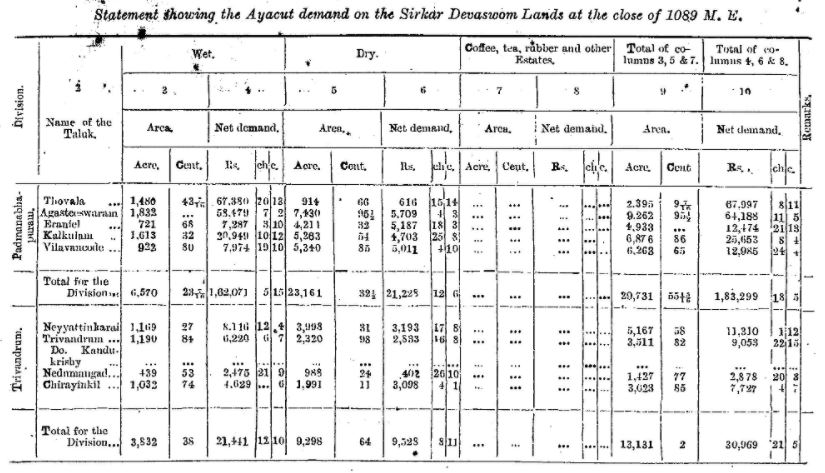
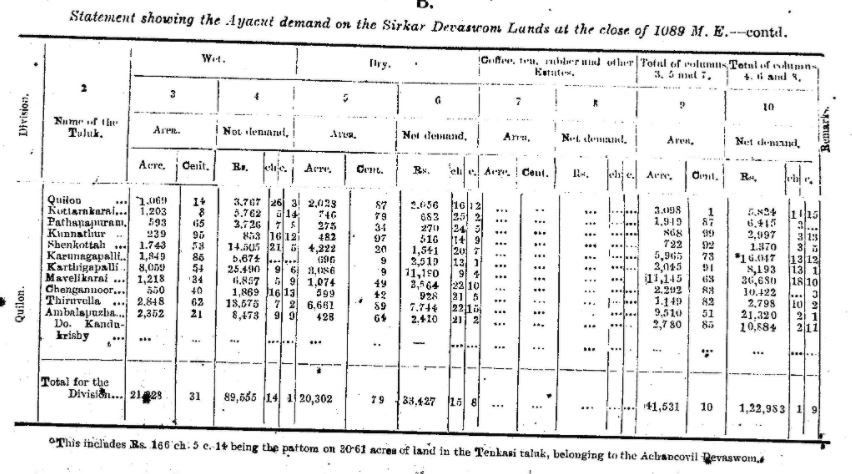
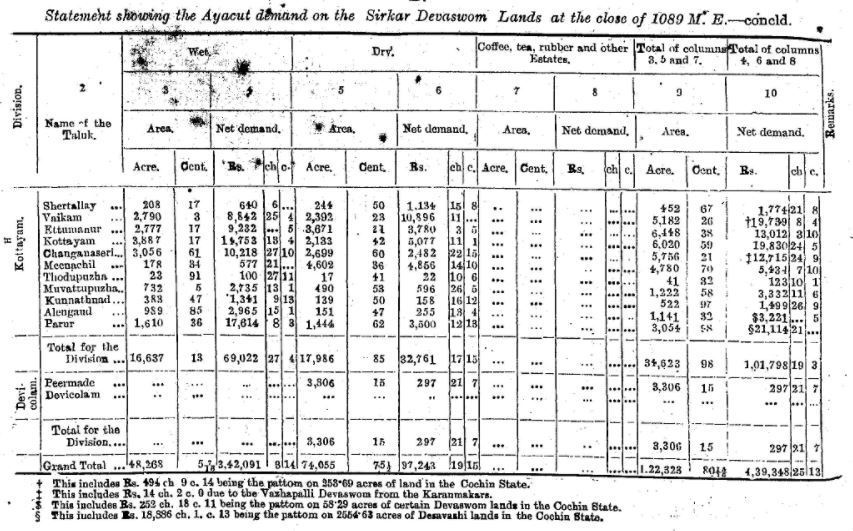
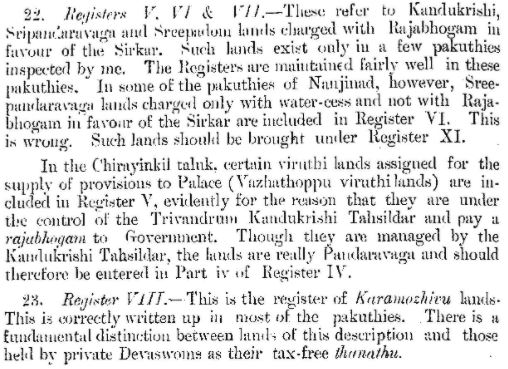
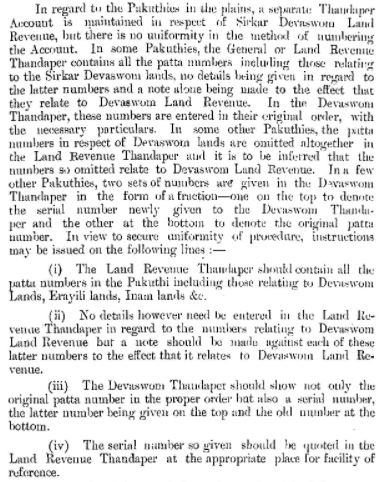
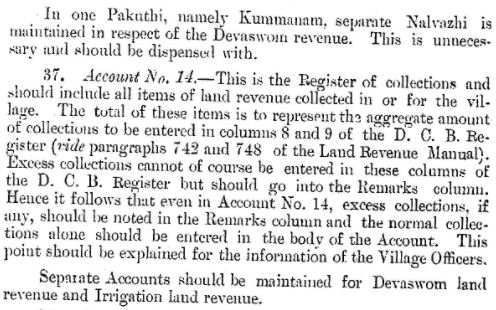
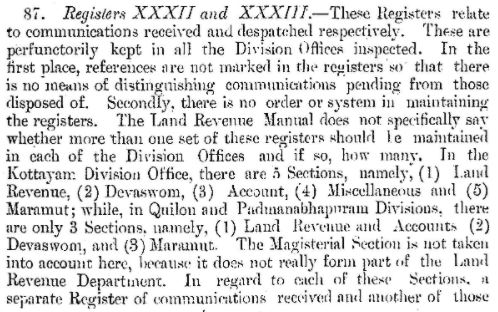
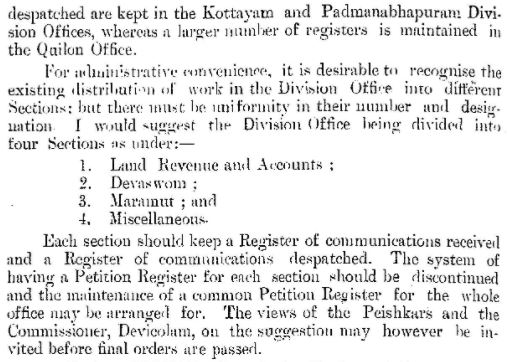
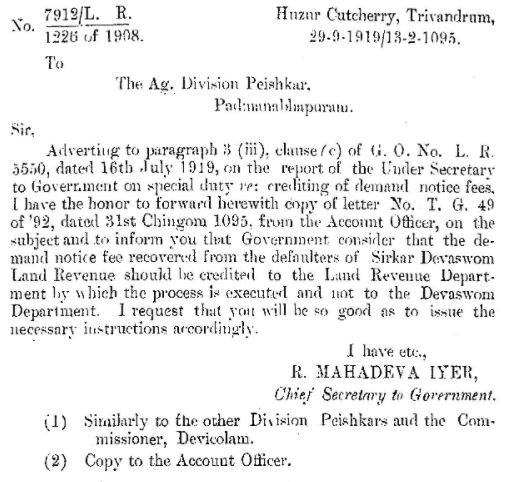
Major Festivals in some of the Sirkar Devaswoms – TDM:
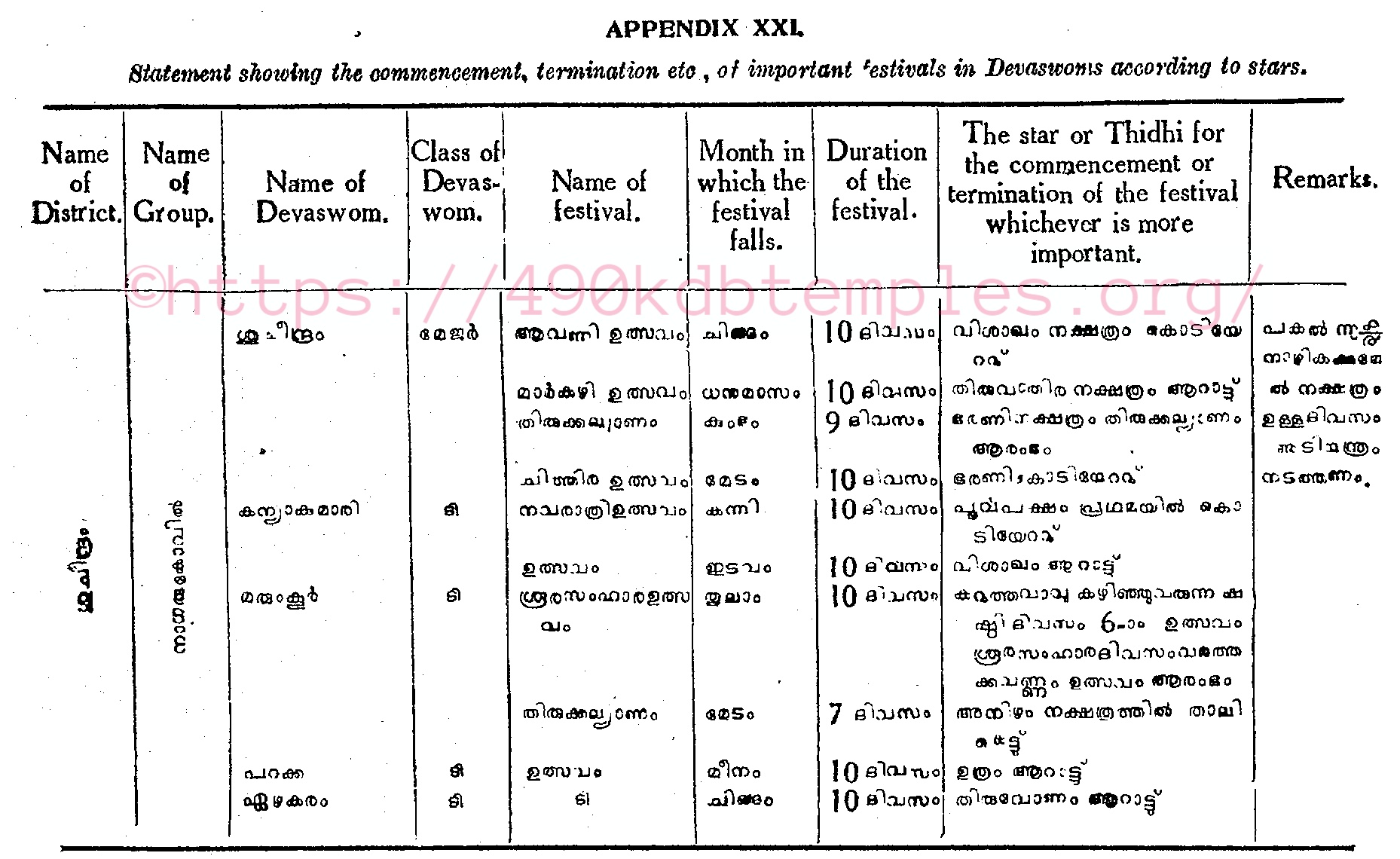
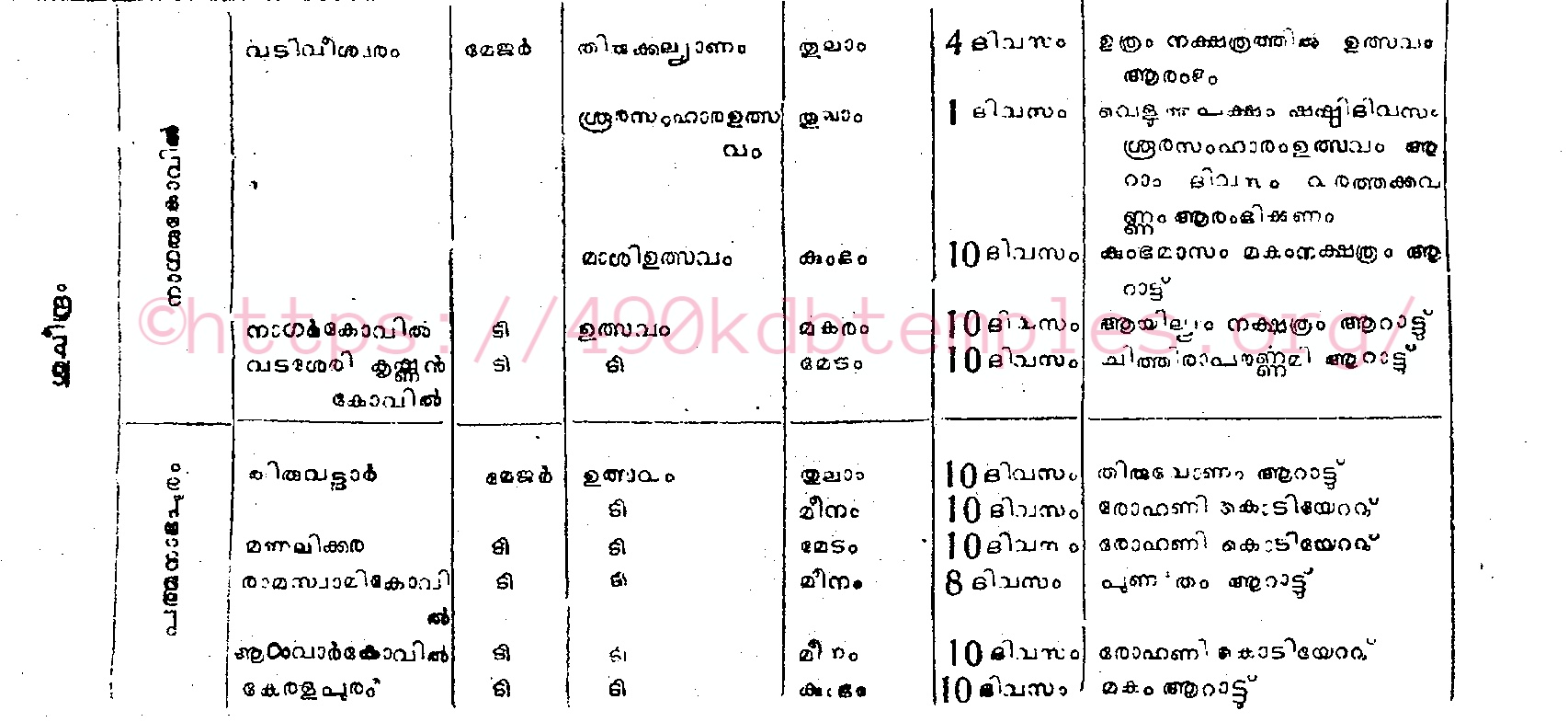
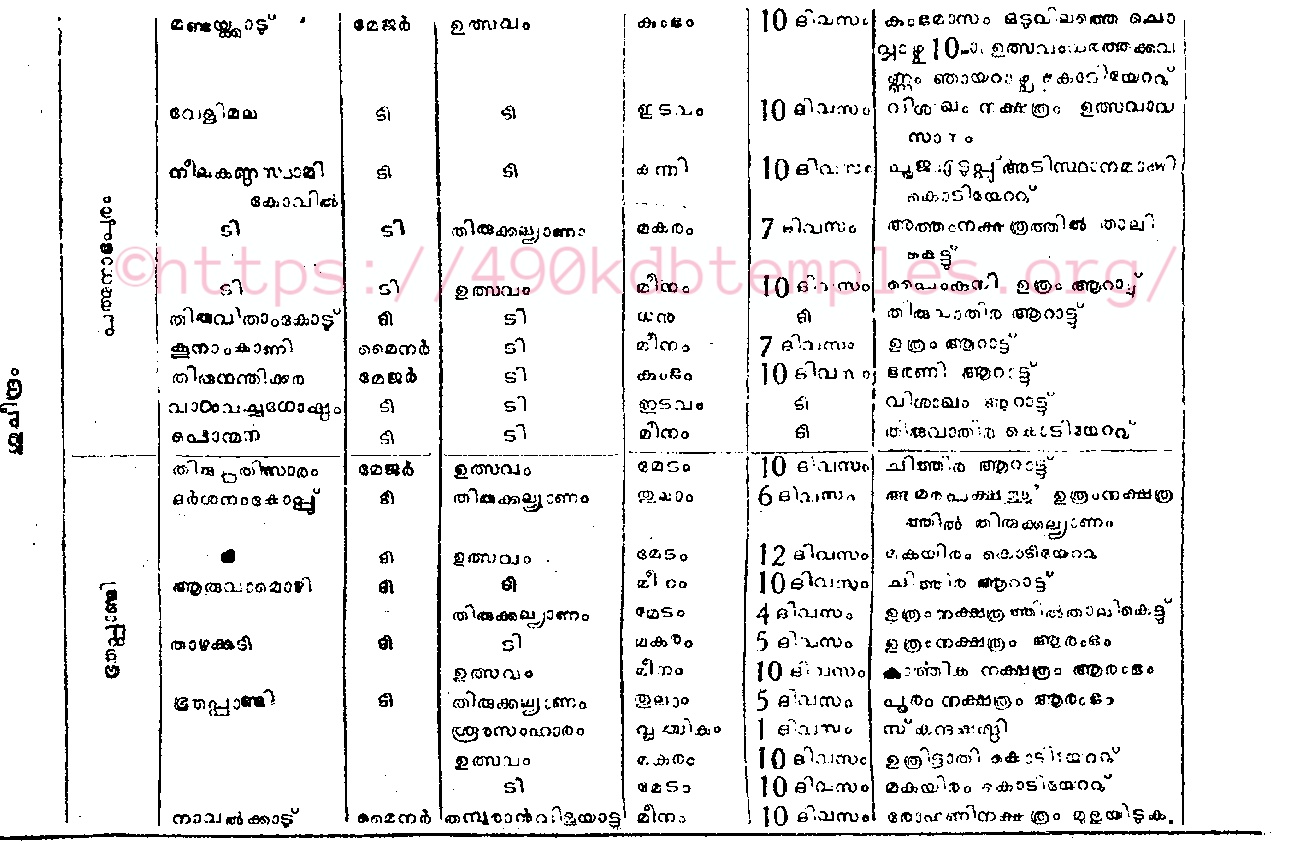
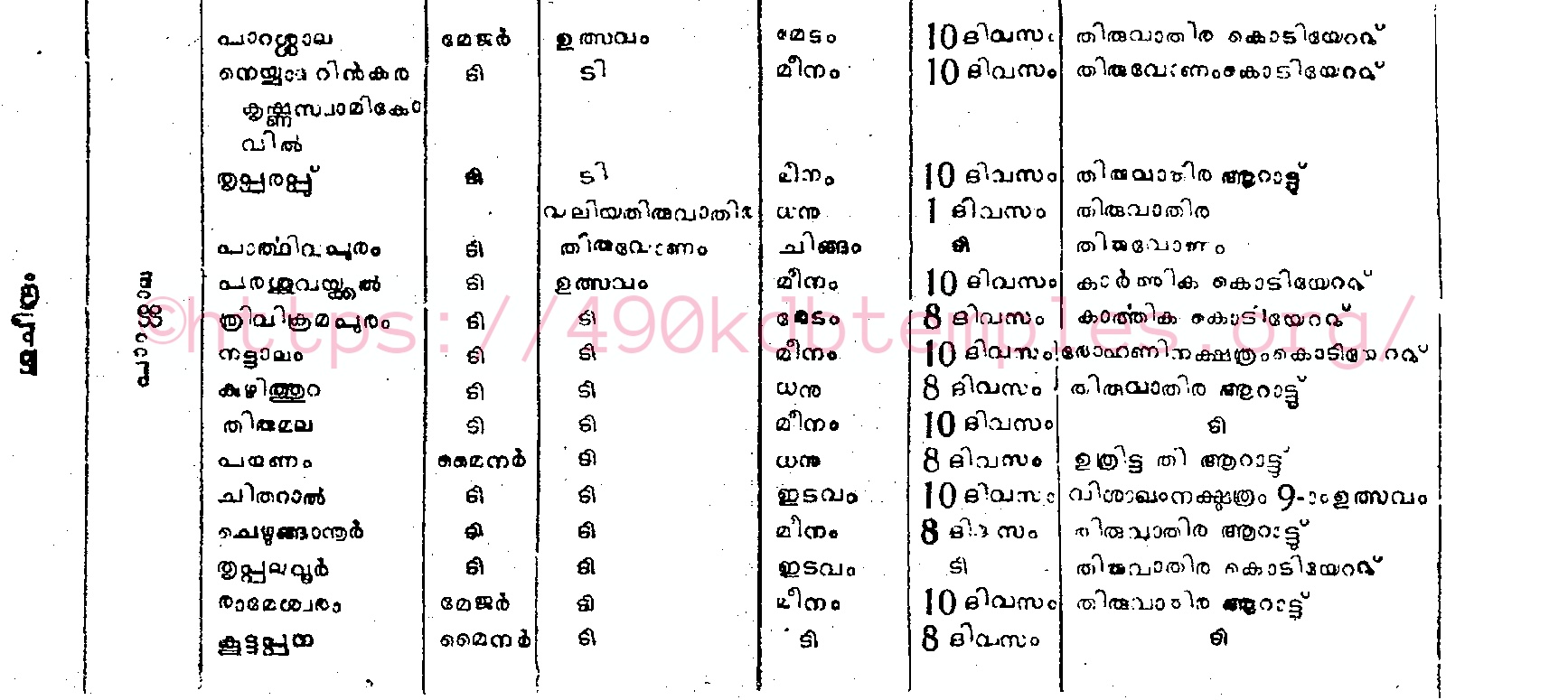
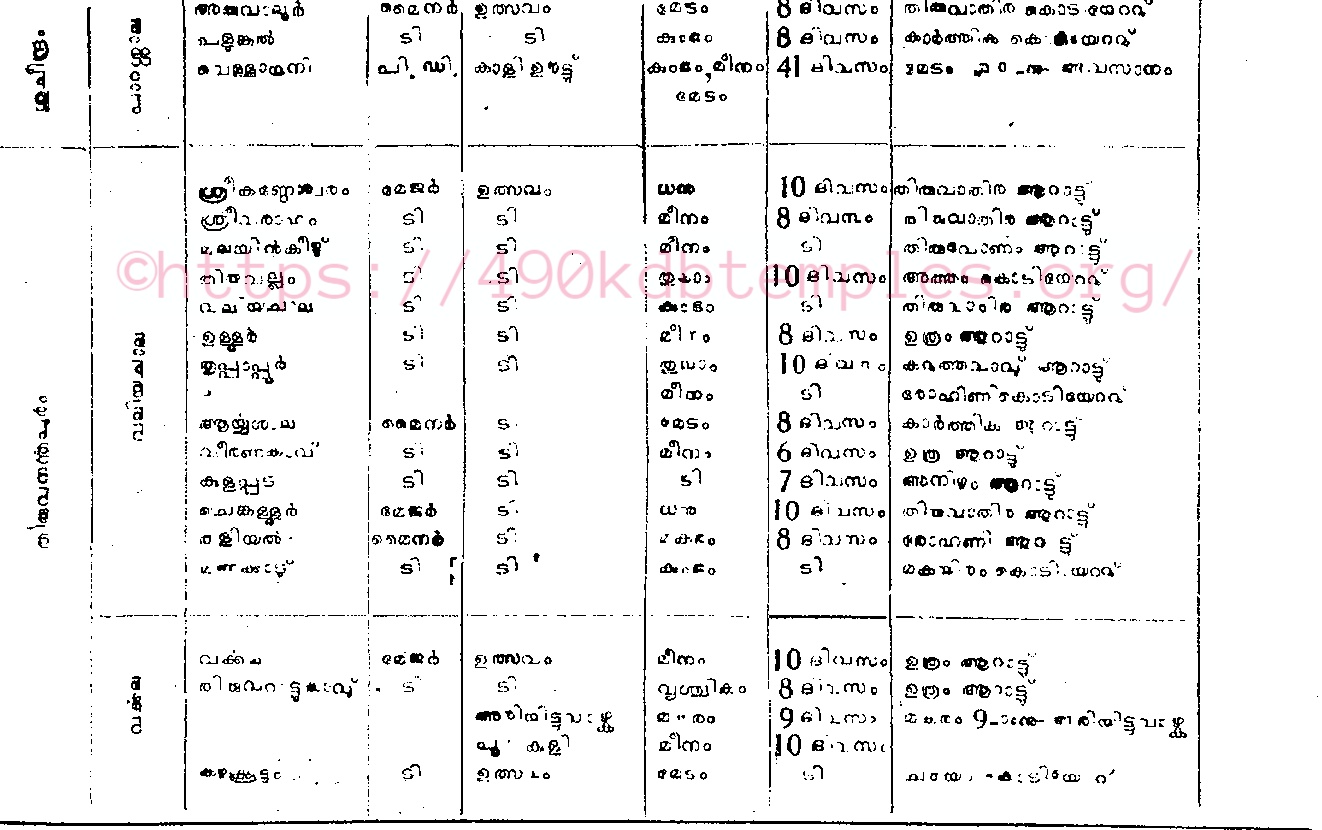
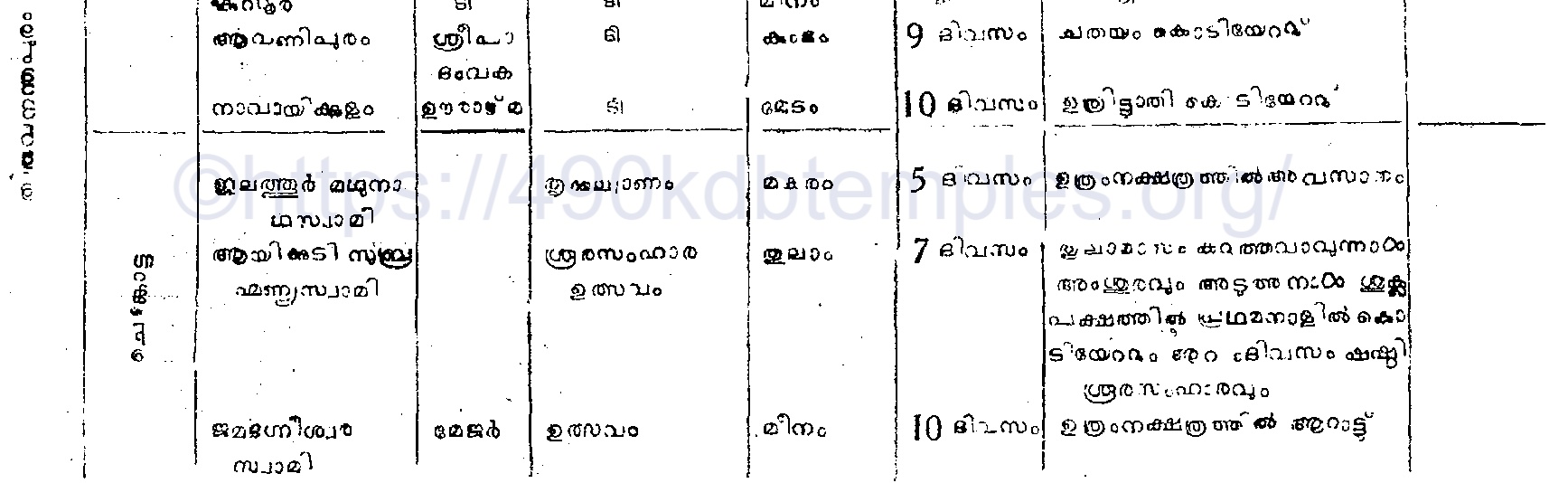
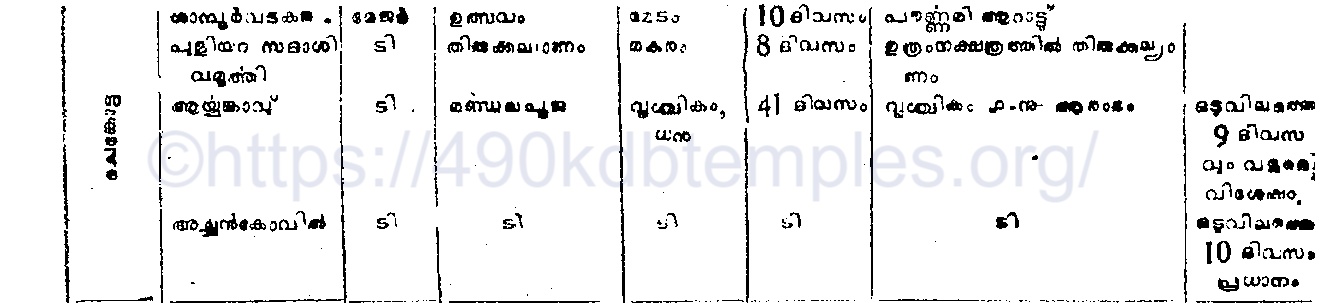
The Travancore Devaswom Inscriptions – TSM:
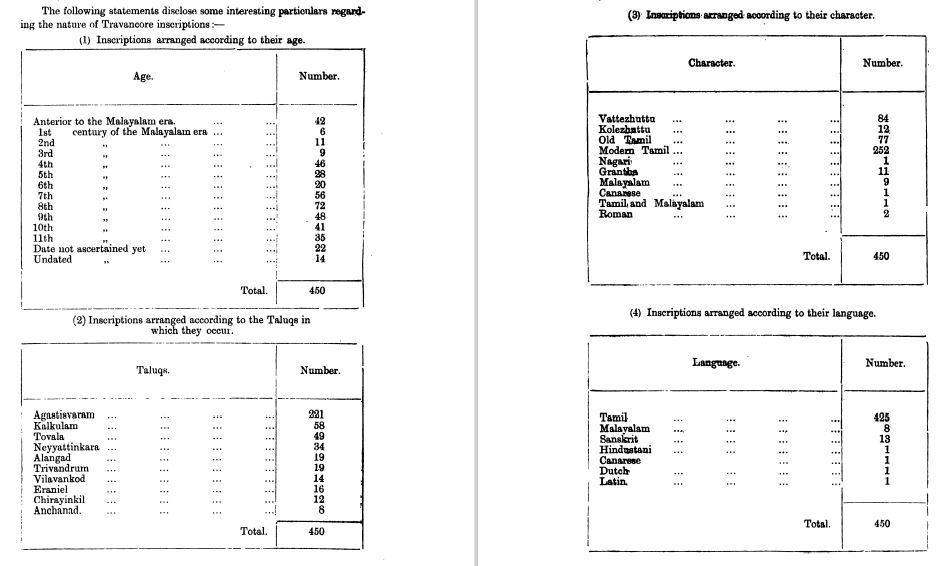
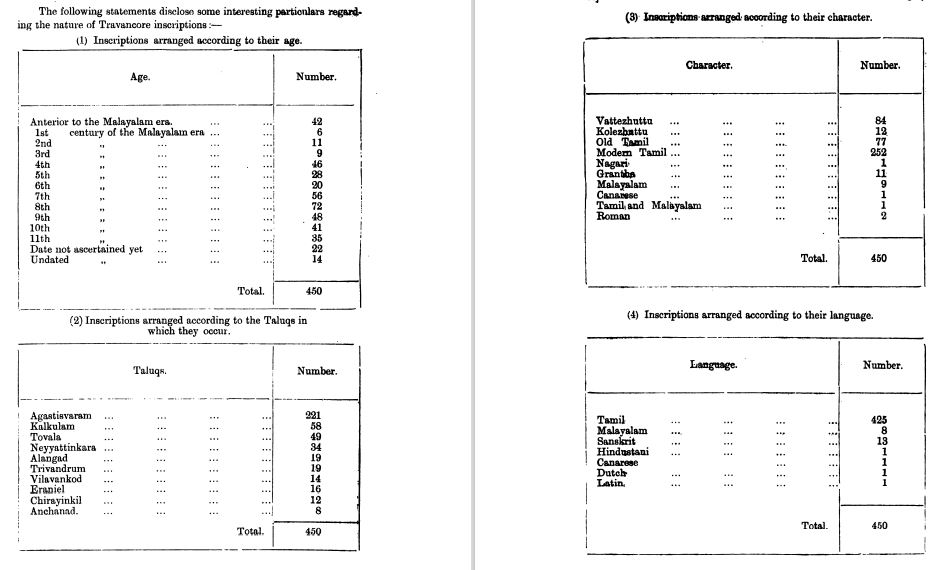
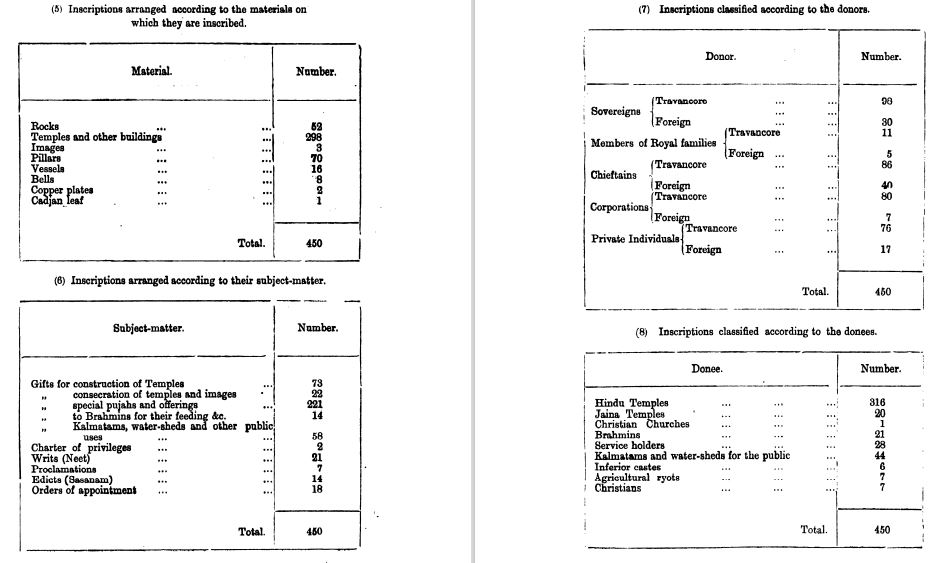
The Travancore Inscriptions in KDB Devaswoms – TAS:
ക്ഷേത്രങ്ങളിലെ ദേവസ്വം ശിലാ ലിഖിതങ്ങൾ – திருக்கோவில் தேவசம் கல்வெட்டுக்கள்


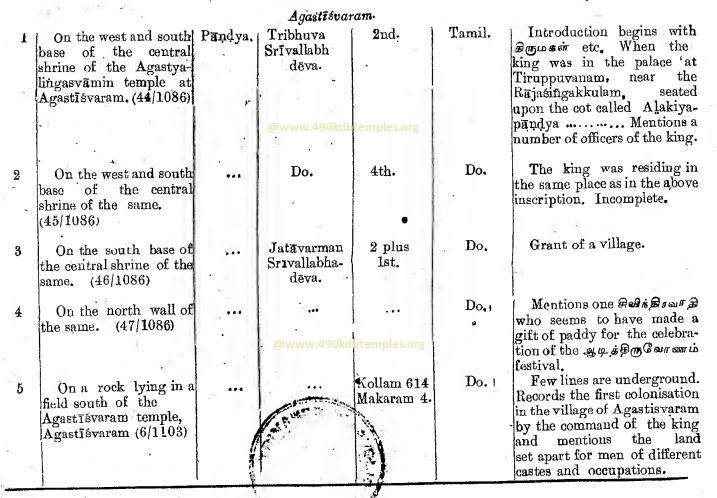
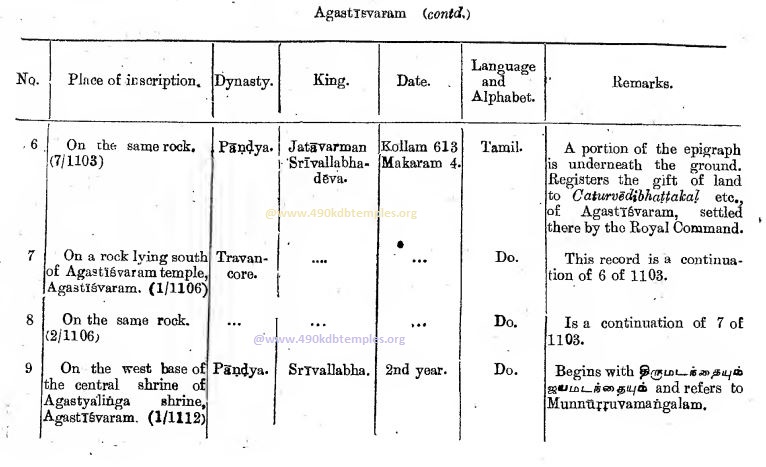
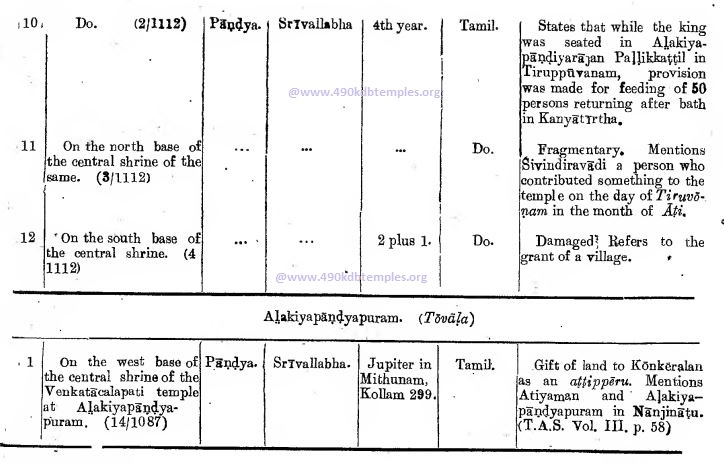
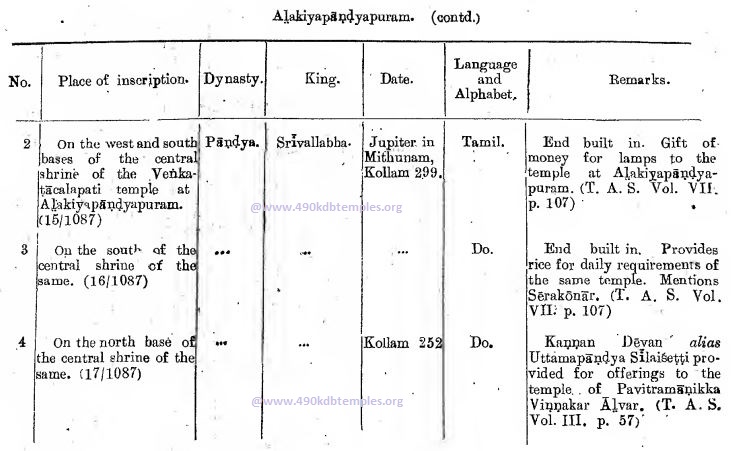
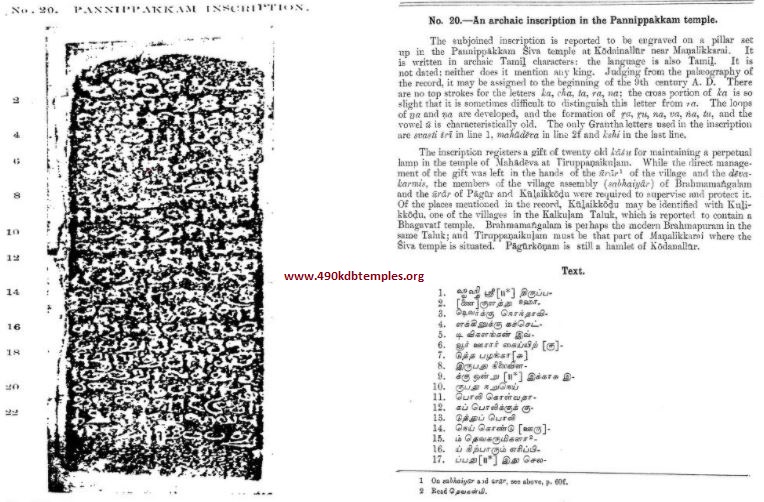
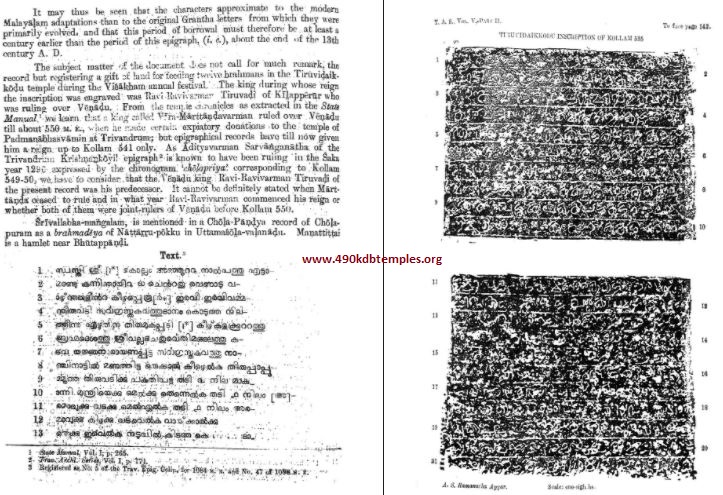
മുഴുവൻ ദേവസ്വം ശിലാ ലിഖിതങ്ങൾ – மீதி தேவசம் கல்வெட்டுக்கள் – (Click Here)
The Time to Time Social Reforms in favour of Humanitarian considerations:
Social Reforms: The devaswom department had taken keen interest to eradicate some of the evil practices existed in Travancore from time immemorial.  Due to the growth of new temple culture, the government adopted such measures with immediate effect. The low caste Hindus were not permitted to enter the temples and temple roads. Unapproachability, untouchability, pollution were but different aspects of the social evil of casteism followed by the caste Hindus for Travancore. There occured a prolonged agitation for temple entry and social status. The notable event of the period was that the government had appointed a committee known as Temple entry enquiry committee to consider the question of temple entry to avarnas which ultimately paved the way for allowing all sections of the society to enter all temples and temple roads of Travancore without any distinction of caste, creed or colour.
  Slavery in the form of uliyam and virutti services was yet another social evil perpetuated by the devaswoms, to which unprivileged and underprivileged classes were subjected to Uliyam meant as compulsory labour for the government without any remuneration (A.Sreedhara Menon, A Survey of Kerala History, p.322.) and virutti constituted a kind of service inams and virutti holders set apart for the service of devaswoms and oottupura had to render obligatory services which generally consisted in ‘supplying at certain fixed prices, vegetables etc (V.Nagam Aiya, The Travancore State Manual, Vol.III,p.335). The people engaged in uliyam and virutti services were poor peasants belonging to the backward and depressed classes. The temple authorities treated them like slaves and the slightest flaw or disobedience on their part was met with, severe punishments.
  The viruttikar attached to Sri PadmanabhaSwamy temple at Trivandrum had supply curd for ceremonies in the temple at Paravur, a place near Kollam. During extra-ordinary ceremonies like bhadradeepam, lakshadeepam, murajapam, triumasam, tulabharam, etc. the obligation of husking paddy and supplying the rice to the temple fell upon the viruttikar of Kollam. This was because nearly 3000 brahmins had to be fed freely during all days of the murajapam. Some of the viruttikars had to carry brahmin guests from Kollam to Trivandrum in palanquins in order to facilitate their participation in murajapam ceremony. The daily allowance paid to this servile labour was on itangali rice per head (Ibid). The Ezhavas were bound to supply firewood for the famous temple at Vaikom and for oottupura attached to it. No remuneration either in cash or kind was given, nor was any land assigned to them as in the case of others under ullyam and virutti services.
 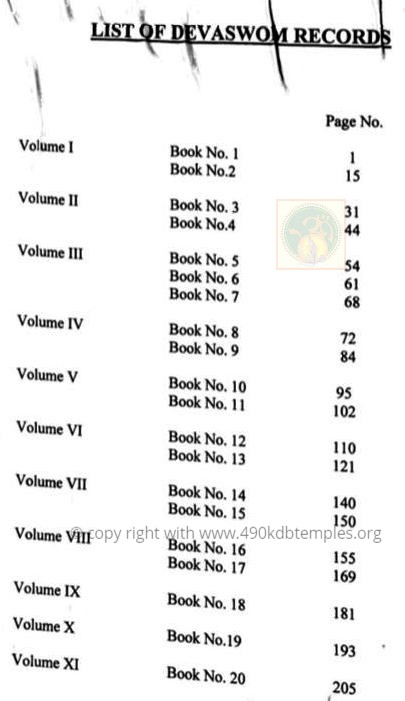 The viruttikar at Haripad had to render free personal service to the subrahmanya temple festivals. Apart from rendering free physical labour, sometimes the duty of the uliyam and virutti holders included the performance of velakali during festival days in temples.
 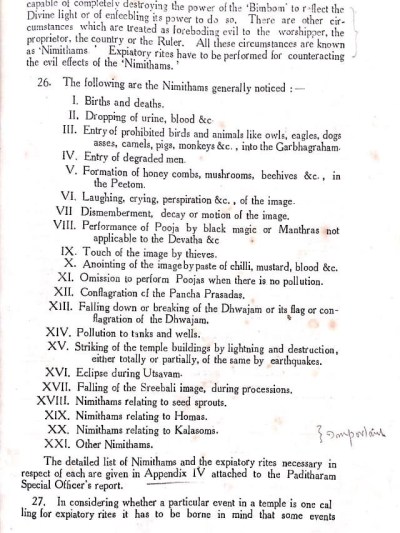 The performance was to be made twice a day during evening and night. It had been calculated that nearly 300 viruttikars engaged for such performance, 200 of them at Sree Padmanabhaswamy temple at Trivandrum and 100 to do the same in the Sree Krishna swamy temple at Ambalapuzha (E.R. File No.48, Devaswom Department Records, A.D. 1907, p.8). To escape from this slavery and oppression from the authorities
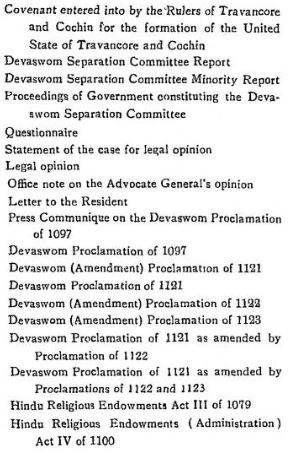 , some of the viruttikars belonging to the depressed classes converted to christianity (E. R. File No. 60, Devaswom Department Records, A. D. 1910, p.11), They began to abstain from works and seek protection from court of law. On one occasion the viruttikar in the Ambalapuzha temple refused to conduct velakali. In 1814 Col-Munro, the dewan of Travancore partially relieved them from their work.
  Another government order issued in April 1880 relieved the viruttikars of Trivandrum, Neyyattinkara and Nedumangad taluks from the burden of supplying provisions for the Isvara Seva ceremony in temples (T.G.G., dated 7 May 1880, p.127). In October 1883, dewan Ramayyangar appointed a committee to study the various problems relating to the uliyam and virutti service holders and to report the government defects of the system.The majority of the committee members recommended the immediate abolition of the system. Dewan Rama Rao issued a notification. In April 1888 relieved all virutti, uliyam holders from the obligation of rendering personal service to devaswoms and oottupuras (Revenue Settlement Final Report, Vol-VI, p.169). On August 7, 1893 the uliyam and virutti services were abolished (The Acts and Proclamations of Travancore, vol.1, p.211). However, it continued in some parts of Travancore in one way or other form. After the formation of the devaswom department the seedlings of this evil system lost their roots completely from the soil of Travancore.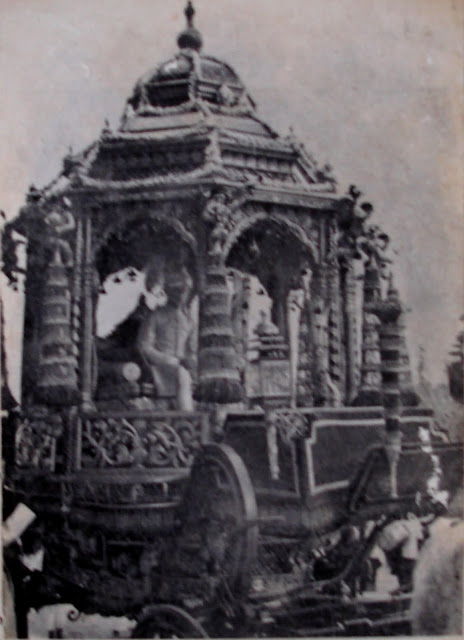
 In some shrines dedicated to Bhagavathy, the custom of sacrificing goats and fowls was prevalent. In some part of the state, even the cow was slaughtered and sacrificed to minor deities. Protest meetings were arranged against this practice by the public. So the government decided to put an end to this practice and issued an order dated 9th March 1925 (Devaswom File No. R.Dis. 343/25, dated 22 August 1925, p.1). Cucumber took the place of the animal victims in the ritual (Report of the Temple Entry Enquiry Committee, 1932, p.90). Another age old custom prevailed in Travancore was a practice that savarnas who crossed the sea did not enter the temples or their being prohibited from entering the temples.
  This custom became out of practice as the caste Hindus freely enter temples for worshiping (Report of the Temple Entry Enquiry Committee, op.cit., p.252). Abolition of purappadu was another remarkable work of the devaswom department. In Cherthala temple during utsavams, particularly on the puram day, obscene songs used to be sung by karakkars of the place in the belief that the deity’s blessings could be won thereby. This was a longstanding practice.
 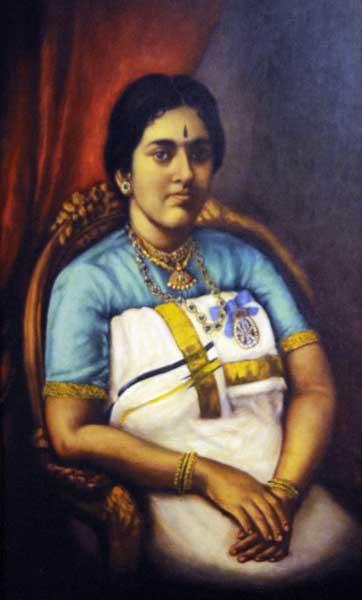 The government stopped this custom by their order dated 9th March 1927 (Proceedings of the Government of Travancore, ROC. No. 344/25/G.B, dated 9 March, 1925). Another important step taken by the government and implemented by the devaswom department was against the devadasi system in temples of Travancore. Though initial steps were taken in 1925, it was finally abolished in 1931 (Devaswom, File No.D.Dis. 611/1931, dated 5 September, 1931). In time immemorial, the Travancore temples had the practice of observing devadasi system. The agama works which prescribes temple rituals and ceremonies refer to therottam or dancing as a part of temple ceremony (Report of the Temple Entry Enquiry Committee, op.cit., p.90). The first epigraphical record about the devadasi system in Kerala was found in the Chokkur temple at Neeleswaram in Kozhikode taluk (Elamkulam P.N.Kunjan Pillai, Keralacharitrattile Iruladanja Ettikal (Mal), p.75). The term devadasi simply meant ‘the maid of God’,
  which was also interpreted as to mean a maid servant to provide pleasure to the deity by dancing before them.
 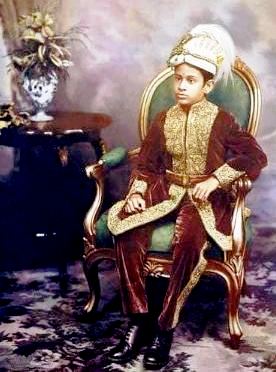 Those ‘wives of Gods’ enjoyed a daily allowance of rice, monthly wages, kachapuram (cloths), kutimana (house site) and other perquisites E..R.,G.O. No.372, dated 15 August 1931. 69 . Later some of the devadasis became rich and gave a portion of their earnings to the temples. This practice was prevalent in almost all major temples of south Travancore, in Sencotta and a few temples of Ambalapuzha, Karthikappally and Cherthala taluk (Census Report of India 1901, Vol.XXVI, Travancore, Part.I, p.277). Like the devadasis attached the temples of east coast, women dedicated to temple service known as kudikaris had been doing several items of service in some of the important temples in Suchindrum district and Trivandrum district.
 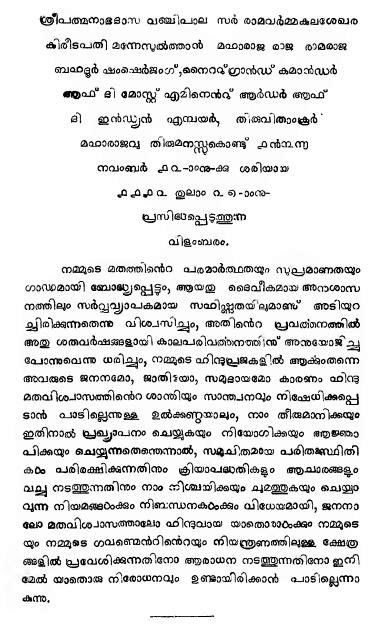 The first attempt by the government to restrict devadasi system came in 1909 when the division assistant of padmanabhapuram division rejected the application of a nair girl below 16 years to became a devadasi in Suchindrum temple on the ground that the Travancore penal code made it punishable to dedicated girls below 16 years of age to a temple (Report of the Temple Entry Enquiry Committee, p.125). Another application was also rejected in 1910 on the same ground. However, the government allowed the children of devadasis above the age of 16 years, if they had already undergone the sacrament of talikett as per marumakkathayam custom (E.R.G.O.No.2634/D., dated 26 Mithunam 1086 M.E/A.D.1911).
 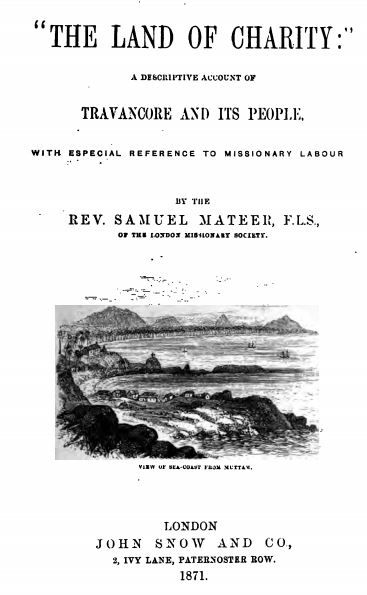 In 1921, the government decided to prohibit any further recruitment of devadasis either by way of adoption or by free choice. The final discontinuance of the system came into effect from 1st Chingam 1 106M.E (A.D 1931) when all the remaining devadasis were relieved of their duties in the temples of Travancore (E.R.G.O.Dis.No.293 of 21/G.B, dated 23 may 1921).
 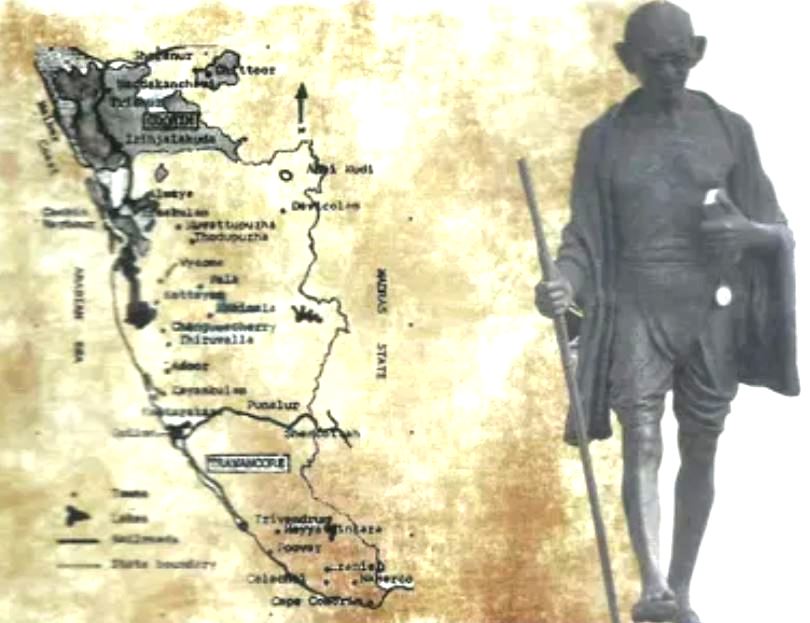 Some of their duties were transferred to temple employees like the ambalavasis and the devadasi system was finally abolished in 1931 (Devaswom, File No.D.Dis.611/ 1931, dated 5 September 1931). The Pilgrimage of Sri.Mahatma Gandhi in Travancore State – CE.1937. The list of devaswoms & Route map from Kanyakumari to Cherthala / Vikkam.


The social reform movement undertaken by the government through devaswom department by way of purification of the Hindu community had its repercussion for a social change in Travancore, which led to the popularisation of temple worship in Travancore. With the passing of Interim Constitution Act of 1948, the Devaswom were reserved exclusively for direct administration by His Highness the Maharaja of Travancore, who administered the Sree Padmanabha Swamy temple direct and the other Devaswoms through the Devaswom Department under a Devaswom Commissioner appointed by His Highness.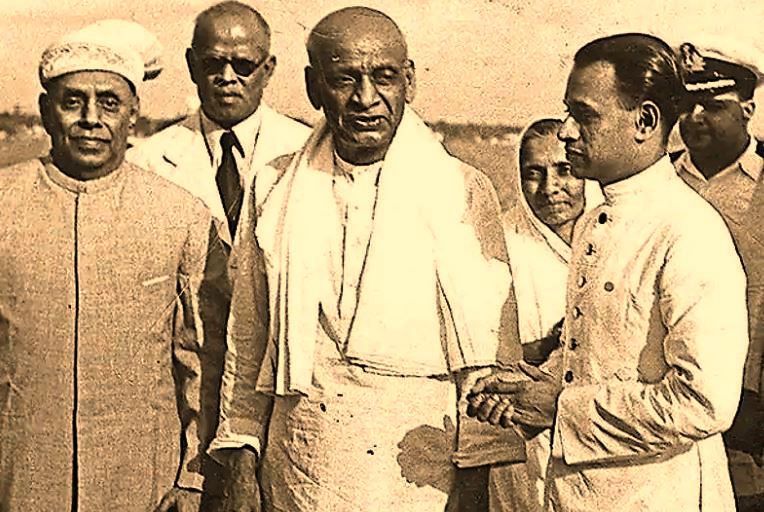
The Princely state of Travancore is “God’s Own Country”; When India got independence on 15th August 1947, the Travancore Kingdom didn’t join the Indian Union Government. 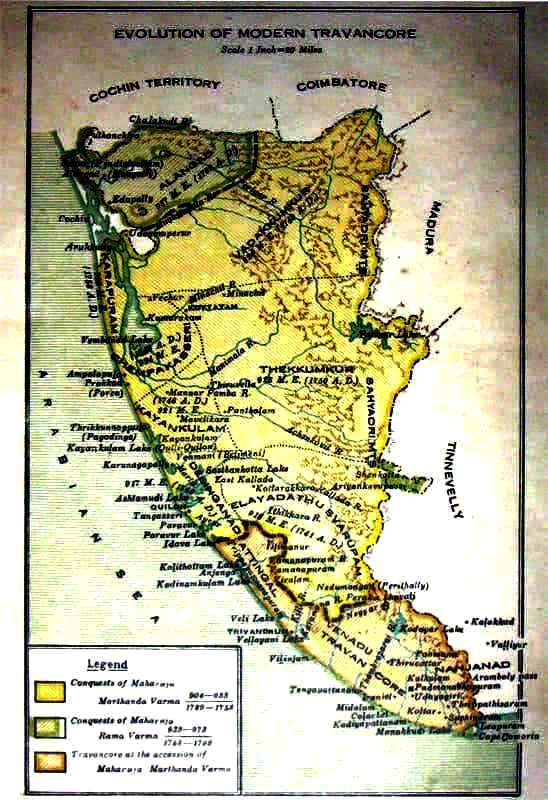 The Diwan of Travancore Kingdom announced in June, 1947 that the Travancore Kingdom will be a separate country by itself. When the talks were on between the Indian representatives and the King Chithirai Thirunal Balarama Varma, to make Travancore Kingdom as part of Indian Union, the King said, “this land doesn’t belong to me and belongs to Lord Padmanabha Swamy and I am only the Custodian. If the Lord Ananthan asks me to do, I will oblige”. The Indian authorities didn’t believe this and considered King’s statement was just to dodge the issue. But the Travancore authorities showed a Palm Leaf written on 20th January, 1750 signed by the then Travancore King Anizhom Thirunal Veera Marthanda Varma in favor of the Lord Padmanabha Swamy that the entire Travancore Kingdom, which extended from today’s Kanyakumari and Paravoor, belongs to the Lord.
Upon India’s independence from the British on 15 August 1947,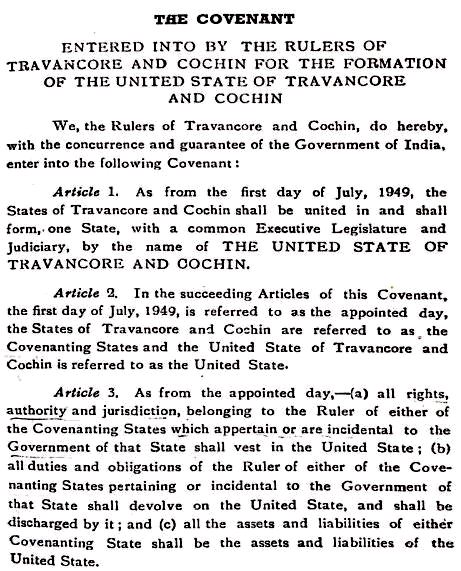 His Highness the Maharaja Sree Chithira Thirunal initially chose to keep his domain an independent country. As this was unacceptable to the Govt. Of India, several rounds of negotiations were held between the Maharaja and the Indian representatives. Finally an agreement was reached in 1949 and Sree Chithira Thirunal agreed to merge Travancore officially as a part of the Union of India. In 1949, Travancore was united with Cochin, His Highness the Maharaja served as the first and only Rajpramukh (Governor equivalent) of the Travancore-Cochin Union from 1 July 1949 until 31 October 1956.
 In 26th January 1950, The First Republic Day of India, The His Highness The Raj Pramukh said, “I have just now hoisted the flag of the Sovereign Democratic Republic of India. Today we have become a Republic under a Constitution which we have given to ourselves and this day marks the commencement of a new chapter in the history of our ancient land with its heritage of culture and tolerance. This is a red letter day in our lives which we should cherish in our hearts for ever. Let us rally round and salute this National Flag which is the symbol of our unity and our independent status and make a firm resolve to sink all our differences and banish from our hearts all feelings of territorial and sectarian rivalry and march forward hand in hand towards the common goal of a greater and more prosperous India.”


On 24th November 1936, The Temple Entry Proclamation of 1936, ‘The miracle of modern times’, His Highness Sri Chithira Thirunal Balarama Varma, the Maharaja of Travancore changed the course of history and the destiny of the people with a stroke of his pen effecting a revolutionary change in the society.
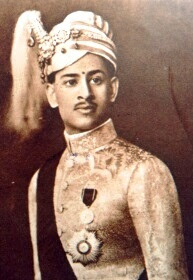 On 1st of July 1949 (M.E.1124), THE COVENANT– ENTERED INTO BY (THE RULER OF TRAVANCORE) HIS HIGHNESS SRI PADMANABHA DASA VANCHI PALA SRI CHITHIRA THIRUNAL BALA RAMA VARMA KULASEKHARA KIRITAPATHI MANNEY SULTAN MAHA RAJA RAJA RAMA RAJA BAHADUR SHARMSHER JANG, KNIGHT GRAND COMMANDER OF THE MOST EXALTED ORDER OF THE STAR OF INDIA, KNIGHT GRAND COMMANDER OF THE MOST EMINENT ORDER OF THE INDIAN EMPIRE THE MAHA RAJA OF TRAVANCORE AND (THE RULER OF COCHIN) HIS HIGHNESS SRI RAMA VARMA, THE MAHA RAJA OF COCHIN FOR THE FORMATION OF THE UNITED STATE OF TRAVANCORE AND COCHIN WITH THE GOVERNMENT OF INDIA- “The Government of India, hereby concur in the above Covenant and guarantee all its (22 Articles) provisions. In confirmation whereof, Mr.V.Pangunni Menon, Adviser to the Government of India in the Ministry of States, appends his signature on behalf and with the authority of the Government of India”. The first clause of the Covenant was that the princely states of Travancore and Cochin were merged from July 1, 1949. I do not elaborate on the various conceptions but the Article 4 (b) of the Covenant relates to the Padmanabhaswamy Temple, Article 8 (a) Concerning Travancore Devaswoms and Article 8 (c) Other Devaswoms.


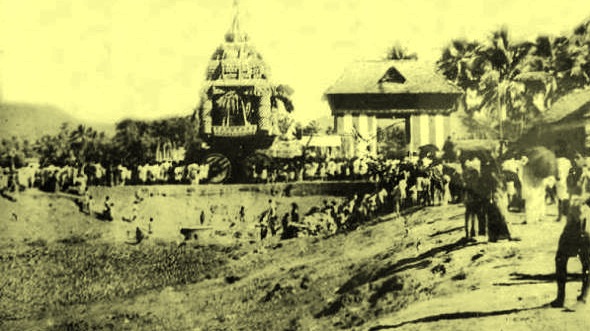 Till 1922 the cost of administration of the of Devaswoms was under taken by the Sirkar through the Revenue Department and the annual contribution to be given to the Devaswom in lieu of all the claims had to be settled and the same was fixed at Rs.51 lakhs as specified in the proclamations of 1947. Also the “Devaswom Surplus Fund” constituted as per section 2(ii) of an Amendment proclamation, ME.1122 (1947). The annual surplus in the Devaswoms was added on to this Devaswom surplus Fund.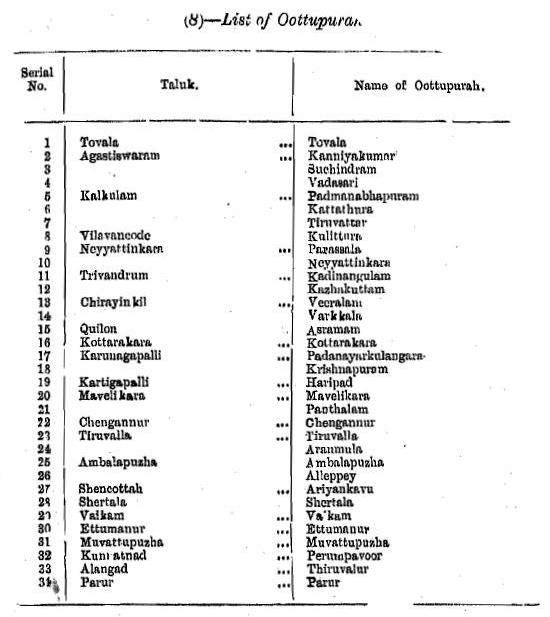
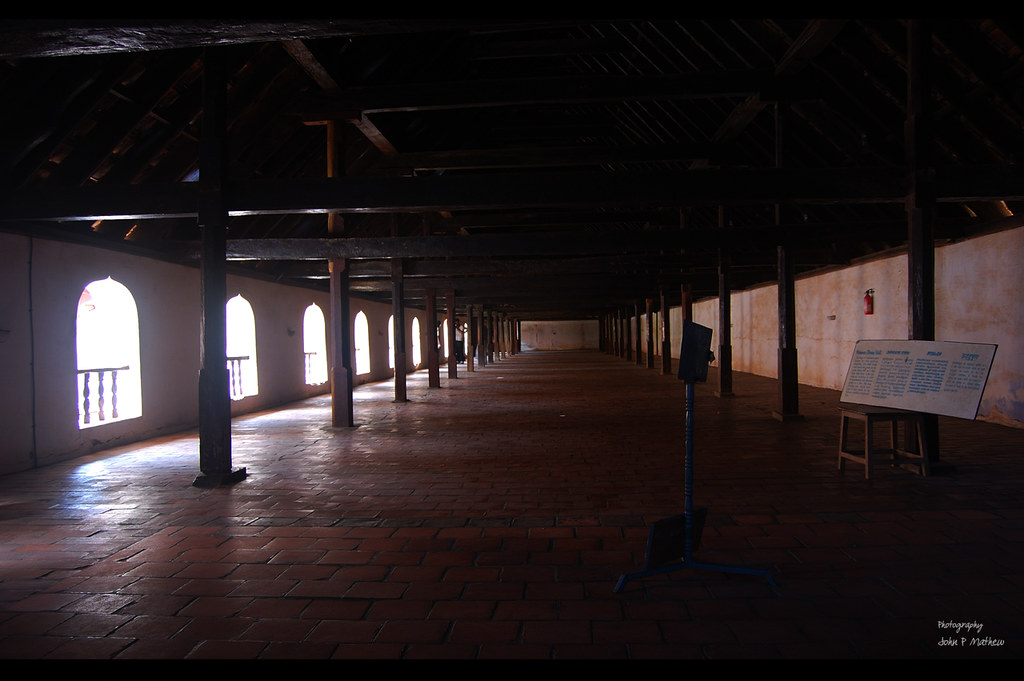 “Devaswom Ootu”, the feeding of Brahmins in large numbers, which was a usage in most, if not all, of the major Devaswoms had been stopped completely long before the Act. In 1943 “the rice and paddy for Keezheedu” were “reduced to one fourth of the quantities mentioned in the Pathivus” Pathivus are schedules of rates for rituals in temples , and “the quantity of coconut oil fixed in the Pathivus reduced to one third”. Even in 1949, that is to say, just before the enactment of the present Act,
 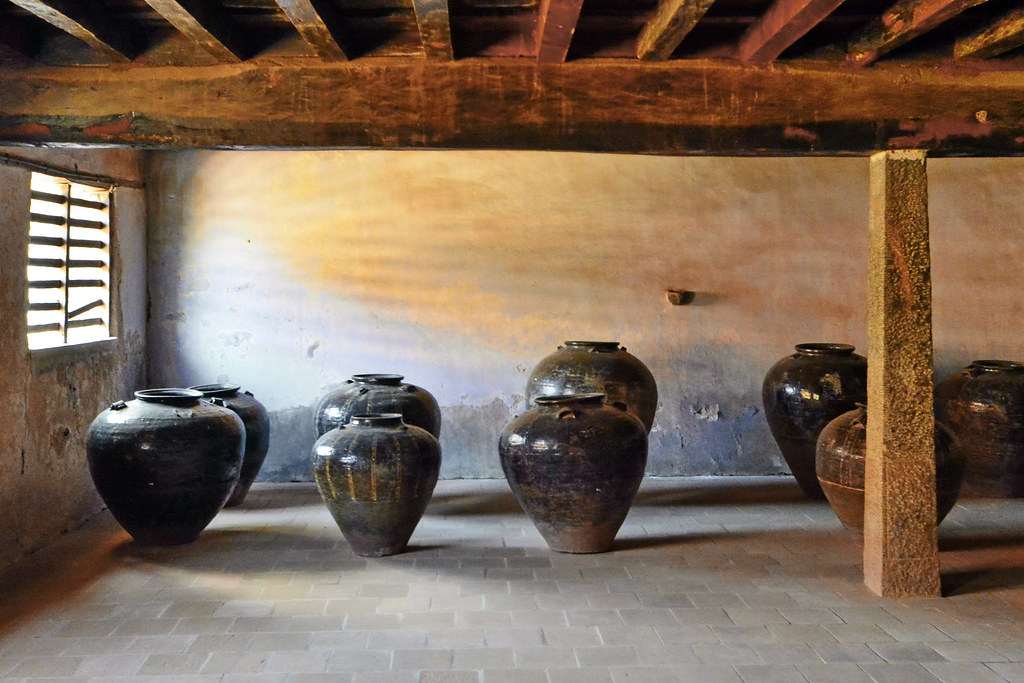 the quantum of Nivedyam in every temple was reduced by 1/3 and feasts and Namaskarams stopped in all temples excepting somewhere Namaskaram was observed as a rite, where also it was reduced to feeding one virtuous Hindu instead of a number of Brahmins. It is then evident that the prior usage was not to regard Nivedyam, Namaskaram, Masavisesham and Aattavisesham as immutable but was to allow reductions of Nivedyam and termination of ceremonies. The acts of the respondents in the same line cannot then be violations of “heretofore usages” of Devaswom.
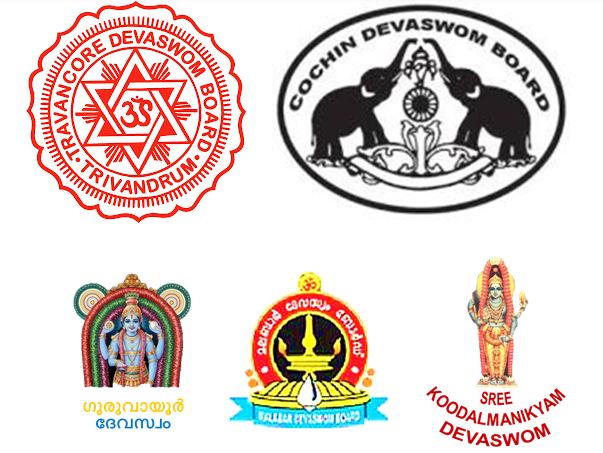 After attaining Independence and the introduction of constitutional changes Devaswom Department was separated from the effective control of the state. When the Travancore and Cochin states were integrated on 1stJuly 1949 the administrative control of Devaswoms was vested with Travancore Devaswom and Cochin Devaswom Boards, in pursuance of the articles of the Covenant and provisions of TCHRE Act of 1950. The temples in Malabar area were governed by HR&CE Department on the basis of Madras HRCE Act of 1951. The Koodal Manickom Temple were governed by Department on the basis of Koodal Manickom Devaswom Act of 1971. Guruvayoor temple is governed by separate Devaswom committee as per the provisions of Guruvayoor Devaswom Act of 1978. Malabar Devaswom board was constituted by Kerala government as per the directions of Honorable high court of Kerala.
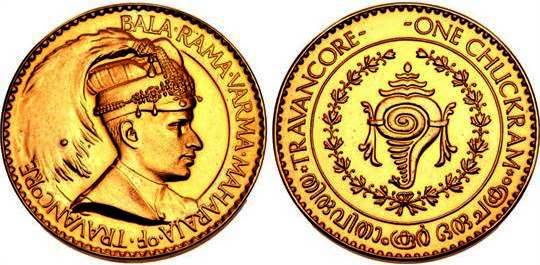
The Travancore – Cochin Temple Entry Act XXVII of 1950 – Rules. in Exercise of The Powers conferred by Section 9. of The Travancore Cochin Temple Entry (Removal of Disabilities) By The Travancore Devaswom Board in order to provide for Maintenance of The Religious Rites And Ceremonies Performed In Temples.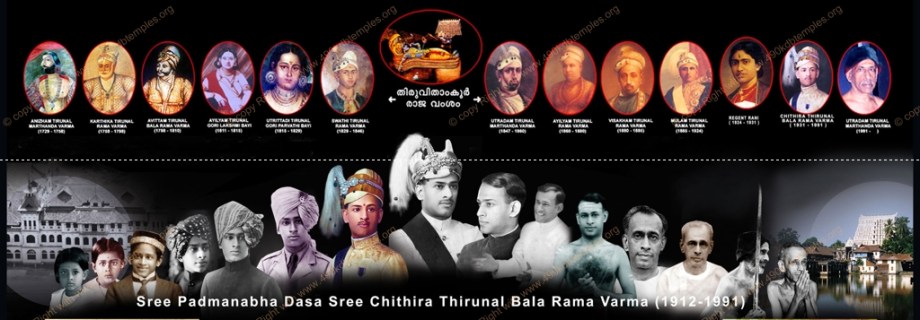


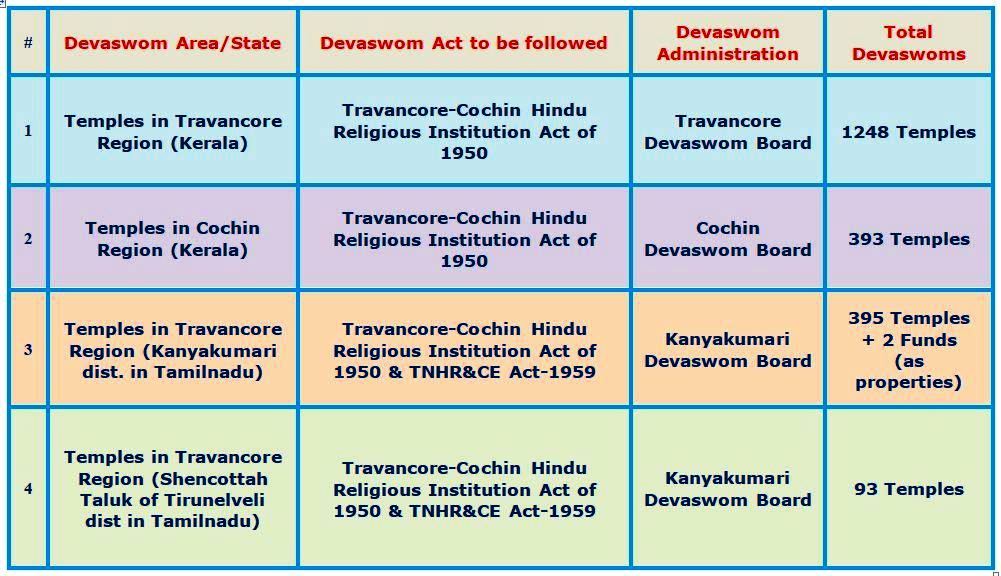 Formation of Travancore Devaswom Board by Thiru-Kochi State
 TDB is an autonomous body constituted under the Travancore Cochin Hindu Religious Institutions Act XV of 1950. It is entrusted with the task of administrating 1248 temples in the erstwhile princely state of Travancore comprised in the State of Kerala which were earlier administrated by the ruler of Travancore prior to the integration of the Princely states of Travancore and Cochin in 1949. The constitution of the Board was based on the Covenant entered in to by the Maharaja of Travancore in May 1949 and concurred and guaranteed by the
 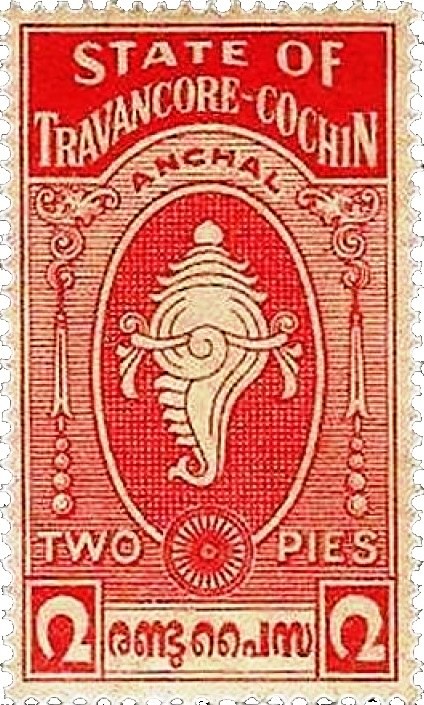 Government of India. In Act 7(2) – Travancore Devaswom Board shall consist of three Hindu members, one of whom shall be nominated by the Ruler of Travancore, one by the Hindu among the council of Ministers and the third or be elected by the Hindu members of the Legislative Assembly of the State.
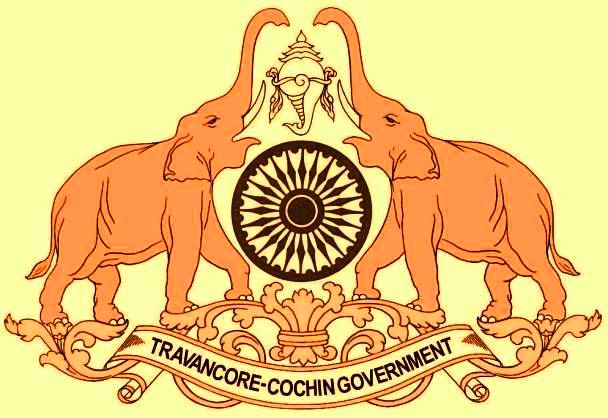 The term of the President and Members is for a period of three years. It has a Secretariat and its Headquarters is at Nanthancode, Thiruvananthapuram. Act XV of 1950 Travancore- Cochin Hindu Religious Institutions Act In the covenant entered into by Rulers of
  Travancore and Cochin, Provision has been specially made for the administration of the temples both in Travancore Cochin. The temples both incorporated and unincorporated which were under the management of the ruler of Travancore, were for the first time, brought under to control of a statutory body known by the name of the „Travancore Devaswom Board‟ with effect from the first day of August, 1949, and a sum of 45 lakhs was allotted to the Board annually for the administration of these temples.
TDB Official website: http://travancoredevaswomboard.org/
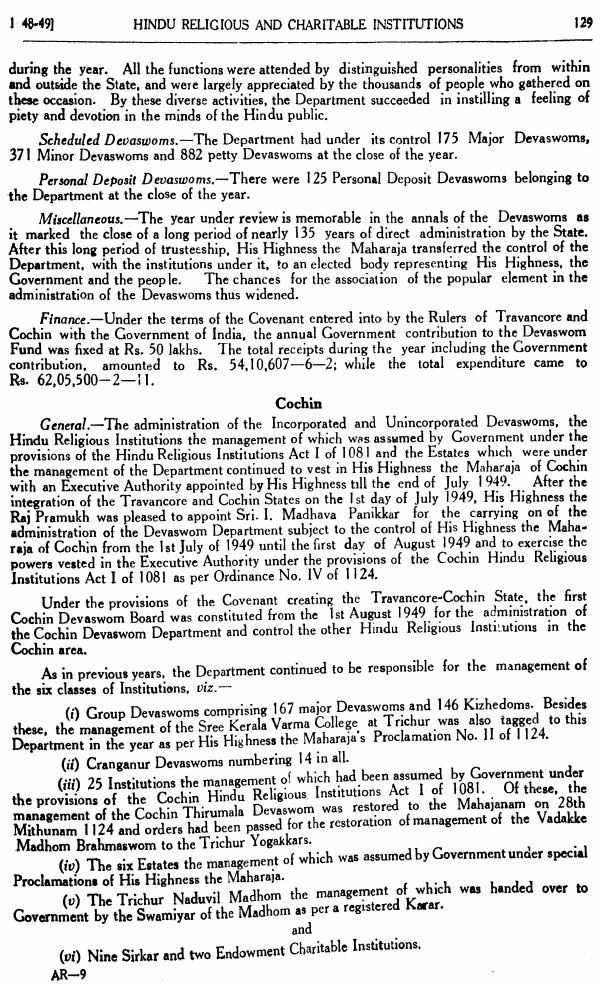

Act XV of 1950 enacted with a view to make for the administration supervision and control of incorporated and unincorporated Devaswoms and of other Hindu Religious Endowments and funds. This came into force on 16th April 1950.  In section 15 of the Act it has been laid down that, all rights, authority jurisdiction belonging to exercised by the ruler of Travancore prior to the first day of July, 1949 in respect of Devaswoms and Hindu Religious Endowments shall and be exercised by the Board. Thus under this Act, the Devaswom Board vested with unfettered power in the matter of administration of all Devaswoms their properties and funds and the actions of the Board were not subject to any supervision control or direction from any appellate authority.
Linguistic Reorganisation of Tamil State from The Travancore


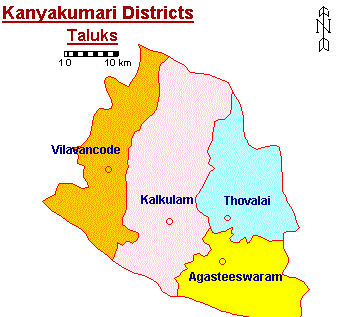 The Linguistic Reorganisation commission accepted the legitimacy of the demand of the Travancore Tamils for unification with Tamil Nadu. It recommended that the five taluks of Sengottai, Kalkulam, Vilavancode, Thovalai, Agastheesvaram should be taken out to be incorporated with the adjoining Tamil state. The commission advocated the linguistic reorganization of controversial areas on the basis of taluks and not villages and refused to take out the Tamil villages in Neyyatringarai taluk for the purpose of incorporation with Tamil Nadu. The commission also recommended that the taluks of Devikulam and Perumedu should be retained in the Kerala state.
 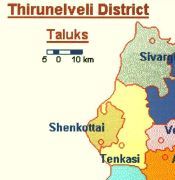 It recommended so because of the fact that the original inhabitants of these areas were Malayalees and Tamils came here as mere plantation workers. The TNCC also expressed its displeasure over this dimension and its leader C. Subramaniam officially conveyed its displeasure to the central government. Broadly based on the recommendations of Fazal Ali commission the linguistic reorganization of states was carried out through the enactment of a Constitutional Amendment Act in 1956. The Sengottai taluk was merged with Tirunelveli district and the other four taluks were amalgamated to form a new district called Kanyakumari in the Tamil speaking Madras state.


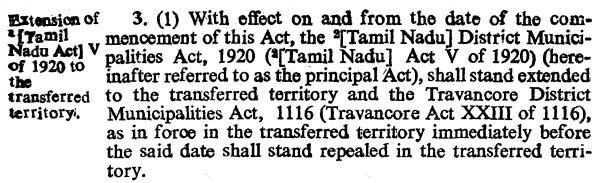
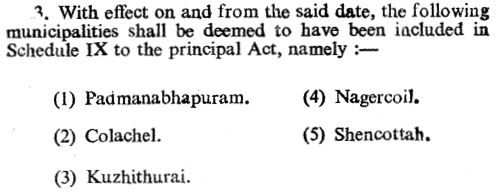
Transfer of Travancore Records
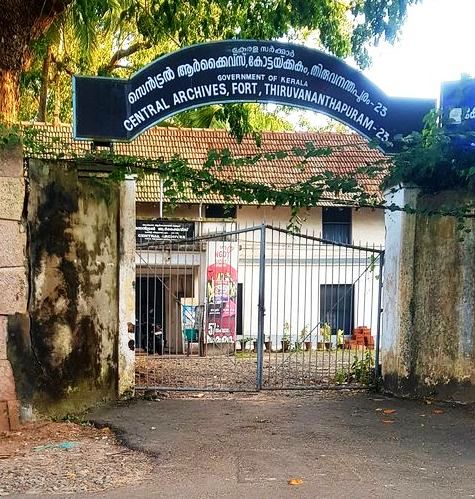 IIO.CR.1.35/57/PD dated 17.05.1960, The state Reorganisation Pre-Settlement and Settlement Records related to the areas transferred to The District Collector, kanyakumari district – Madras State from Kerala govt. Public Dept. (Central Records) including Devaswom Land Settlements Records on 03.08.1960 and are received by Sri.C.P.Bhaskara Menon for The Collector Sri.J.A. Ambasankar IAS. Ref .B4.6543/60 dated 11.08.1960 00351-CRI-433/60/PD seal dated 17.Aug.1960.
The Devaswom Land Records of in Kanyakumari District and Sengottai taluks in Tirunelveli District were handed over by the Public Department (Central Records), Trivandrum in 1960 to the Kanyakumari District Collector. However, till this date, the Devaswoms do not have settlement registers for to establishing the ownership with them and in the absence of such ownership document, Devaswom administration is not able to reclaim / recover the lands from the possession and enjoyment of untheorized people.


- Thus, all the records pertaining to the Devaswom lands transferred territory were delivered to and received by the District Collector, Kanyakumari and Assistant Director Survey department Tirunelveli district. The District Collector, Kanyakumari & The District Collector, Tirunelveli has been in possession of the records including the settlement registers relating to the lands transferred under States Re-organization Act to Tamil Nadu.
- Settlement registers and other documents of lands in possession of the District Collector, Kanyakumari include those of the lands belonging to the temples in the Kanyakumari District. Like temples in other parts of Tamil Nadu, the temples also have lands in Kanyakumari district. The extent of lands held by the temples in Kanyakumari District would easily exceed thousands of acres worth several hundred Crores of Rupees. The lose of Lands and it’s revenue leads to effected day to day Devaswom poojas, events and other proceedings. The purposes of providing immovable properties are not meeting now a day.
- Though the Collector, Kanyakumari District and the Assistant Director Survey department Tirunelveli district received the land records relating to the transferred territory of Travancore, it has not yet sent a copy of the records to the respective Devaswoms / Temples. Because of this non-furnishing of settlement records, the temples are not aware of the exact extent of lands owned by them. In the absence of settlement records for verification, Re-Survey of lands conducted in Kanyakumari District resulted in recording hundreds of acres in the name of third-party individuals and as government poramboku, since AD 1811 all temples in the princely state of Travancore were treated as government properties. Because of this, all temple lands are designated as Particular Sirkar Devaswom Vaka / Brahmaswom Vaka / Ooranma Deavswom Vaka / Deavswom Wet Land – Dry Land – Garden Land Ayacut Vaka / Devaswom Karam ozhivu / Kovil or Devaswom Porambokku / SriPandara Vaka / Pandara Vaka / SriPadam Vaka / Sangetham Vaka / many verities of Viruthi lands for unique Devaswom services / Thanathu land of particular temples, Kavu Purambokku and so on. Now some of the above said Devaswoms / temples themselves came under the private patta lands. It led to the occupation of temple lands by unauthorized persons and these encroachers got their names mutated in the revenue records. Mutation is made possible because land records or authorized copies of the same are not forwarded by the Kanyakumari District Collector to the respective local authorities. Even though temple land were identified and prepared reports by the special officers appointed by state Government of Tamil Nadu the authority under the provisions of HR&CE act 22 of 1959 Assistant Commissioner, HR&CE , Nagercoil did not pay attentions to protect the interest of the temples. Temples are greatly relying on the local people’s knowledge about the land holdings of temples in all their efforts in evicting encroachers and cancelling any unauthorized alienation of temple lands registered in the sub-registrar’s office. Sub-Registrars are not cooperating in refusing or cancelling unauthorized registration of temple lands in favour of third parties. This has led to the loss of property and revenue to the temples. Even after 60 years, The Kanyakumari Devaswom Board Administration itself doesn’t know some of their missing Devaswoms, where it was? Not able to claim the ownership of the Devaswoms; which the List of Devaswoms mentioned in the schedules 1&2 of HR&CE act 22 of 1959.
- The temples do not have Devaswom Land settlement registers establishing ownership with them and in the absence of such ownership document, temples are not able to reclaim / recover the lands from the possession and enjoyment of unauthorized people. Therefore, an authorized copy of settlement registers lying with the District Collector, Kanyakumari and the District Collector, Tirunelveli should be sent to each respective temple.
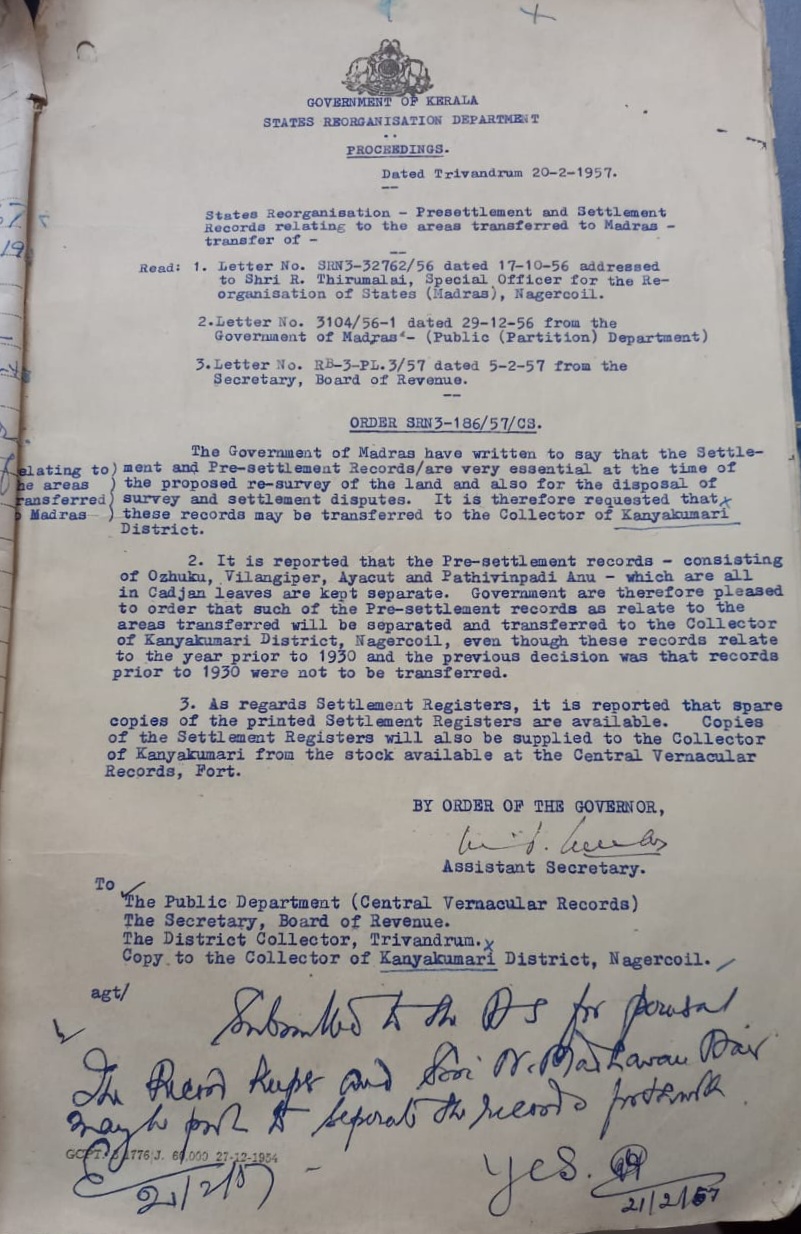
Requesting the Collector, Kanyakumari District and Tirunelveli District:
- To scan the Pre-settlement and Settlement Records including Devaswoms Land Settlements Records as received in 1960 from the Public Department (Central Records), Trivandrum relating to all the temples in the Kanyakumari District and Shencottah taluk in Tirunelveli District and furnish such digitalized copy to each temple in the Kanyakumari District and Shencottah taluk in Tirunelveli District.
- Requesting the Commissioner HR&CE Dept., to direct the Assistant commissioner, HR&CE (Admin)., Nagercoil, to identify the temples and properties of religious institutions in Kanyakumari District as per the reports prepared by Special Tahsildar (Temple Lands), Nanguneri, and also find out the encroachments over temple lands, holy springs, temple ponds, tanks of listed, non-listed temples, Endowments, Mutts, Kavu, Madoms along with Devaswoms, Devaswom Satrums, Nadavanams, Homa puras, Kanji puras, Parivettai Mandapams, Devaswom Vazhiyambalams, under Kanyakumari District Temples.
- Requesting the Commissioner HR&CE Dept., The chairman, Kanyakumari District Temples, Assistant commissioner, HR&CE (Admin)., Nagercoil, to identify temples and ancient heritage / historical monuments and buildings, damaged structures and restore temples and structures by removing encroachments in Kanyakumari District.
Central Government Act; Article 290A in The Constitution Of India 1949
290A. Annual payment to certain Devaswom Funds.- as on 1949’s Covenant – A sum of forty-six lakhs and fifty thousand (46,50,000/-) rupees shall be charged on, and paid out of, the Consolidated Fund of the State of Kerala every year to the Travancore Devaswom Fund; and a sum of thirteen lakhs and fifty six thousand (13,56,000/-) rupees shall be charged on, and paid out of, the Consolidated Fund of the State of Tamil Nadu every year to the Devaswom Fund established in that State for the maintenance of Hindu temples and shrines in the territories transferred to that State on the 1st day of November, 1956, from the State of Travancore-Cochin.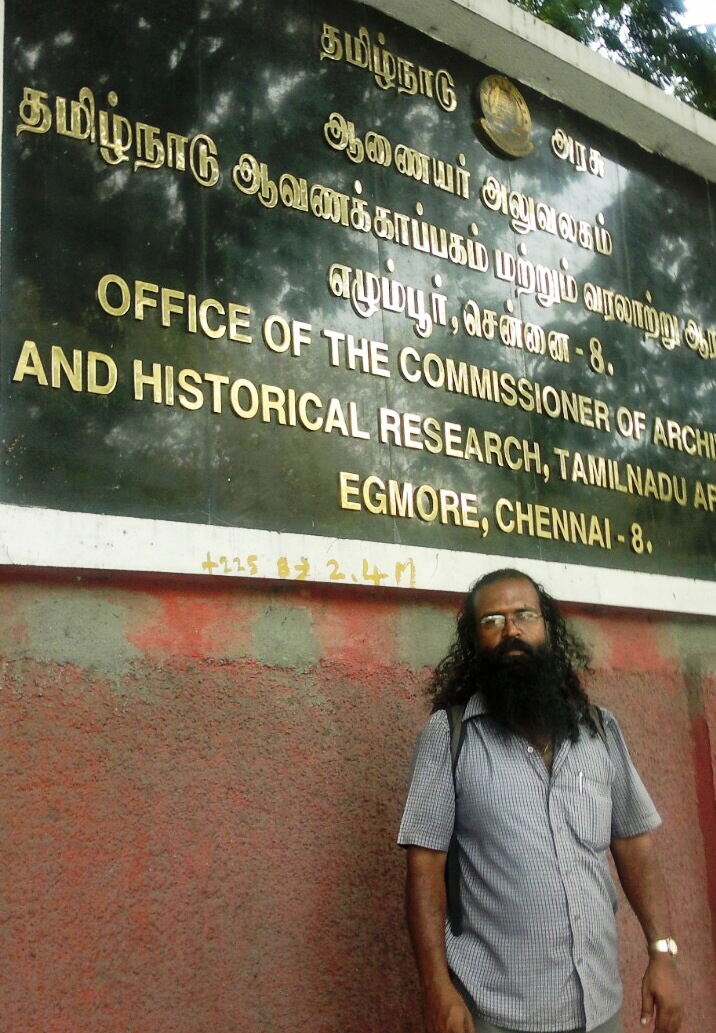
Latter The Kerala Govt. raised the Rs.32,94,000 to One Crore (1,00,00,000/-) rupees and The Tamilnadu Govt. raised the Rs.13,56,000/- to Three Crore (3,00,00,000/-) rupees.
[The Tamilnadu Hindu Religious and Charitable Endowments Department, Demand No.47 Government Grant for Kanyakumari District temples (2014-2015) sec. 59. Understanding the shortage of funds in the administration of Kanyakumari District incorporated and unincorporated temples which includes 490 temples, 1 Women’s college, 1 Higher Secondary School, and 2 High Schools Hon’ble Chief Minister of Tamilnadu Puratchi Thalaivi Amma ordered the annual government grant of Rs.1 crore to be raised to Rs.3 crore and now it becomes 6 crore for better administration.]
The Formation of Kanyakumari Devaswom Board
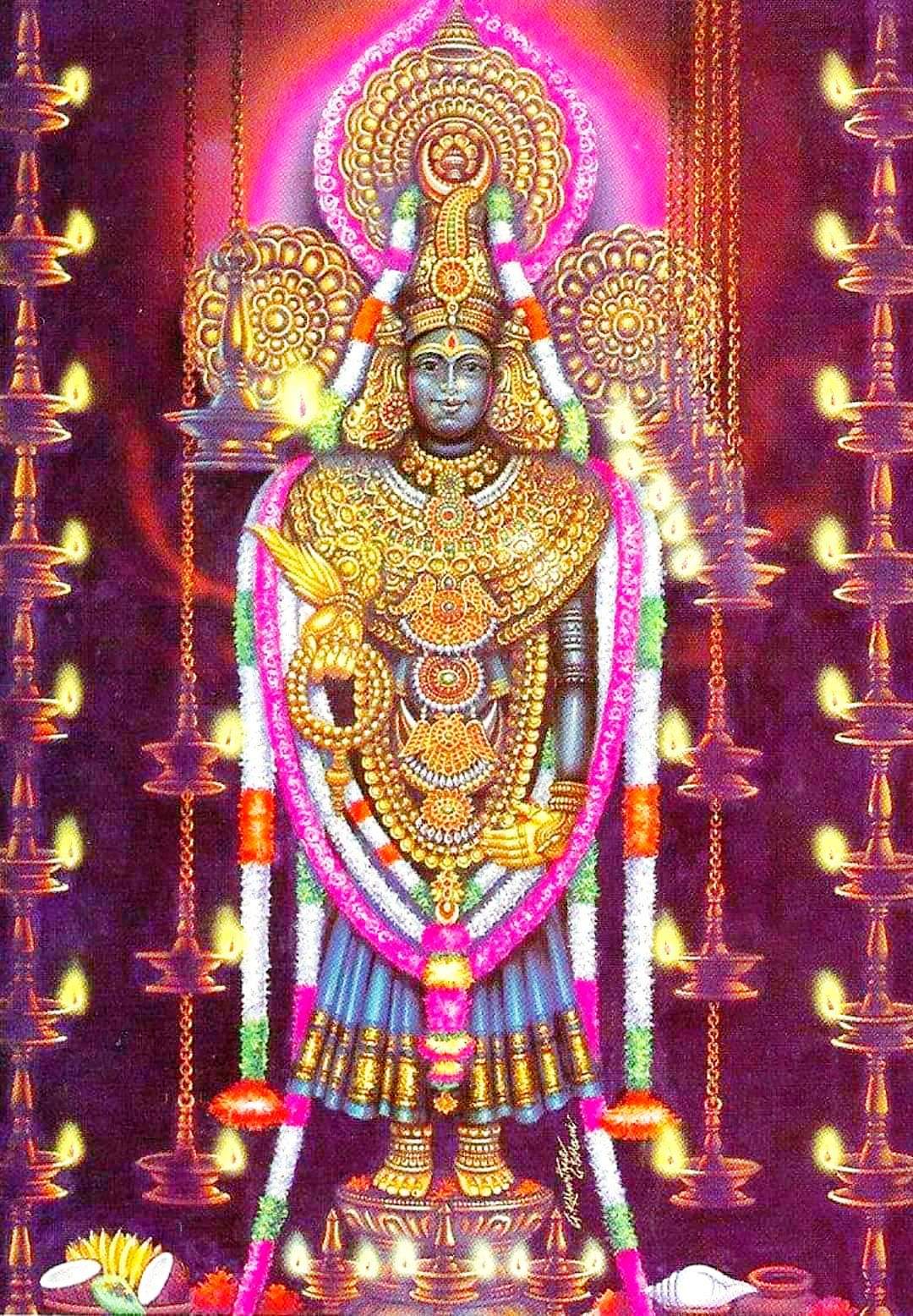 As per the Act 30 of 1959, The Tamilnadu Transferred territory Incorporated and unincorporated Devaswoms Act, 1959 (Act,30 of 1959) passed by the Madras legislature, the Kanyakumari Devaswom Board was established on 1st April 1960. The act of 1959 came into force on 1st April 1960. The President and two members constituted the Board. The president and a member were nominated by the then Madras Government and the Ruler of Travancore nominated another member. Only the permanent resident of the transferred territory was eligible to be nominated to the Board. He should profess the Hindu religion and must attain the age of thirty-five years. The members could be removed on the ground of misbehavior or incapacity. In absents of Board, The Assistant Commissioner / The Executive Officer of Kanyakumari Devaswom Board will take the charge as Thakkaar.
 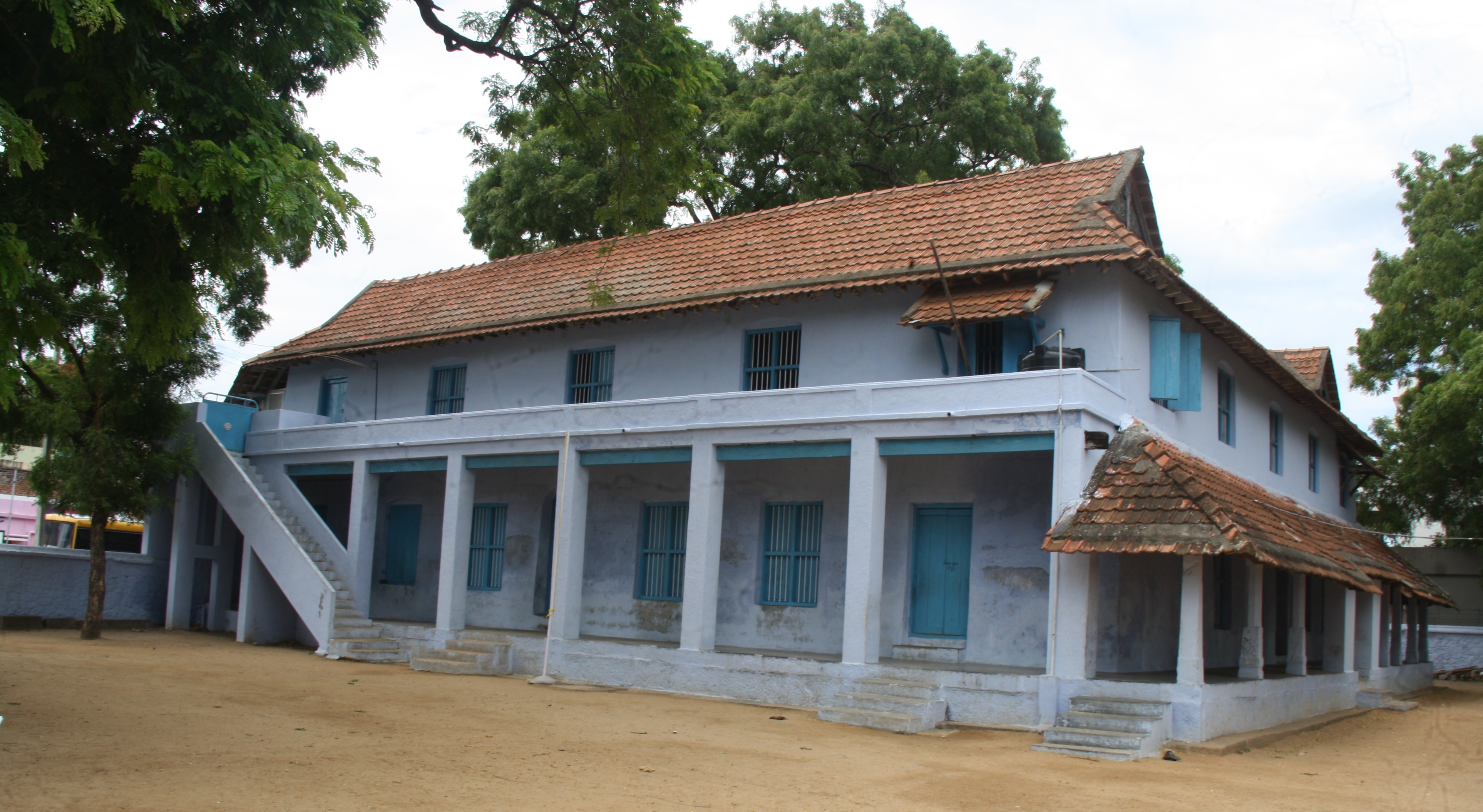 The head quarters of the Board was continues in the office the Travancore Devaswom Assistant Commissioner. The provisions of the present Act of 1959 are, as compared with those of Act XV of 1950, retrograde in nature. In the latter Act the power, status and authority of the Board have been wanting only reduced with the result that it has to work almost as a
 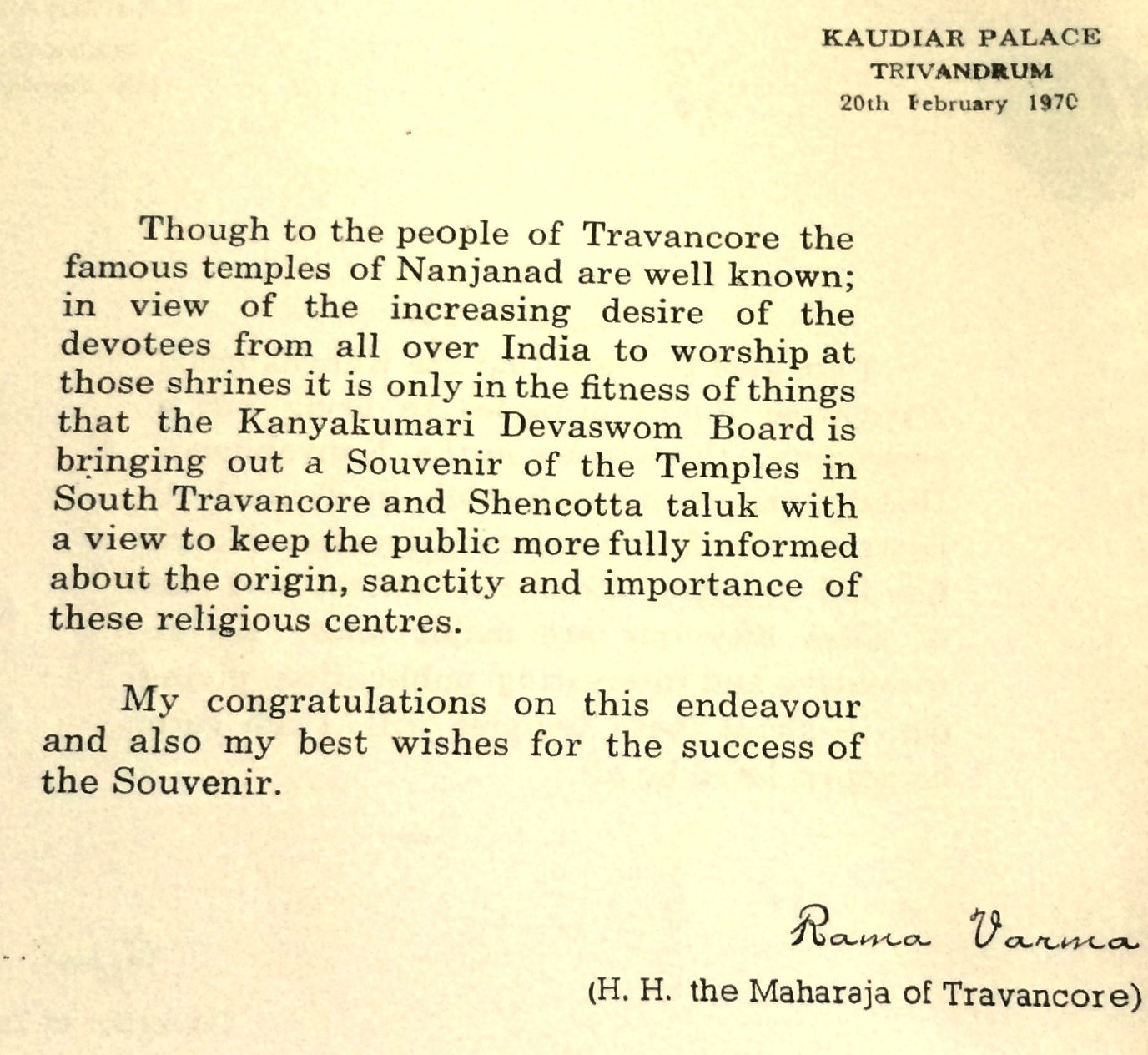 subordinate institution under Commissioner for Hindu Religion and Charitable Endowments. The Act of 1959 has given that power the Government. According to the former act decisions are taken by the Board by a majority of voters and in case of equality of voters, the present will have casting vote, but in the new Act in case of equality of votes, the matter has to be referred to the Honorable Commissioner, HR&CE whose decision shall be final.
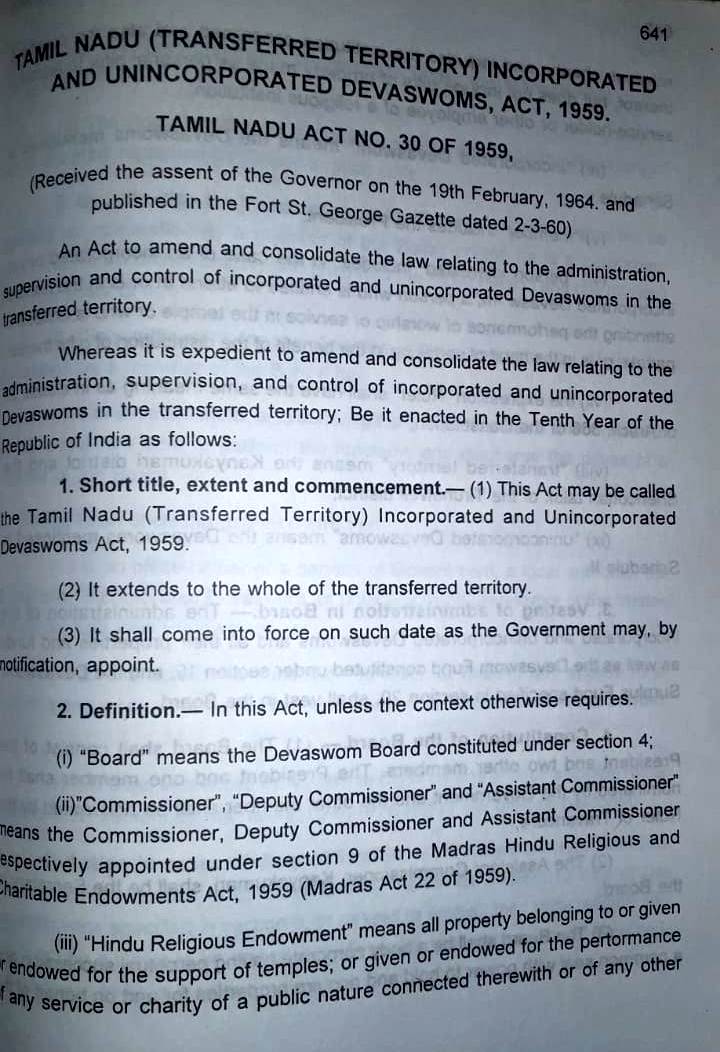
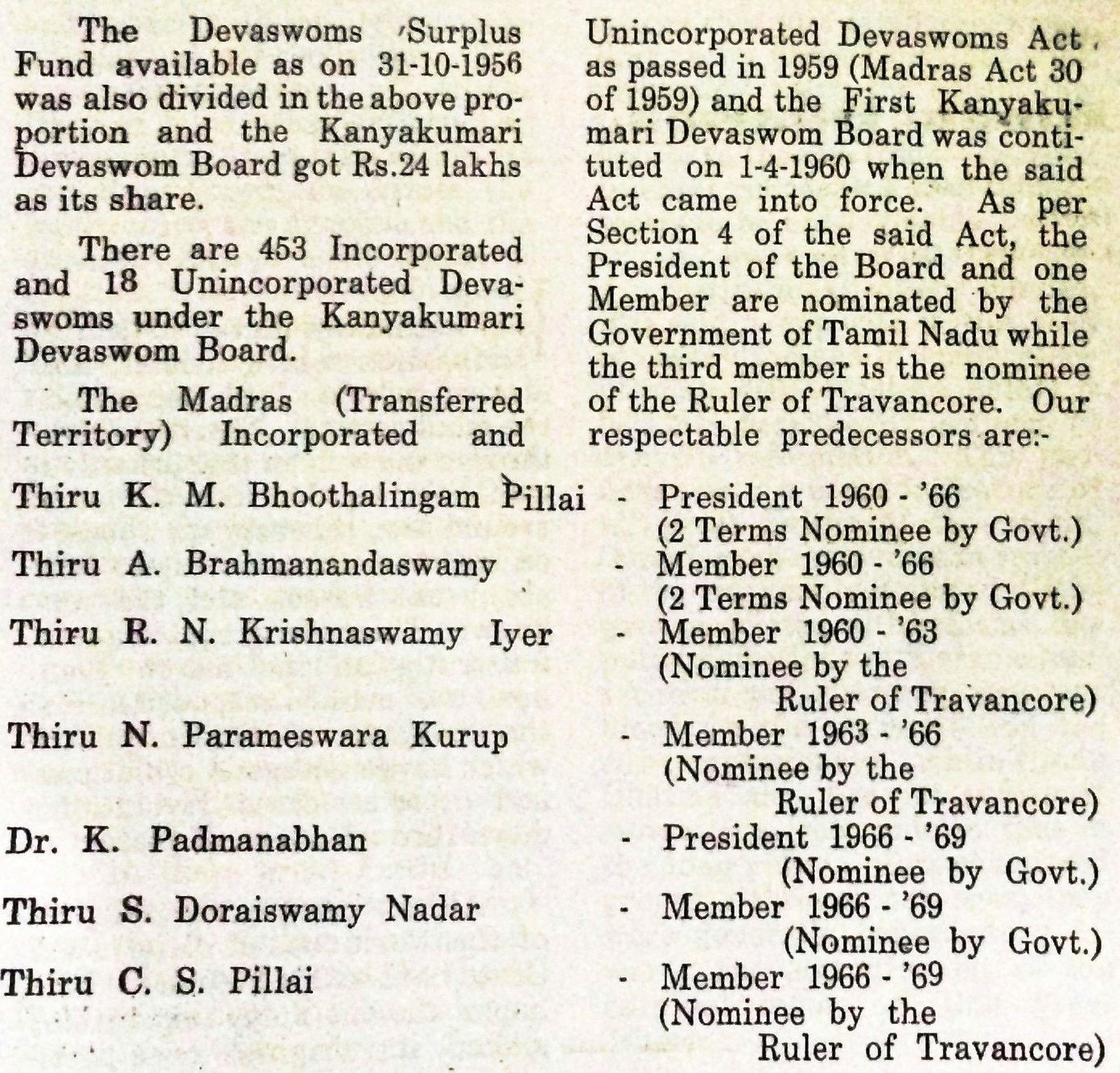
The first Kanyakumari Devaswom Board was constituted with K.M.Boothalingam Pillai as president and A.Brahamandaswamy and R.N.Krishna Iyer as members. The first two persons were nominated by the Government of Madras as per the provisions of the above mentioned in the Act R.N.Krishna Iyer was nominated by Ruler of Travancore as per the Act. As per the act to elect the members of devaswom board the voting eligibility of the member of the legislative Assembly should be the followers of Sanadhana Dharma (Hindusm/buddhism/Jainism Religions).
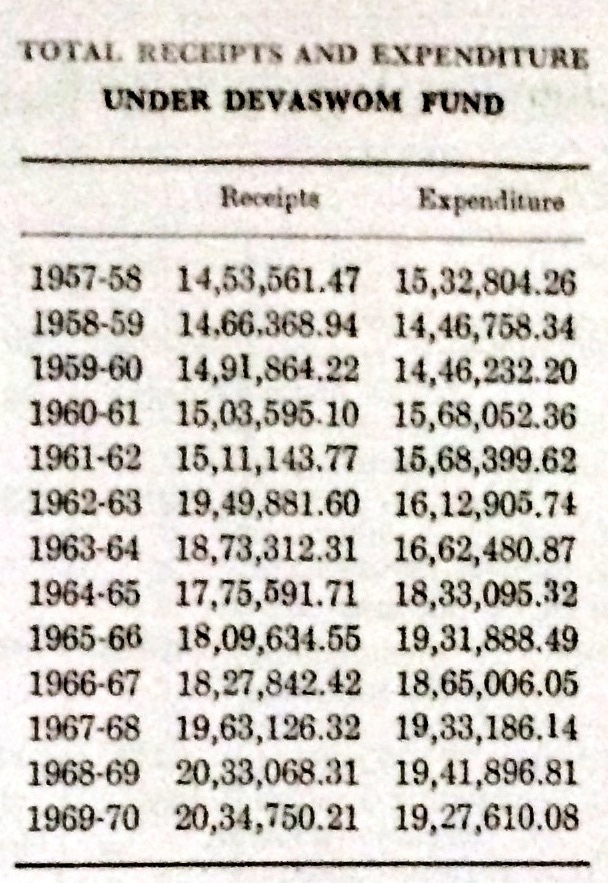 In the independent India, “The States Reorganisation Act-1956” came into effect from November 1st, 1956 and consequently, the Tamil speaking area of Thovalai, Agastheeswaram, Kalkulam, Eraniel & Vilavancode Taluks of Thiruvananthapuram District and Sengottai Taluk of Quilon District were transferred from Travancore-Cochin (Kerala) to Madras (Tamilnadu) state including 490+ Travancore Devaswom Board temples. These incorporated and unincorporated devaswom temples are now under the administration & control of The Joint Commissioner & The Executive Officer of Kanyakumari Devaswom Board {KDB}, Suchindram.
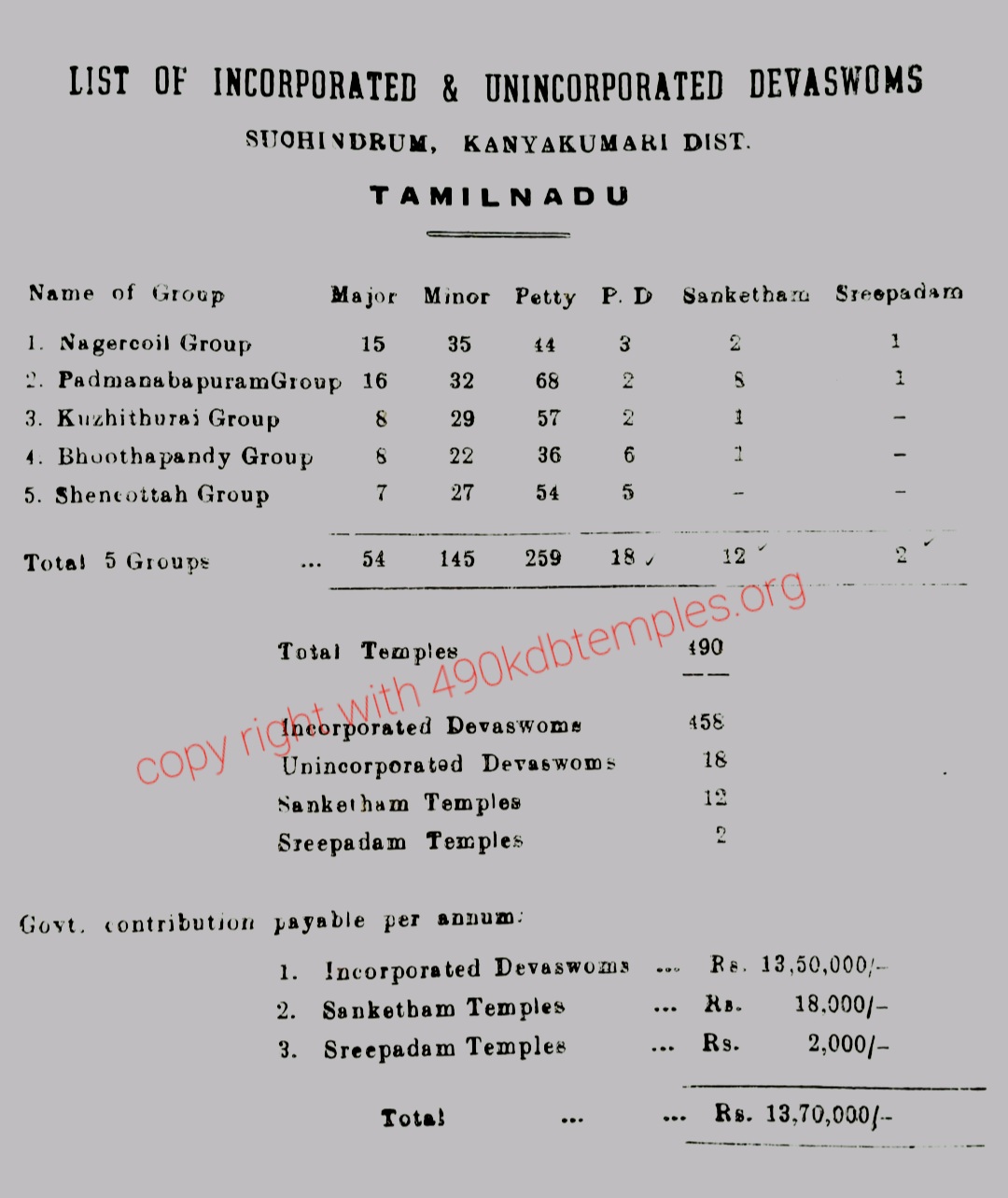
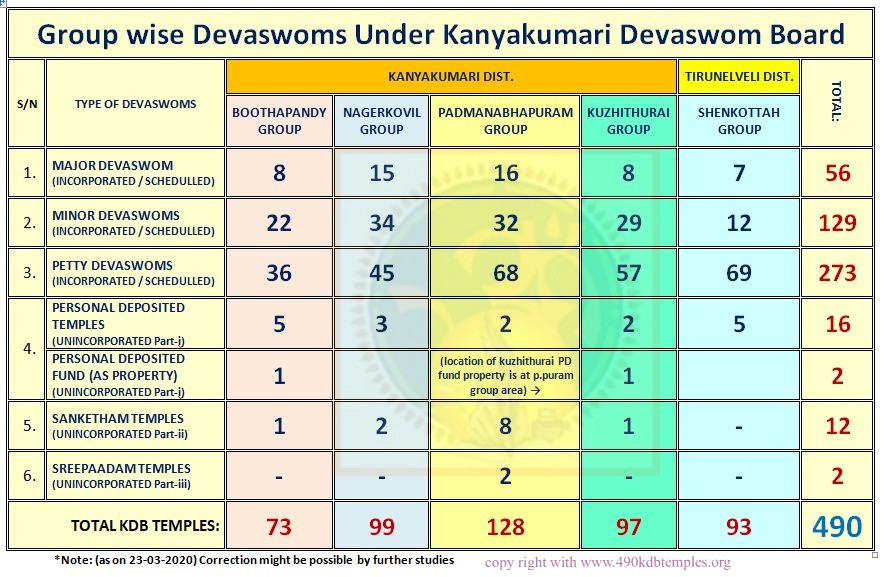
Report of the Hindu Religious Endowments Commission 1960-1962
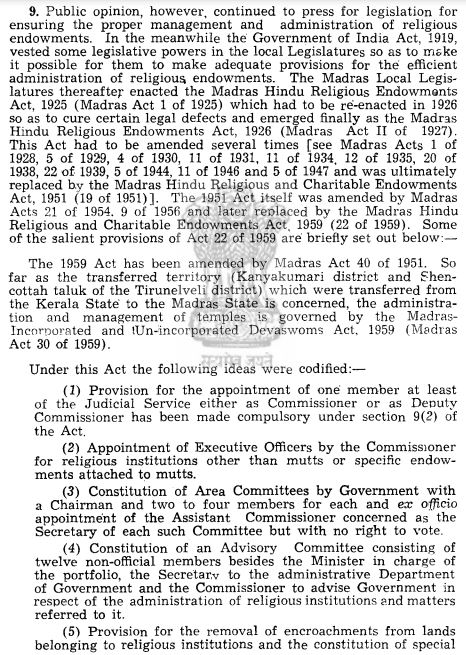
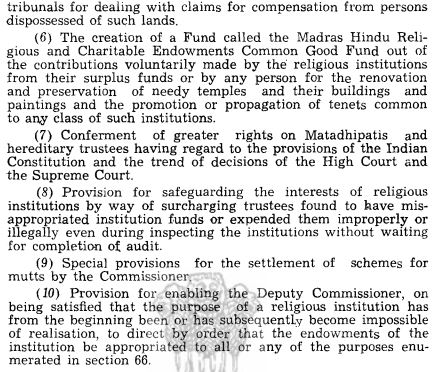
The Devaswom Board would ensure the Rights and Privileges His Highness the Maharajah of Travancore: The Census of India 1961 by Sri. P.K.Nambiar – Temples of Madras state..
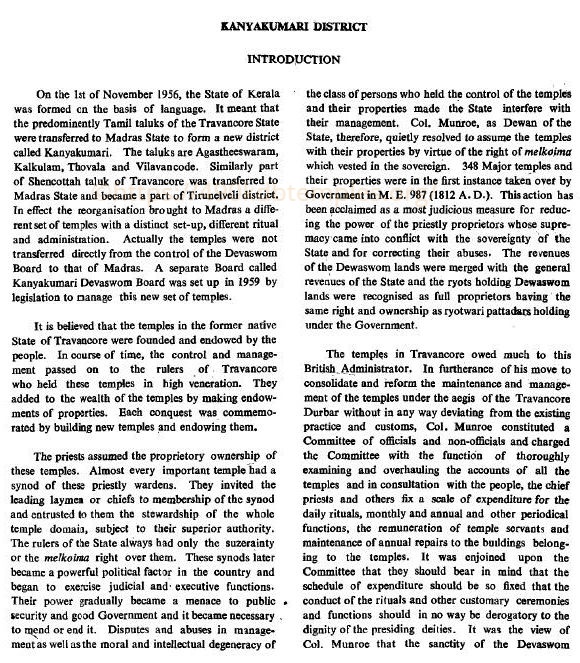
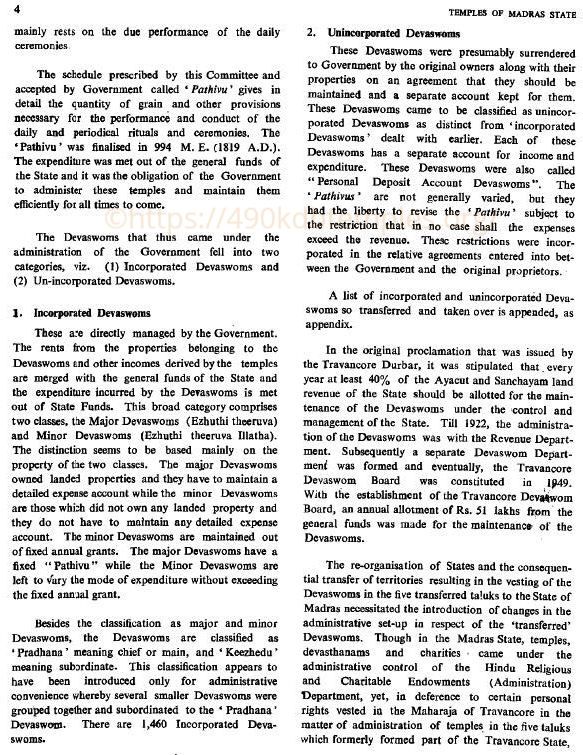
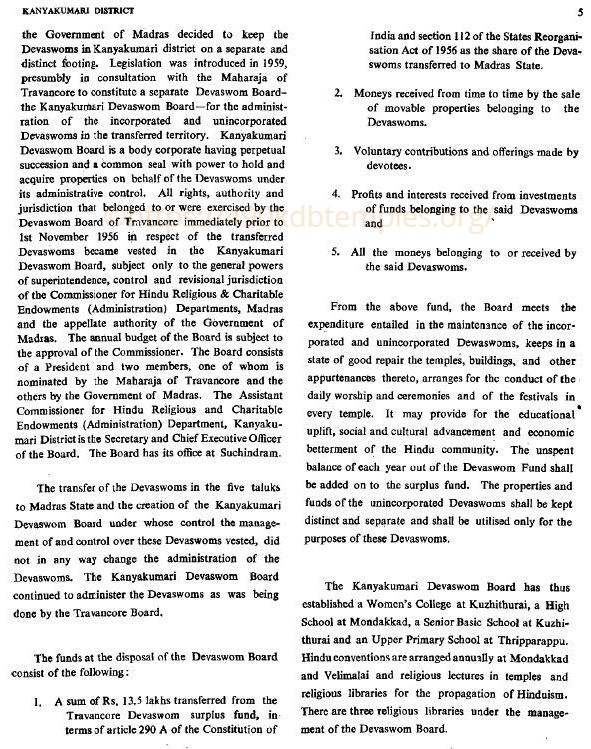
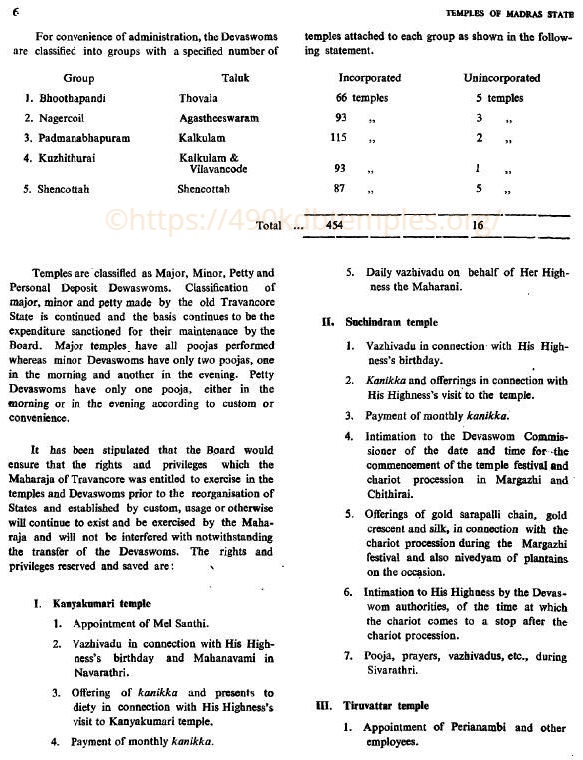
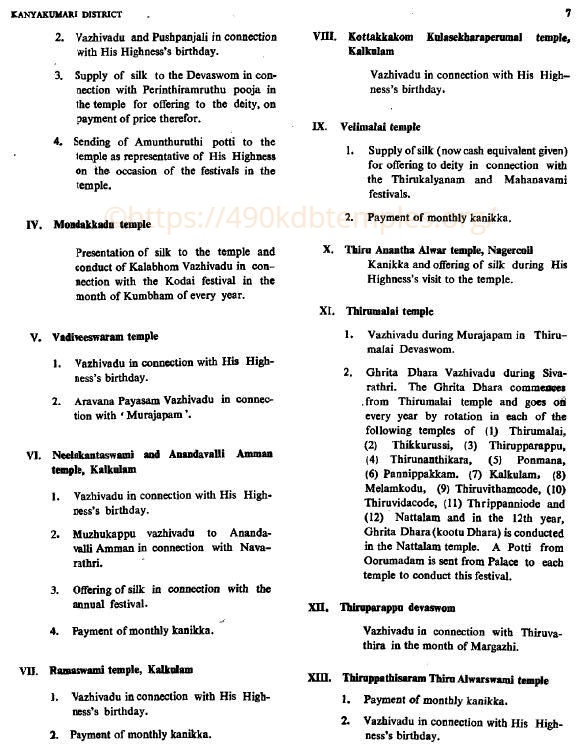

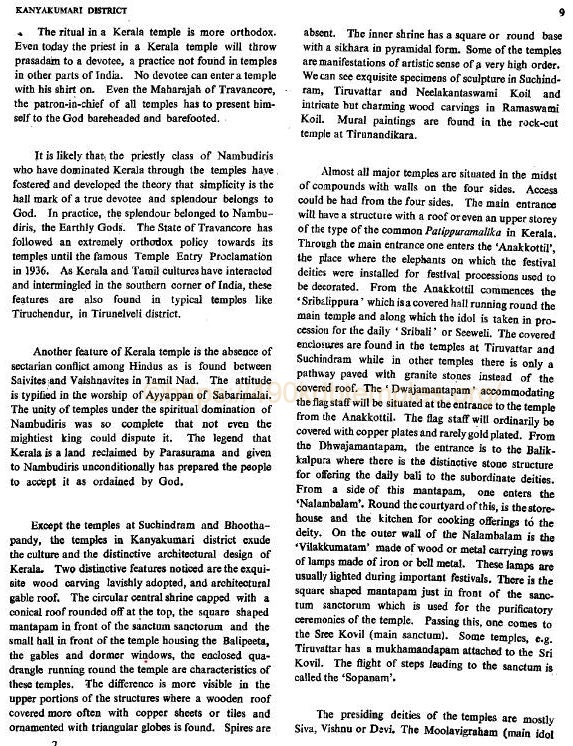
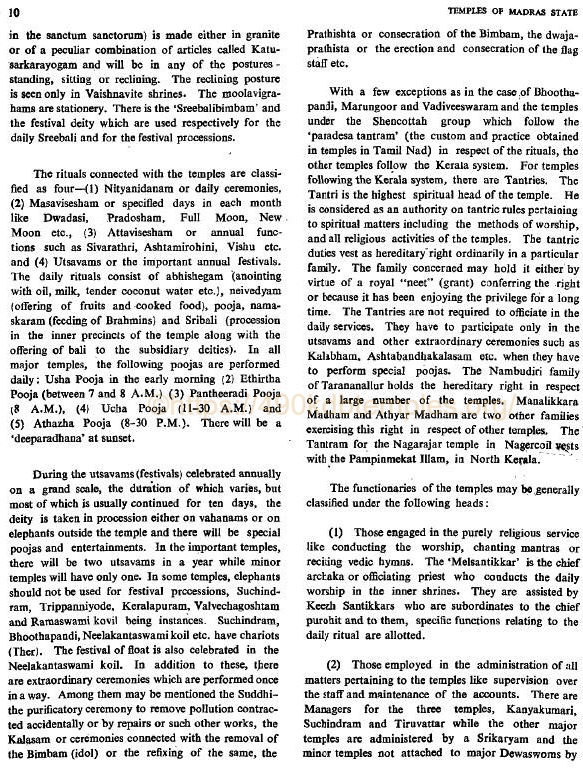
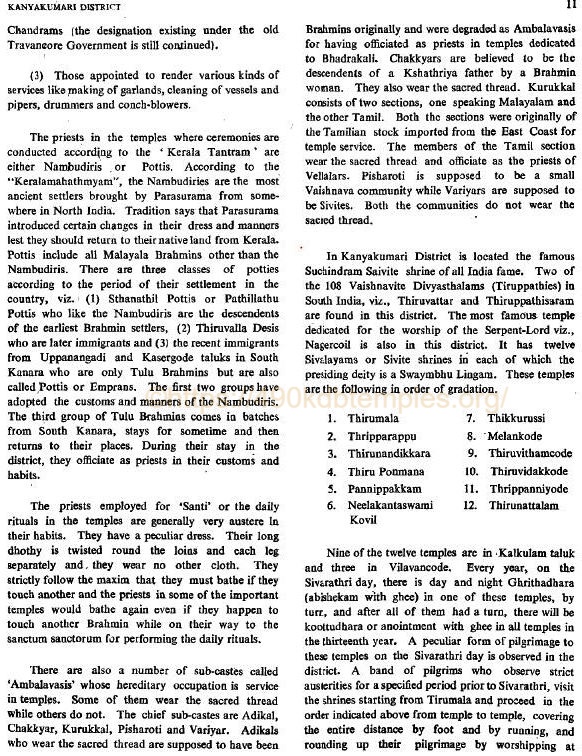
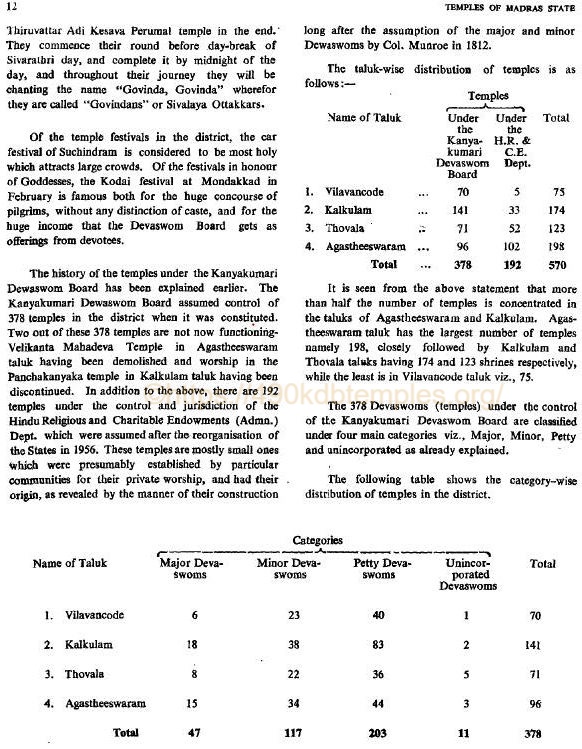
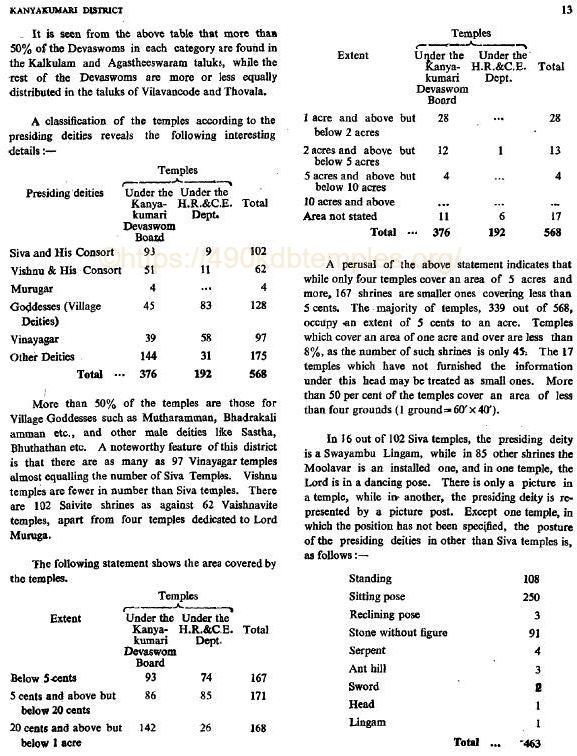
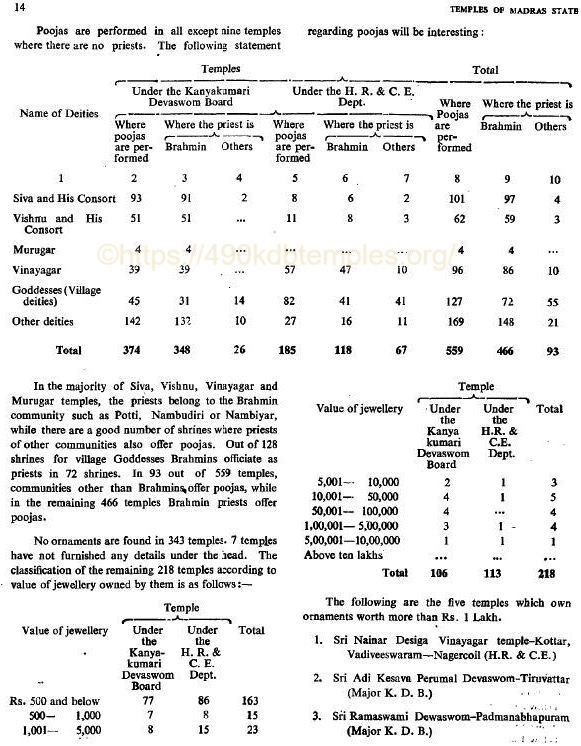
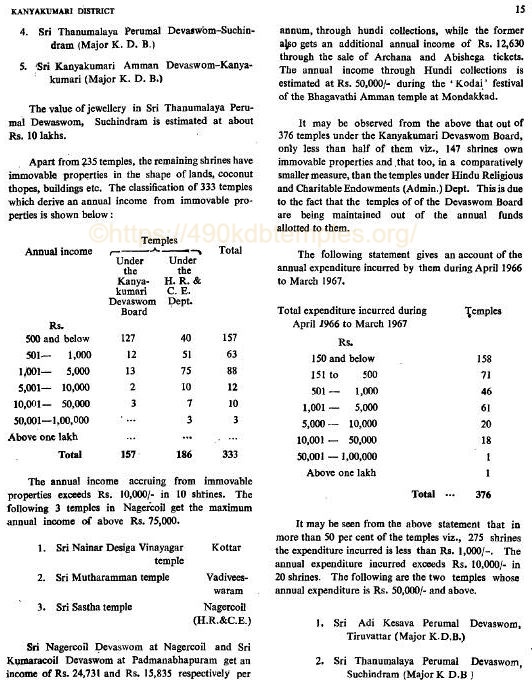
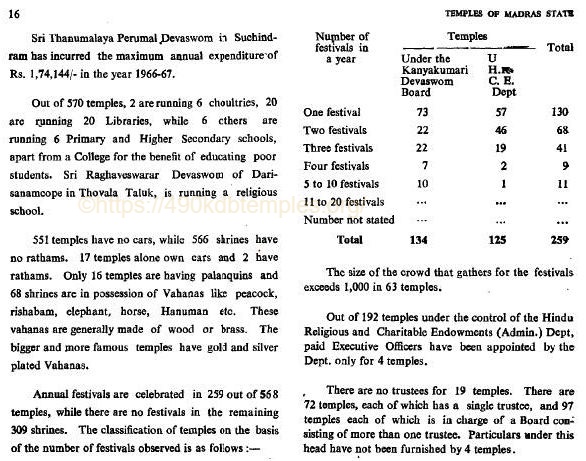
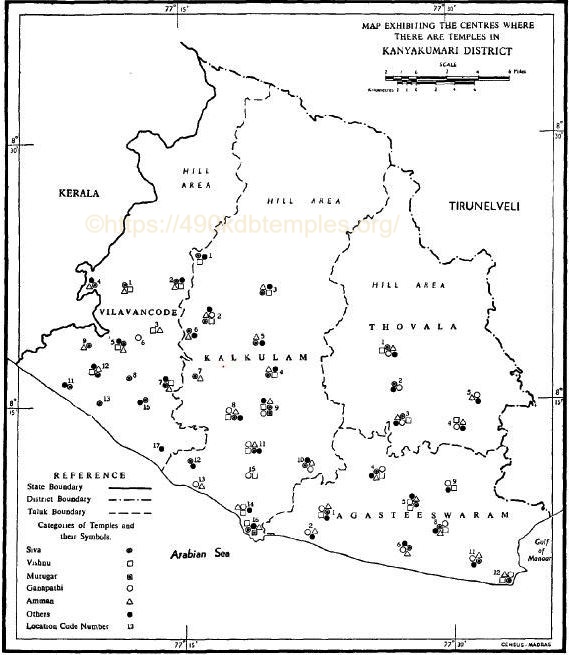
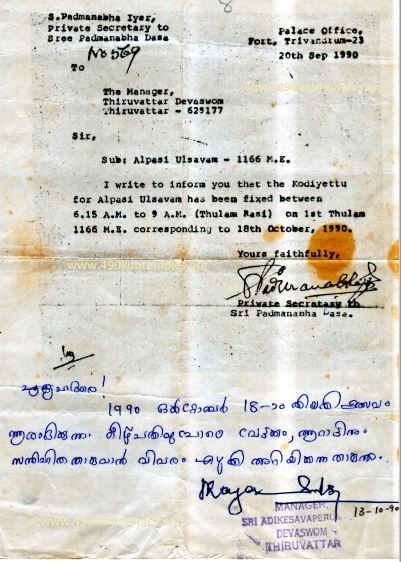
List of Devaswoms under Kanyakumari Devaswom Board in 1960:

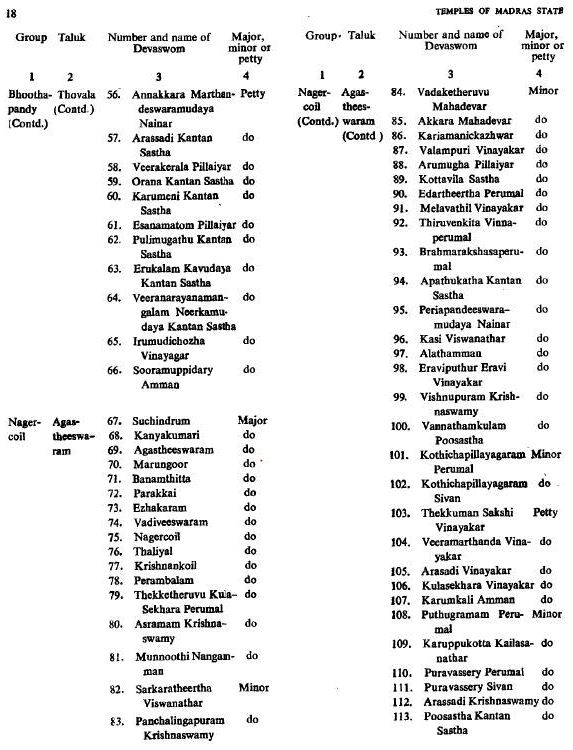
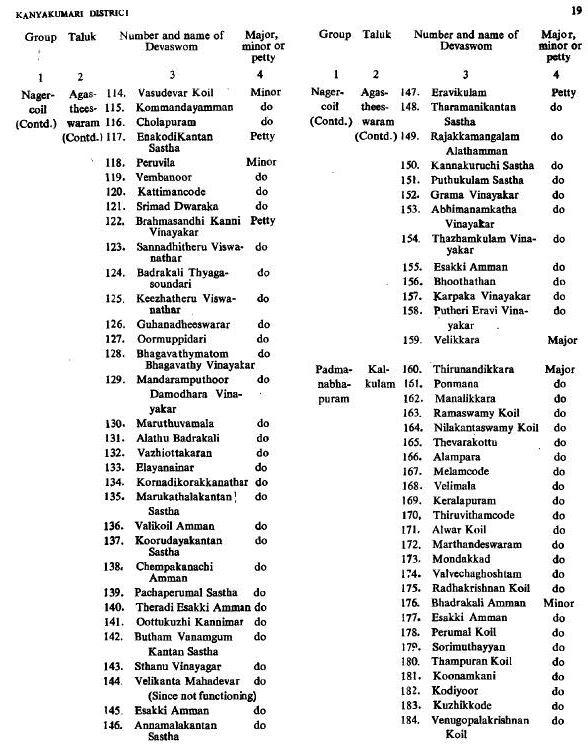
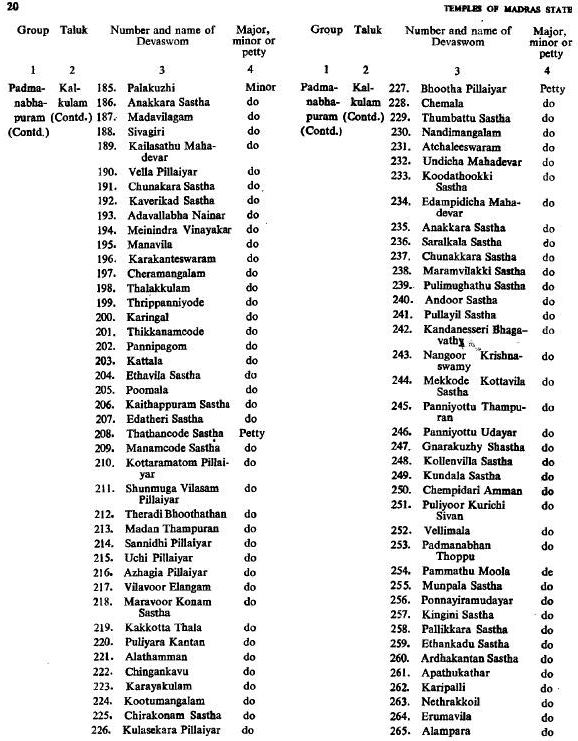
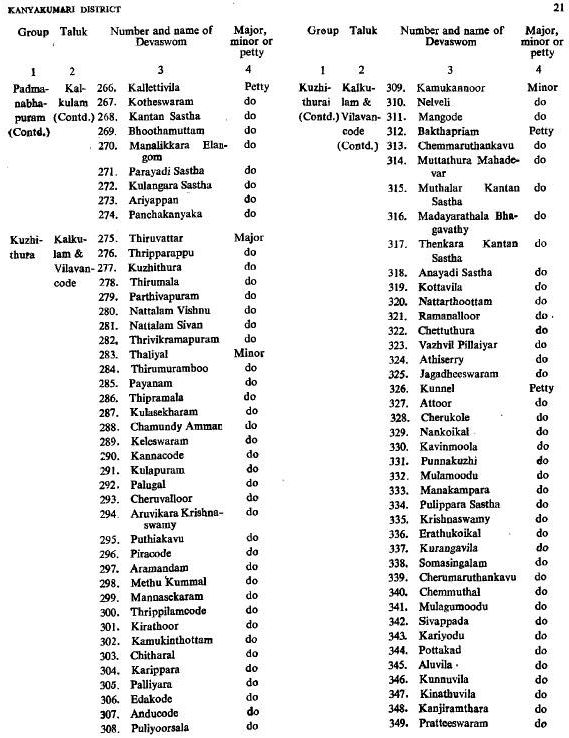
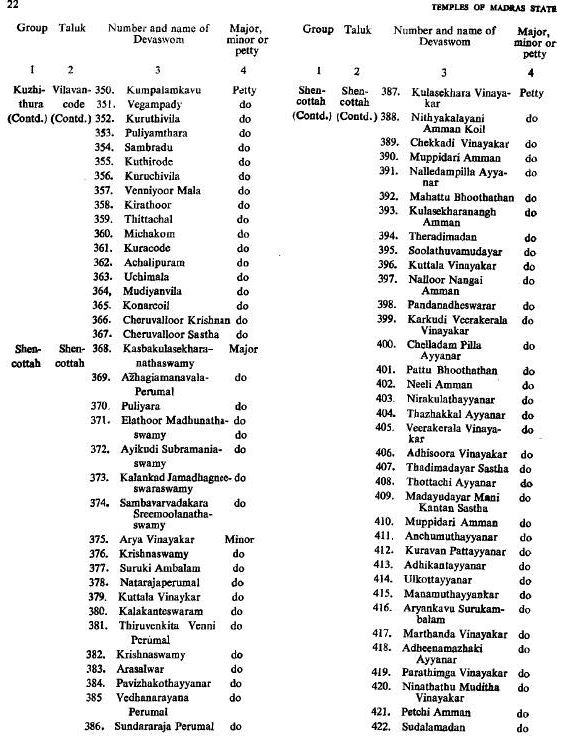
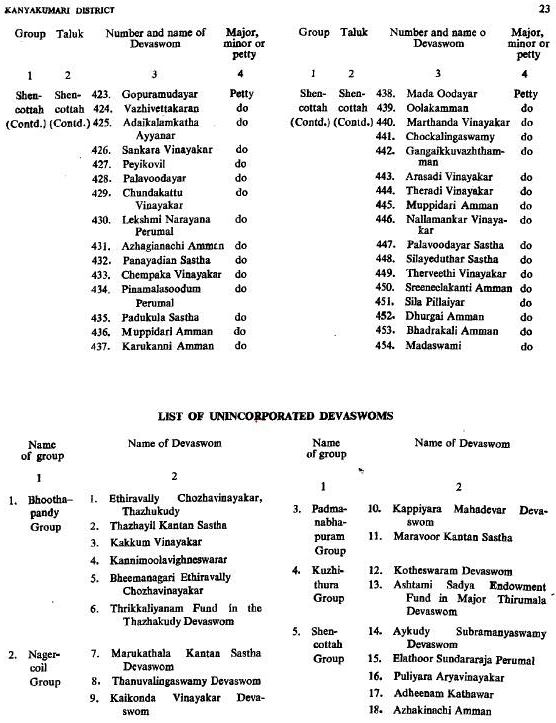
Kanyakumari Devaswom Board came under the control of TN HR&CE Dept.
The Devaswom Board functioned from 1st April 1960 to 31st December 1974 for about 15 Years. the Government introduced a Bill in 1974, stating that the Kanyakumari Devaswom‟s administration was incorporated with the Hindu Religious and Charitable Endowment Board and it has been called the Act of Tamil Nadu 1974. The working of the Board was effective. The most important function of the Board was to control the administration of devaswoms in the transferred territory. This expression was substituted for the expression, “The Devaswom Board constituted under section 4 of the Tamil Nadu (Transferred Territory) Incorporated and Unincorporated Devaswoms Act, 1959 (Tamil Nadu Act 30 of 1959)”.
REPEAL OF THE TAMIL NADU (TRANSFERRED TERRITORY) INCORPORATED AND UNINCORPORATED DEVOSWOMS ACT, 1959 (TAMIL NADU ACT 30 OF 1959) BY THE TAMIL NADU HINDU RELIGIOUS AND CHARITABLE ENDOWMENTS (THIRD AMENDMENT) ACT, 1974. (TAMIL NADU ACT 50 OF 1974). An Act further to amend the Tamil Nadu Hindu Religious and Charitable Endowments Act, 1959.
Be it enacted by the Legislature of the State of Tamil Nadu in the Twenty-fifth Year of the Republic of India as follows: Short title and commencement: (1) This Act may be called the Tamil Nadu Hindu Religious and Charitable Endowment (Third Amendment) Act, 1974. (2) It shall come into force on such date as the State Government may, by notification, appoint. 2 to 13. [The amendments made by sections 2 to 13 have already been incorporated in the Tamil Nadu Hindu Religious and Charitable Endowments Act, 1959 (Tamil Nadu Act 22 of 1959)]. This Act come into force on the 4th January 1975. T. N. HINDU RELG. & CHARIT. ENDOW. (3RD AMENDMENT) ACT.
Continuance of legal proceedings – Any legal proceedings taken on behalf of or against the Board constituted under section 4 of the Tamil Nadu (Transferred Territory) Incorporated and Unincorporated Devaswoms Act, 1959 (Tamil Nadu Act 30 of 1959), may be continued by or against the Board of Trustees constituted under clause (b) of sub-section (1) of section 47. Any amount including costs, under any decree or order of court obtained for or on behalf of the said Board shall be recoverable by the Board of Trustees constituted under clause (b) of sub-section (1) of section 47.
Provision for staff of Devaswom Board .- Notwithstanding any law, custom or contract to the contrary, the following provisions shall apply in regard to the persons employed in the administration of any Incorporated and Unincorporated Devaswoms immediately before the date of the commencement of this Act : (1) The Government shall have power to terminate the service of any such person after giving one calendar month’s notice or paying him one month’s pay in lieu of such notice. (2) Persons whose services are retained shall be governed by such rules as the Government may make in regard to them.
Repeal:- (1) The Tamil Nadu (Transferred Territory) Incorporated and Unincorporated Devaswoms Act, 1959 (Tamil Nadu Act 30 of 1959), is hereby repealed. (2) (i) On and from the date of the commencement of this Act, the Board constituted under section 4 of the Tamil Nadu (Transferred Territory) Incorporated and Unincorporated Devaswoms Act, 1959 (Tamil Nadu Act 30 of 1959), shall stand abolished and any member of such Board shall with effect from the said date, cease to hold office as such member. (ii) All orders passed, decisions made, proceedings or action taken and things done under the said Tamil Nadu (Transferred Territory) Incorporated and Unincorporated Devaswoms Act, 1959 and the rules.
 T.N. HINDU RELG. & CHARIT. ENDOW. (3RD AMENDMENT) ACT made there under before the date of the commencement of this Act, shall be deemed to have been passed, made, taken or done under the principal Act as amended by this Act, by the Board of Trustees constituted under clause (b) of subsection (1) of section 47 of the principal Act.
On and from 4th January 1975 (i.e., the date of coming into force of the Tamil Nadu Hindu Religious and Charitable Endowments (Third Amendment) Act, 1974 (Tamil Nadu Act 50 of 1974), the Tamil Nadu (Transferred Territory) Incorporated and Unincorporated Devaswoms Act, 1959 (Tamil Nadu Act 30 of 1959) was repealed by section 16.
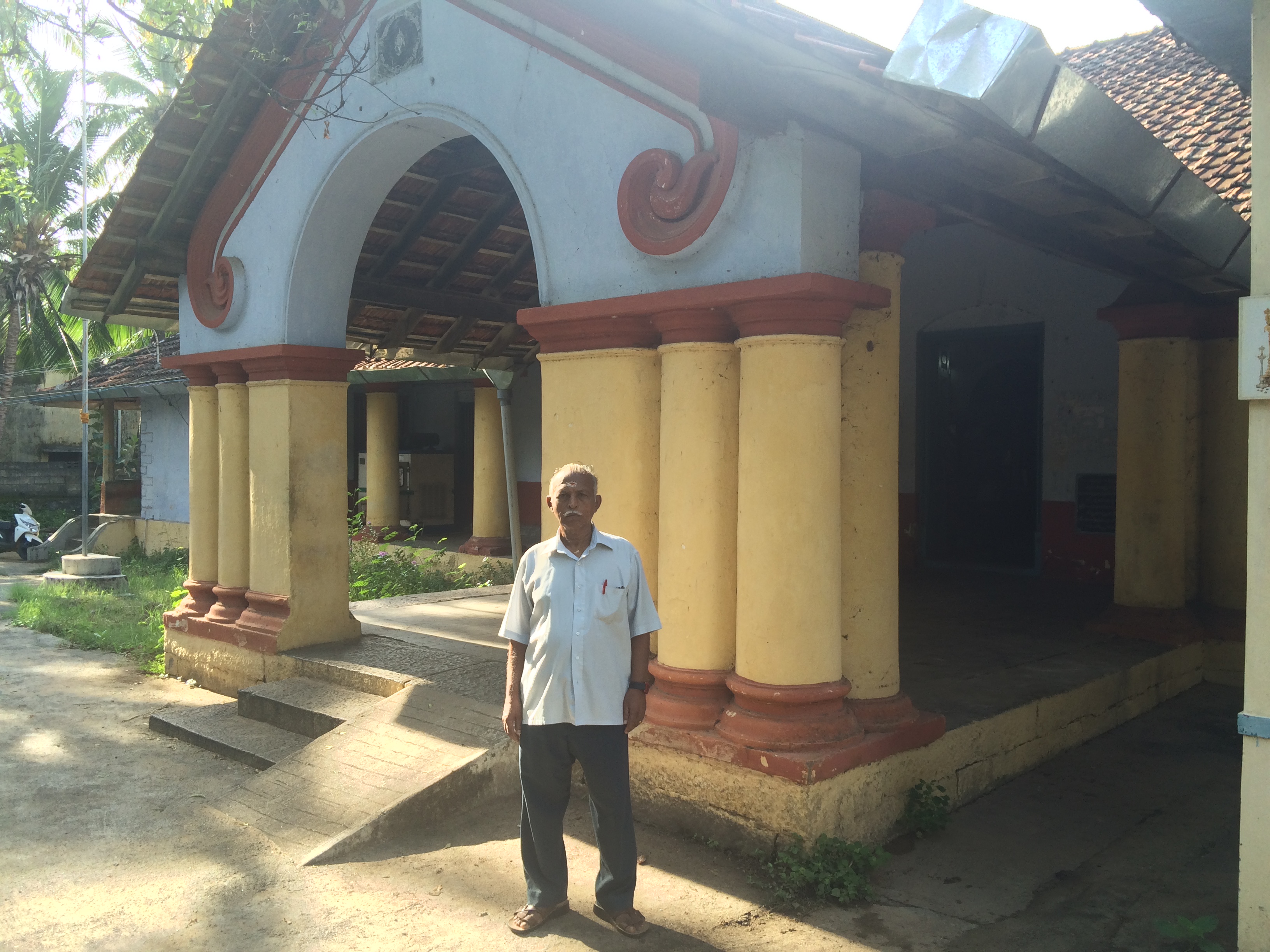 The Board supervised the activities of the temple, made arrangements for the proper conduct of pujas, ceremonies, ulsavams and other festivals of the temples. The Board appointed temple servants for the proper conduct of pujas and ulsavams. Board members visited the important temples during the days of ulsavams. They were entitled to get travelling allowances during their visit. Apart from temple administration, the Board has undertaken many social, cultural and educational activities with a view to uplift the social, economic and cultural betterment of the Hindu community. The Board conducted meetings at regular intervals and urgent meetings were conducted with circulation minutes. Kanyakumari Devaswom Board has prepared and passed byelaws on various subject matters at the Board meetings. These byelaws were published in one or more newspapers of local languages of the locality, district gazettes, and exhibited them in the devaswom notice board at Board’s office at Suchindrum. People expressed their objections and suggestion over the byelaws, which enabled the Board to modify them. Such modified byelaws were sent to the government through the commissioner. The Board prepared the administration report every year. Assistant devaswom commissioner acted as the secretary of the Board.


The report covered all the activities of Board. In the administration report. for the year 1960-’61, a detailed report regarding the social activities of the Board had been given. 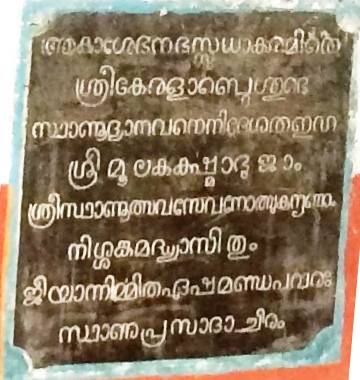 The establishment of schools and other educational institutions including the “Thevara patasala” at Suchindrum were the major educational activities of the Board. Incorporated Devaswoms were the temples mentioned in the schedule of the devaswom proclamation of 1097 M.E., which had been under the management of the ruler of Travancore. Then they came under the Land Revenue Department and subsequently transferred to Travancore Devaswom Department then it become Travancore Devaswom Board. During bifurcation these temples were entrusted to Kariyakumari Devaswom Board.Total number of temples under Incorporated Devaswom category was 458. the Devaswom Board took over some of the temples managed by trustees on account of their mismanagement and these temples came to be known as unincorporated devaswoms. The properties and funds of these devaswoms were kept distinct and separate from the incorporated devaswom.
 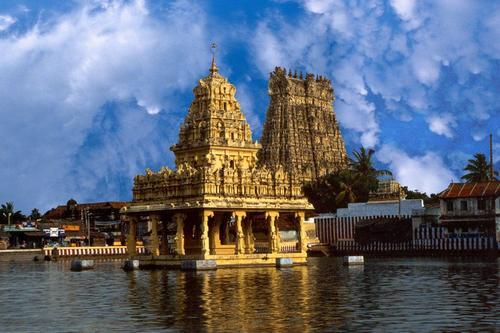 There were 18 unincorporated devaswoms under Kanyakumari Devaswom Board. The administration of SreePadmanabha Swamy temple and Sreepandaravaka properties and funds of the said temple was vested in a trust with the ruler of Travancore. There was a separate department known as sanketham department. When sreepandaravaka lands were taken over by the Government, the administration and management of sanketham temples were placed with the devaswom Board. There were twelve sanketham temples in the transferred territory. The sreepadam temples were managed by the palace directly. There were separate lands known as sreepadam lands for these temples.
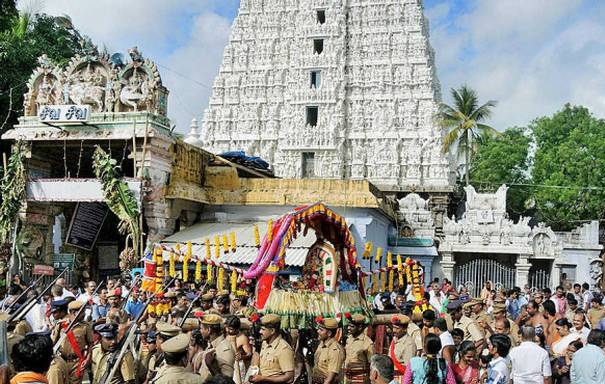 Sreepadam lands were taken over subsequently. The management and control of these temples were transferred to the Devaswom Board. There were two sreepadam temples under Kanyakumari Devaswom Board. The temples under category sanketham and sreepadam were royal family temples. They were entrusted with the Board because of their properties being abolished by laws enacted by the government.
Sanketams :
Sanketham was an important institution that existed in Kerala during the medieval period. It is an independent institution governed by its own members, but presided over by an elected member. All important temples in Kerala used to have their own Sanketams. The Sanketams possessed independent sovereign authority in their domains.To guard against encroachment, the Sanketams chose a secular leader.But they never gave up their right of ownership. With the help of the ruler, they managed the temple lands and tracts. The Sanketam was almost a state within a state with its own organs of government. The ruling sovereign (Naduvazhi) had no effective control over them. In fact they provided the ruler with a safe place for asylum in times of invasion, war or internal disorder. The Sanketams enjoyed protection from the enemies attack. In view of the importance of Sanketams there was a regular scramble among the rulers to acquire Melkoyma rights over them.
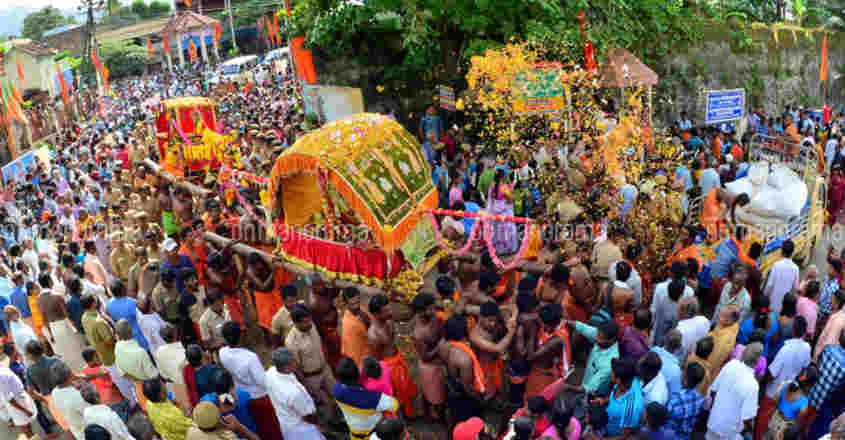 Among the incorporated temples, some of them were considered as big temples. Such temples assumed that status on the basis of the expenditure incurred by them for pujas, ceremonies and other festivals. In other parts of Tamilnadu the temples which have more income are considered as big temples. This is a major difference between the temples of KDB and other parts of Tamilnadu. Those temples are conducting many festivals and ulsavams apart from nityanitanam. The expenditure in these temples are high and so they are considered as major temples. The ritual in these temples are similar to those of the temples of Travancore.
 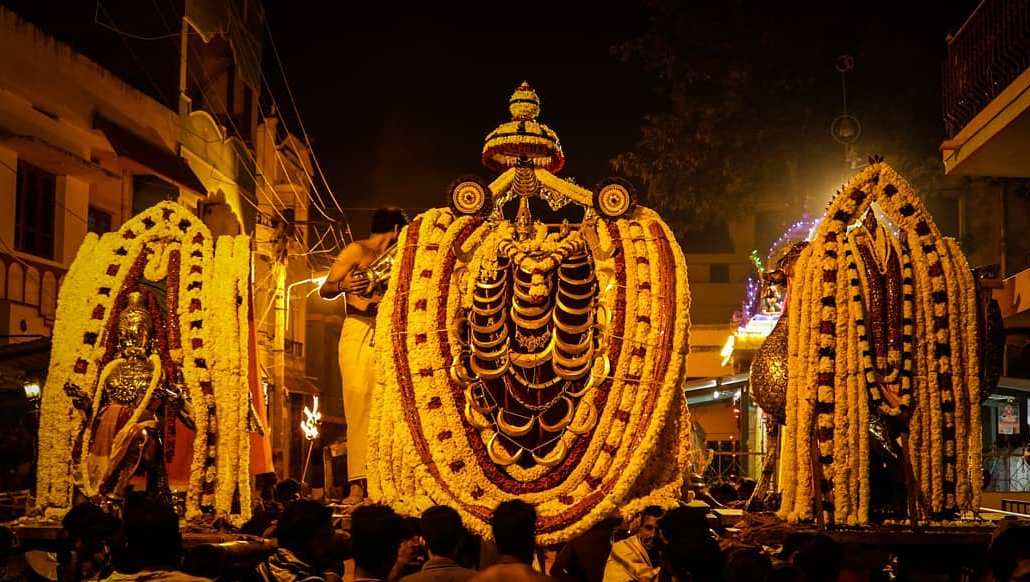 A large number of people participated in these festivals. Many temple priests like Santhikars, Tantri, Melsantlii, Kizhsanthi etc were appointed on the initiative of Board for the proper conduct of pujas and ulsavams. The Santhikars are appointed for a particular period ordinarily for a term of three years.
 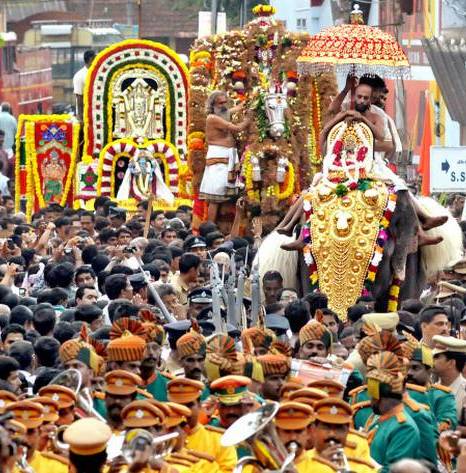 The Santhikars in Kanyakumari temples were directly paid with paddy but now they are paid in cash. Apart from Santhikars, there are other temple servants (contingency) such as Nathaswaram, Thaval, Panchavathiam, Vilakiceduppu, Suruthi, Thalam, Malaikettu, Patramtheipu, Thalithoopu, Kazhakam, Sankuvili, Thirumeni Kaval, Pariyudayavar, Bhagavthar, Thevaram, Kai-Vistharam, Rudhrajepam and Adthyayanam. In addition to these temple servants, Brahmin Peon, Watchman and Strong Room Guards are also appointed.
K.D.B. Suchinthiram Administration Office Staff
- Assistant Devaswom Commissioner — 1
- Devaswom Accounts Officer — 1
- Thiruvabharanam Special Officer– 1
- Manager (office) — 1
- Technical Assistant — 1
- Auditors (U.D) — 1
- Auditors (L.D) — 1
- Librarian — 1
- Treasurer — 1
- Head accountant — 1
- Accountant — 1
- Manager (P.D.Devaswom) –1
- Draftsman — 1
- Electrician — 1
- Last grade servants — 5
- Work Superintendent — 2
Government Servants of K.D.B.
1. Devaswom Superintendents — 05
2. Managers- 02
3. Maramath Section Officers — 02
4. Assistants — 14
5. Junior Assistants — 22
6. Typists — 03
7. Overseer — 01
8. Sub overseers– 05
9. Sreekariams — 39
10. Chadrams — 21
11. Office Assistants(peons) — 16
12. Watchman — 01
Total = 131
Temple Servants under K.D.B.
1. Melsanthi (Archakar)- 140
2. Kizhsanthi (Assistant to Melsanthi)- 220
3. Nathaswaram- 50
4. Thaval – 50
5. Watchman and strong room guards — 160
6. Pancha-vadhyam — – 60
7. Vilakkeduppu– 05
8. Brahmin peon– 05
9. Sruthi– 30
10. Thalam– 10
11. Maaikettu– 50
12. Patram theipu– 20
13. Thali-Thoopu (sweepers) — 100
14. Kazhakom– 40
15. Sankuvili– 10
16. Thirumeni kaval & Paniyudayavar– 58
17. Bhagavathar – Thevaram & Kaivistharam- 18
18. Rudhra-Jepam & Adhyayanam — 20
Total = 1046
Temple Addl. Servants in K.D.B.
1. Junior Assistants — 02
2. Supervisors — 02
3. Electricians — 02
4. Maistry — 03
5. Library Assistants — 02
6. Office Assistants — 03
Total = 14
Classification of Priesthood Class in TDB & KDB
The priesthood class in temples of Kerala can be broadly divided into two categories namely Thandris (high priest), and Saanthikkars (consisting of Melsaanthi and Keezh-saanthi) and also one more category named Kazhakakkar.
Thandris (High Priest): Aachaarya or Thandri is one who belongs to a high born Brahmin Family (both matrilineally and patrilineally), and who performs all the sixteen purificatory rites, known as the essence of the sacred texts, observes deeksha (initiation) and follows the rules of conduct of his caste based on gurukarma, besides being competent and exerts himself as thapaswi in his work. Above all, he should be a believer in God and in sacred tradition. Aachaarya or Thandri is also the sthaapaka (the architect priest) and consecrates the temple. Thandri has a vital role in temple. As the deity installed in a temple is always for the sreyas (welfare) of devotees the Thandri has to conduct all the rituals like the consecration rites, expiatory rites etc with the intention of ensuring continuance of vitality of the deity.
Saanthikkars: Saanthikkar in temples can be broadly divided in to mel-saanthis (Chief priests) and Keezh-saanthis (Assistant priests). In some of the temples the melsaanthi is not allowed to go out of the temple complex during his tenure as melsaanthi and such category of mel-saanthi is known as Purappada Saanthi.
Mel Saanthi: The Nambis who are the chief priests of Sree Padmanabha swamy Temple stay in the Nambi-madam maintained by the Sree Padmanabhaha temple during their tenure of office, observing strict celibacy and many other restrictions, their movements being confined to the maryaada of the Sree Padmanabhaswamy Devaswom and the madam, and to accompanying the deity for Pallivetta and Aaraat twice a year. In many devaswoms, Saanthies by custom is Purappada Saanthi. There is yet another class of Saanthi, known as Maasa-maaradi- Saanthikaran where the mel-saanthi and KeezhSaanthi inter change their posts in alternate months or fortnights. Mel- Saanthi is responsible for the conduct of daily poojas apart from helping the Thandri if required, in special rites. Adikal also act as officiating priests in Bhadrakaali devaswoms.
Keezh Saanthi: In small temples there may be no keezh- Saanthikkars. Wherever they are appointed they have some special duties and responsibilities as preparing nivedya, helping Thandri/melsaanthi, distributing prasaada, etc.
Kazhakakkar: They are closely associated with the day-to –day affairs in a temple. They are classified as Kaaranma and non-kaaraanma. These persons have duties like making garlands, fetching firewood for use in Thidappalli, carrying of kuttuvilakku, playing traditional musical and percussion instruments etc.
Staff of Major Devaswoms: Temple staff consists of both priesthood class and other office staff. Office staff consists of different levels of staff from Manager/ Executive officer/ Chairman/ Managing Trustee to sweeper, dafedar, security etc. In certain devaswoms there are Managers as top authority of office as well as over all functioning of the devaswoms. While in case of others Executive Officer/ Managing Trustee/ Joint Commissioner of Devaswom is the top authority in relation to general matters of the devaswoms. In almost all devaswoms there is no trained staff for effectively guiding the pilgrim coming from different parts of the world. Different temples follow different customary practices of prayers and prathikshinam. So it is essential to provide such information to pilgrims both domestic and international. Here an attempt is made to study the staff pattern of temple and their status.
Staff pattern of Devaswoms: Though there is no uniform staff pattern in the devaswoms of KDB, the staff of temples can be categorized in to four viz., top officials, middle officials, supporting staff and lower level staff.
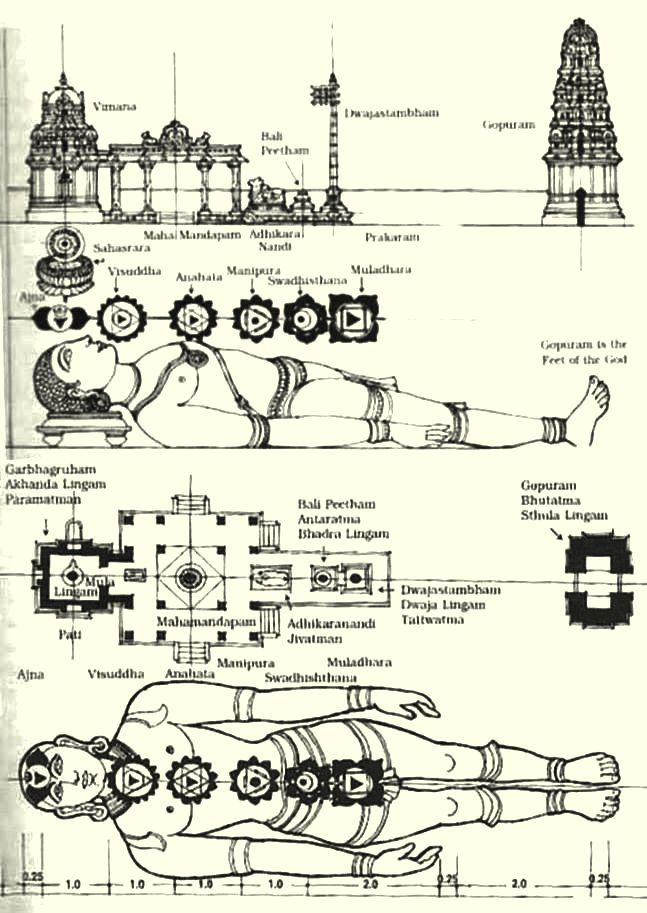 Top level officials include thandri, melsaanthi, adikal, Trustee, chairman, president, Maramath Chief Engineer, Head Survey and Joint Commissioner.
Middle level officials include manager, deputy administrator, sreekaryakkar, chanthiram, madayan, engineer, assistant engineer, thirumeni kaval kuruppu, audit officer, manager temple accounts, head accountant, superintendent and junior superintendent. supporting staff consists of saha melsaanthi, assistant mel saanthi, keezhsanthi, assistant keezhsanthi, udc, ldc, counter clerk, despatch-section clerk, devaswom assistant, marar, programme executive, hereditary shaanthi, security chief and clerk higher grade.
Lower level staff comprises devaswom guard, driver, peon, pookettu staff, electrician, masappadi, sathram boy, vanitha security, adichuthali and gardener
362 – TAMIL NADU GOVERNMENT GAZETTE
Click to access 362_Ex_III_1a.pdf
——————————————————————————————————————-
Details of Accounts on Devaswoms under KDB Administration
Incorporated Devaswoms – (single account for all Major, Minor & Petty Devaswoms) ஒன்றாக சேர்க்கப்பட்ட அல்லது இணைக்கப்பட்ட தேவஸ்வம்கள் / ഒന്നായി സംയോജിപ്പിച്ച ദേവസ്വങ്ങള്.
Unincorporated Devaswoms – (separate account for each PD Devaswoms) ஒன்றாக சேர்க்கப்படாத அல்லது இணைக்கப்படாத தேவஸ்வம்கள் / ഒന്നായി സംയോജിപ്പിക്കാത്ത ദേവസ്വങ്ങള്.
Sanketham Devaswoms – (single account for 12 Devaswoms)
Sree Padam Devaswoms – (single account for 2 Devaswoms)
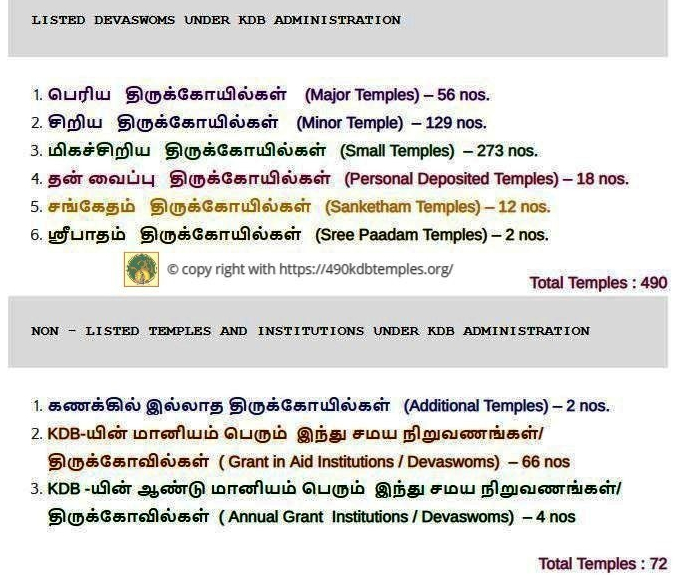
Hiranya Simha Nalloor Palace (Eraniel Palace)
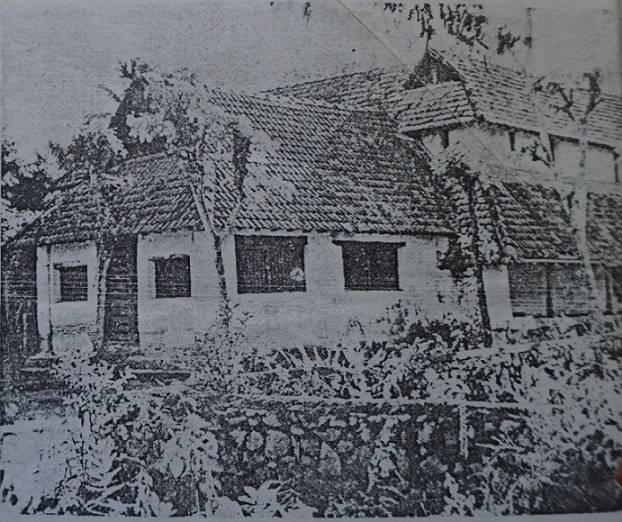 After “The States Reorganisation Act-1956″ The Eraniel Palace and its Fort are also come under the control of Kanyakumari Devaswom Board. KDB has give this Palace for Civil supplies to use as godown; and it leeds to hastened its dilapidation. Recently The Tamilnadu Govt. allotted Four Crore (Rs.4,00,00,000) Rupees for the purpose of renovation of this palace to KDB through Tamilnadu Hindu Religious & Charitable Endowment Department..!!!
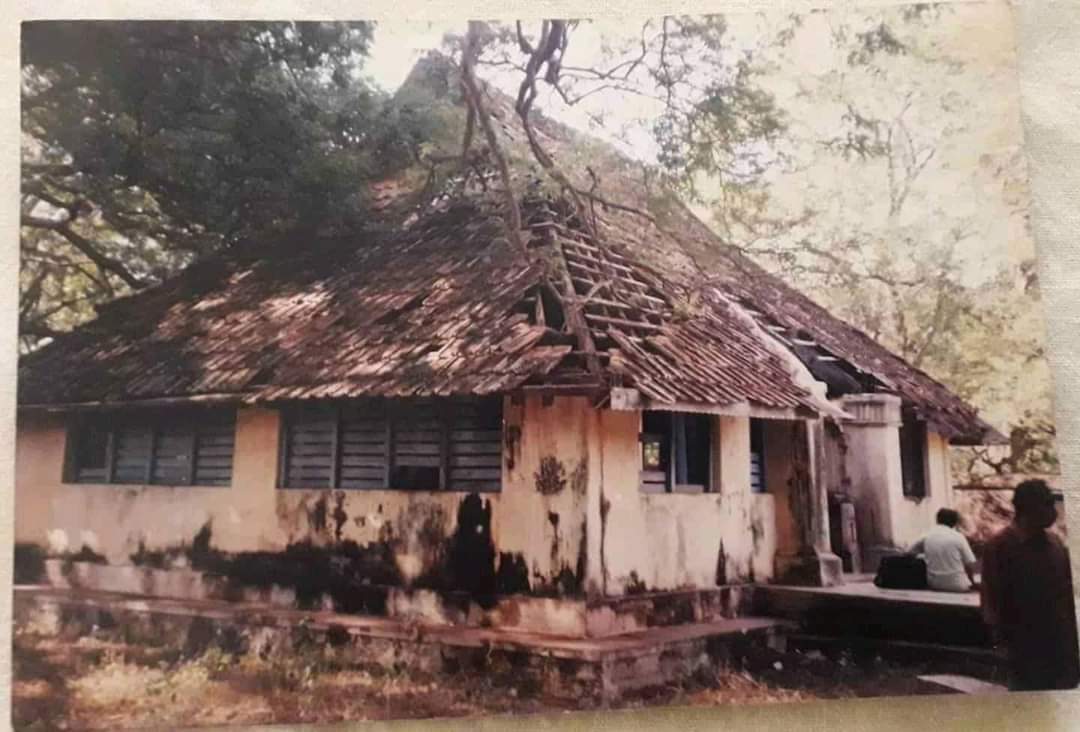
Educational Institutions & Library–
- Thevara Padasala, Suchinthiram, Kanyakumari District.
- Thevara Padasala, Dharisanamkoppu, Kanyakumari District.
- Devaswom High School, Thirparappu, Kanyakumari District.
- Devaswom High School, Kulithurai, Kanyakumari District.
- Devasthana Higher Secondary School, Mandaikadu, Kanyakumari District.
- Sri Devi Kumari College for Women, Kuzhithurai, Kanyakumari District.
- Sree Chitra Devaswom Library, Nagercoil, Kanyakumari District.
———————————————————————————————————————–
Right of Tamil Nadu HR&CE Act 22 of 1959 over KDB Temples
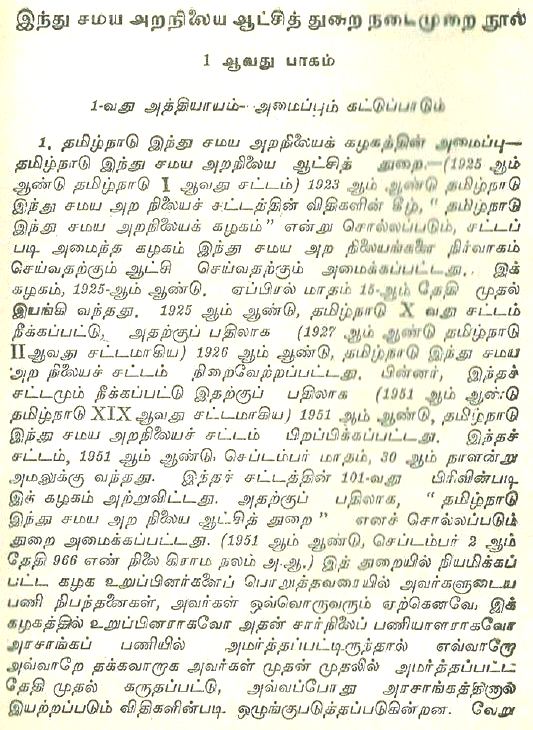
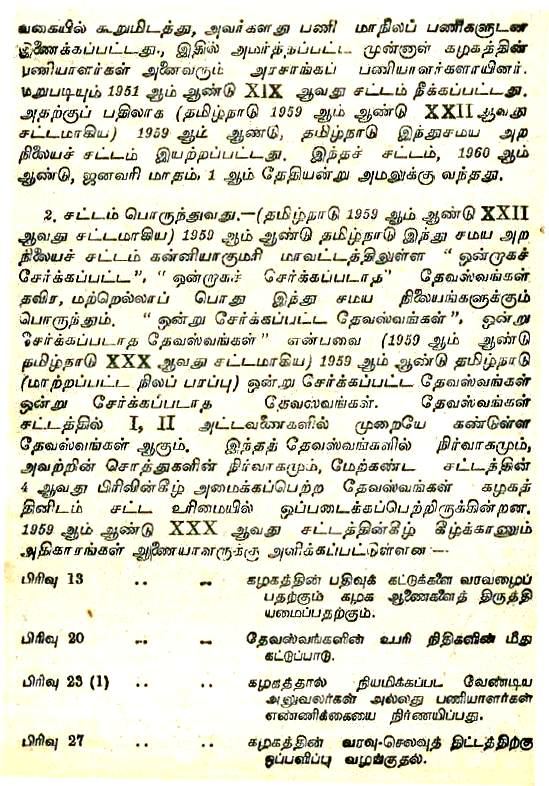

தமிழ்நாடு இந்து சமய அறநிலைக் கொடைகள் சட்டம் 1959 (சட்டம் 22/1959 பிரிவு 6(12) மற்றும் 6(23)-ன் கீழுள்ள அட்டவணைகளில் குறிப்பிட்டுள்ள கன்னியாகுமரி மாவட்ட திருக்கோயில்கள் செயல் அலுவலர் (இணை ஆணையர்) பிரிவுக்கு உட்பட்டதும்; கன்னியாகுமரி மாவட்ட இணைக்கப்பட்ட மற்றும் இணைக்கப்படாத திருக்கோயில்கள் (தேவஸ்வம்) உட்பட்டதும் ஆகும்.
தமிழ்நாடு இந்து சமய அறநிலையத்துறை நிர்வாகத்தின் கீழ் நூறு ஆண்டுகளுக்கும் மேல் பழமையான 3470 திருக்கோவில்கள் வரிசை பட்டியலில் 2771 முதல் 3265 வரை சேர்க்கப்பட்டதும், மதிப்பிற்குரிய திருநெல்வேலி இணை ஆணையர் பிரிவுக்கு உட்பட்டதும் ஆகும் கன்னியாகுமரி தேவசம் வாரியம் திருக்கோவில்கள்.
KDB Temples Administered by the Executive Officers from HR&CE :-


TN HR&CE Act 22 of 1959 Sections applicable for KDB:-
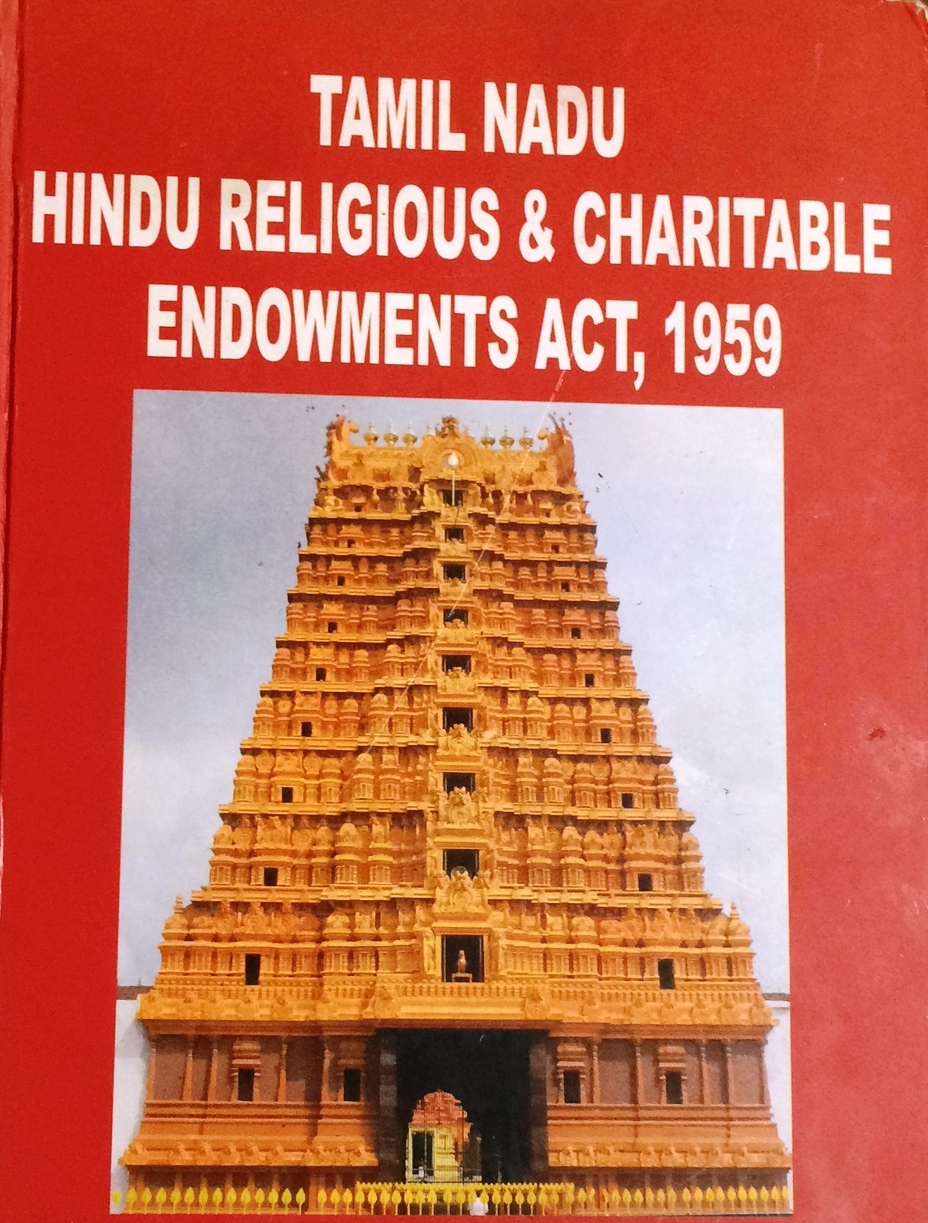 (1) It shall be lawful for [the Commissioner] to create a Fund to be called the Hindu Religious and Charitable Endowments Common Good Fund [hereinafter in this section referred to as the said Fund], out of the contributions voluntarily made by the religious institutions from their surplus funds or by any person for the renovation and preservation of needy temples and their [building and paintings, for the promotion and propagation of tenets common to all or any class of religious institutions and for any of the purposes specified in sub-section (1) of section 66.] [(1-A) [The Commissioner] may, on a direction from the Government, transfer to the said Fund, any surplus or such portion thereof, as may be specified in the direction, remaining in the [Tamil Nadu Hindu Religious and Charitable Endowments Administration Fund] after the repayment of the amounts specified in sub-section (2) of section 12 and sub-section (2) of section 96]. (2) The said Fund shall be vested in and such administered by [the Commissioner] in such manner as may be prescribed.
 {Note: THE STATES REORGANISATION ACT, 1956 (Central Act 37 of 1956) – Section 112″ Provision as to the Devaswom Surplus Fund of Travancore.
(1) As from the appointed day, there shall be established in the State of Madras a Devaswom Fund for the management of Hindu temples and shrines in the territories transferred to that State from the State of Travancore- Cochin.
(2) The assets as on the appointed day of the Devaswom Surplus Fund constituted by section 26 of the Travancore- Cochin Hindu Religious Institutions Act, 1950 , shall be divided into two parts in the ratio of 37. 5 to 13. 5 in such manner as the Central Government may, by order, direct, and the smaller part shall, as from the appointed day, be transferred to the Fund mentioned in sub- section (1).
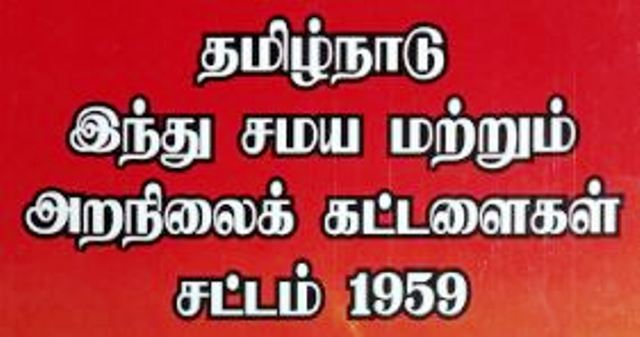

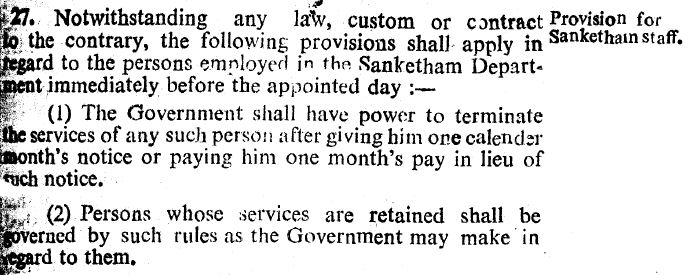
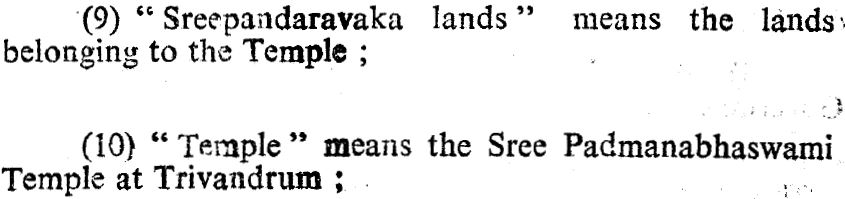

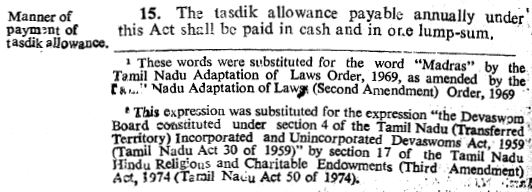
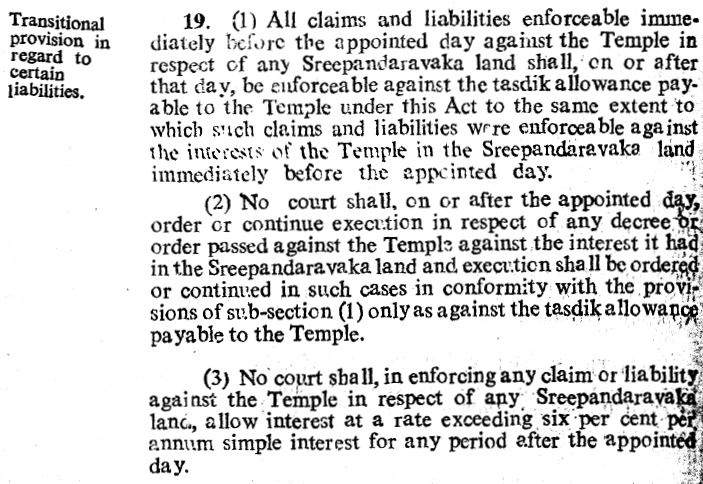
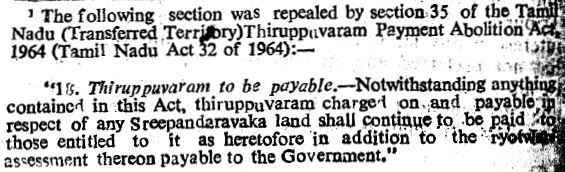

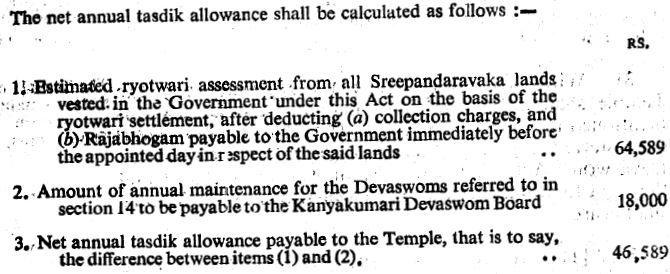
Explanation II.-The sum of two thousand rupees paid annually by the Government to the Board of Trustees constituted under clause (b) of sub-section (1) of section 47 by virtue of section 28 of the Kanyakumari Sreepadam Lands (Abolition and Conversion into Ryotwari) Act, 1972 (Tamil Nadu Act II of 1973), shall be deemed to be the funds of the Unincorporated Devaswoms mentioned in Part II of Schedule II.] 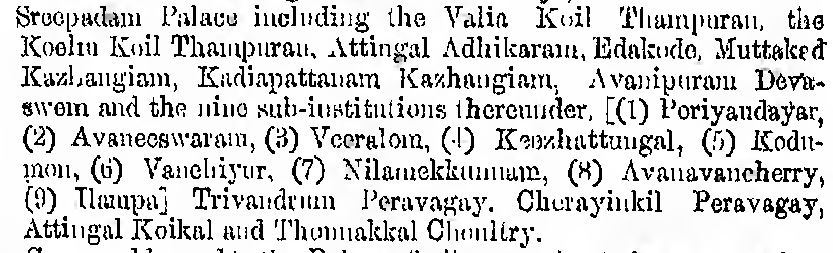 These two sreepadam Devaswoms are originally managed by 250-year-old at Sreepadam Palace. The oldest among the palaces here, the Sreepadam Palace was where the women (The Maha Ranies & Thamburatties) of the royal family, called the Attingal queens, and their family members lived. It is also the palace closest to the Sree Padmanabhaswamy temple.
 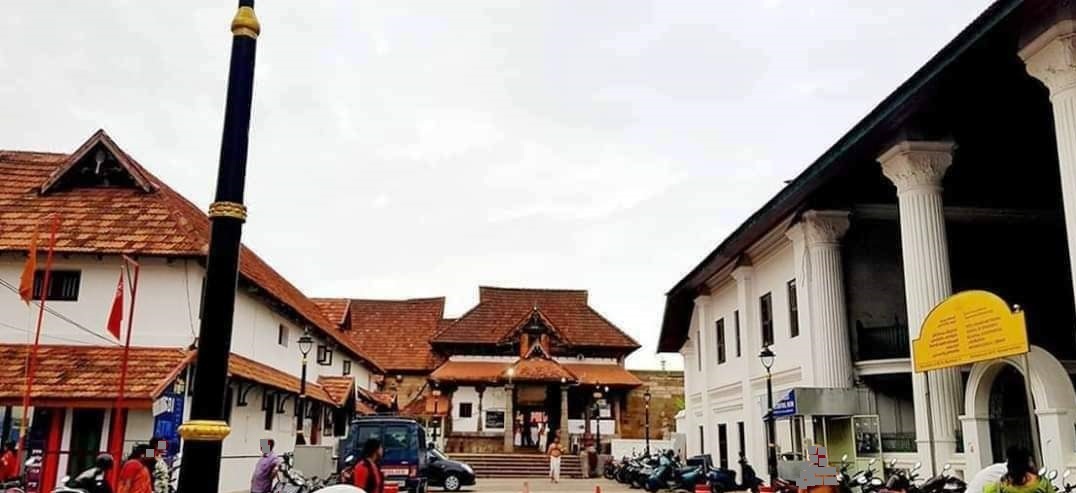 Originally called the Sreepada Theerthakara Kandukondedathu Koyikkal, the palace and the 1.16 hectares of land on which it stands were acquired by the government from the royal family of erstwhile Travancore at a cost of Rs.1.7 crore. Once the holiday home of the erstwhile Travancore royal family during 16th and 17th century. The entire colonial structure is constructed around the ancient ‘Sreepadatheertham ‘holy pond which dates back to the 14th century. The pond is believed to be the second most sacred water body after ‘Padmatheertham’. It is believed that the holy water after the rituals performed on the idol of the Sree Padmanabha Swamy in the temple flows into the ‘
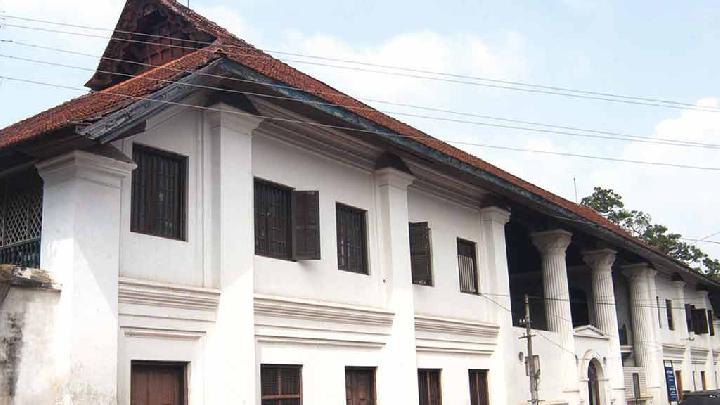 Sreepadatheertham’ pond. The 16th century Nalikettu – the antique rectangular structure with a central courtyard – is one of the rarest architectural wonder in Kerala and dates back to pre-Marthandavarma period. The Nalukettu construction in Travancore style is made or rocks and wood and has Vadakkini (northern block),Padinjattini (western block),Kizhakkini (western block) and Thekkini (south block).The exquisite wooden and rock pillars that support the roof of the verandah surrounding the Nalukettu reflect the architectural craftsmanship of Travancore.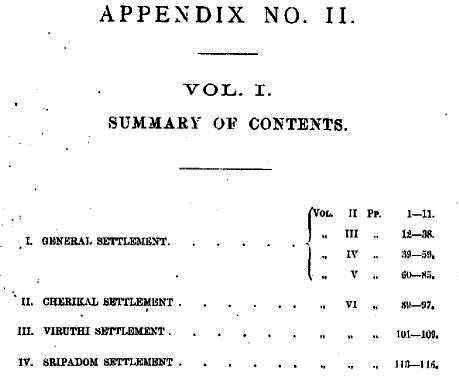
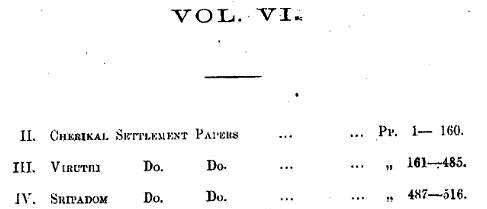 Huge pillars, arches and carved wooden railings in the place are reminiscent of European architecture. According to historians, the ‘Nalukettu’ is said to have belonged to Aswathi Thirunal Umayamma Rani,who was the regent of Venad.”Sreepadam is one of the oldest places in Kerala.


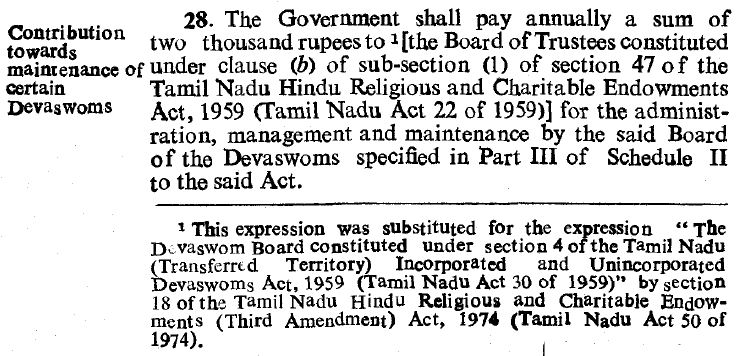
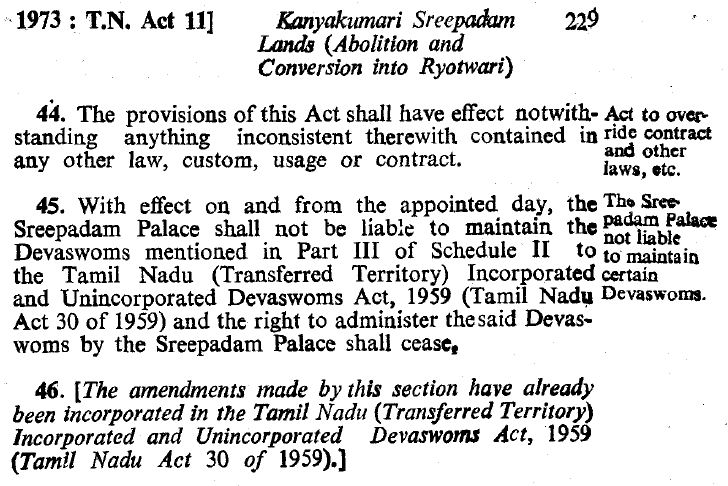
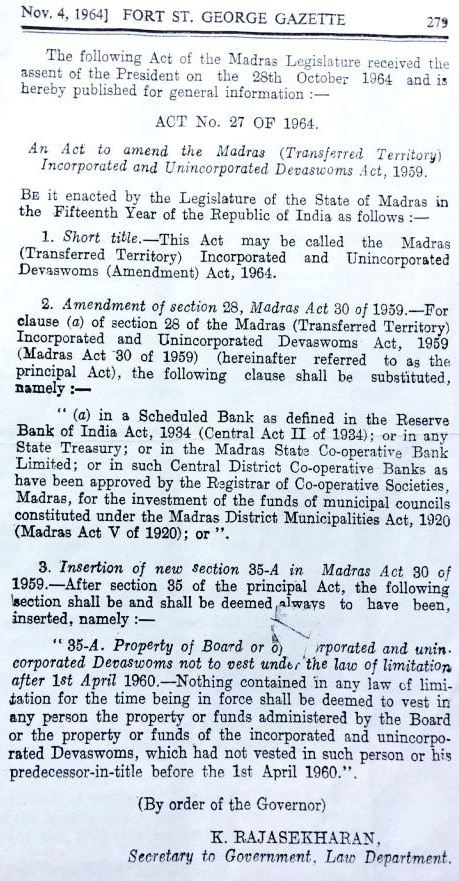
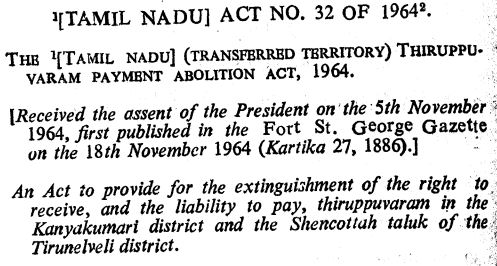
Duties of Land Revenue Officers in Survey & Settlement on Devaswoms and Oottupurahs:
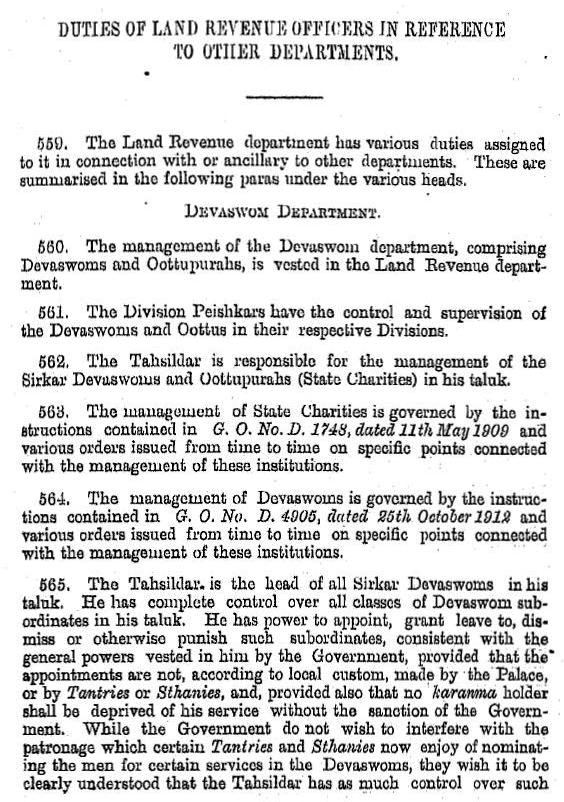
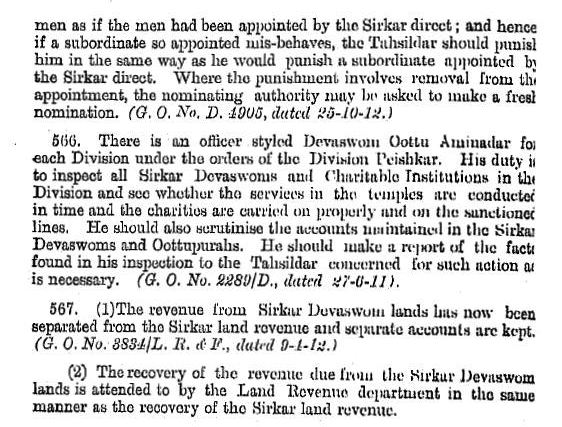
A brief history of Survey & Settlement is given below: (https://dslr.kerala.gov.in/brief-history/)
- Year 1712: A complete survey and settlement was conducted. The survey was a ‘Kettezhuthu’ Record of “what is heard” and was based on discussions with landholders. The holders were issued pattas after settlement.
- Year 1738 to 1748: This settlement was confined to the lands belonging to Sree Padmanabha Swamy Temple. No measurement of land was conducted.
- Year 1775: Ramayyan Dalava conducted a complete Survey and settlement. Holders were issued pattas. The nature of survey is not known.
- Year 1801: A complete survey was conducted. This was a ‘Kandezhuthu’. (Record of what is seen). The tenures were similar to the previous settlement. Pattas were also issued after the settlement.
- Year 1817:- This was only a settlement of garden lands. Pattas were issued subsequent to the settlement.
- Year 1836: A complete resurvey of garden lands was conducted. Side measurements were made with a ‘10’ Feet Rod. Rough Pattas were issued after the settlements.
- Year 1882 to 1909: This is the latest settlement record.
A scientific Survey was conducted and pattas were issued for all the land owners. The survey records in all the regions were maintained according to the Land Records maintenance Rules in the respective regions.
G.O.(Ms) No.365 dated 09.04.2010 Temple Property suit Rs.100/-


G.O.(Ms).No.540 Dt: December 04, 2014 Encroachment – Formation of Various Committees to dispose the grievances relating to the eviction of encroachment in Government land.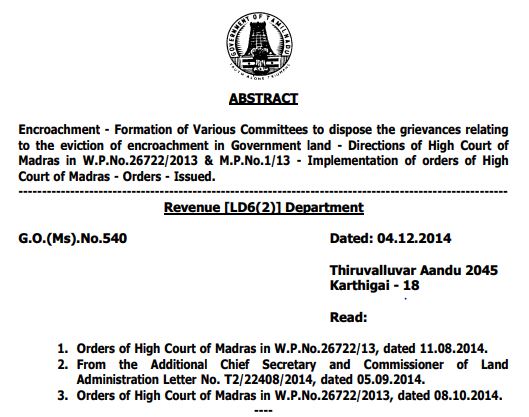
Kavu Devaswom poramboke (Scared Groves) :
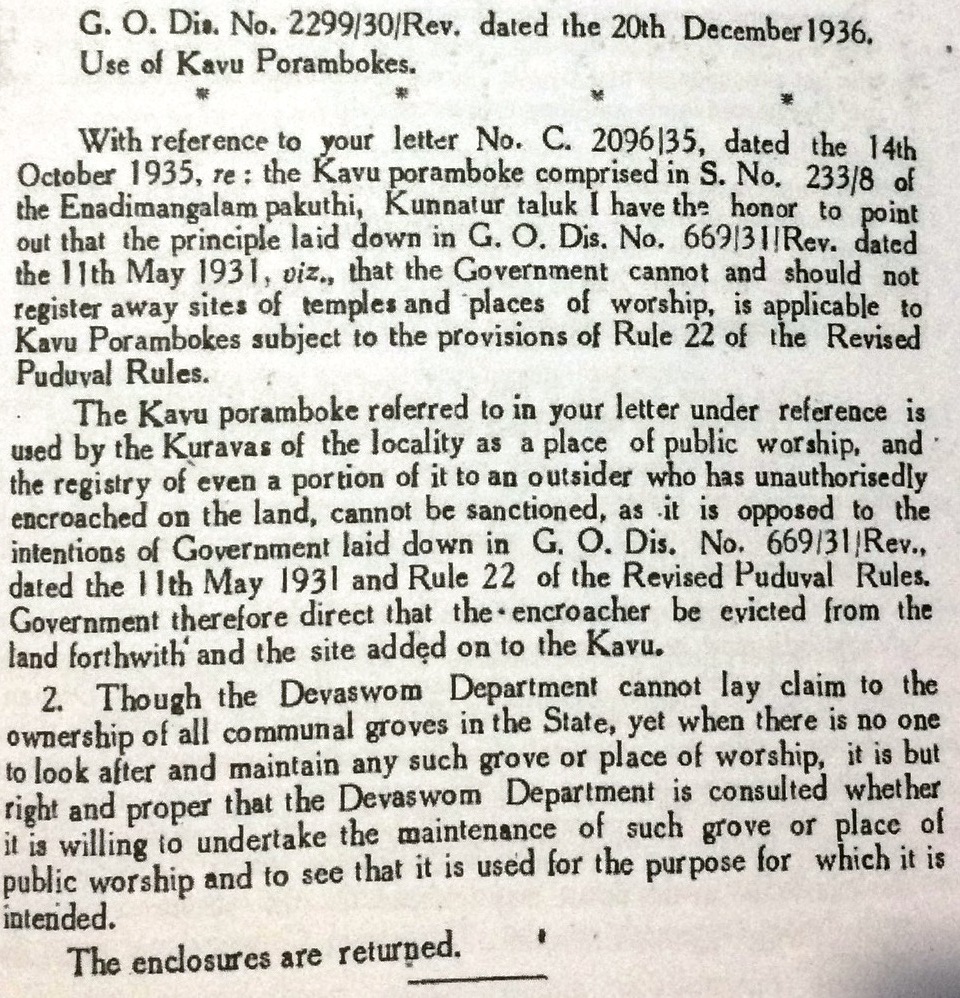 The sacred groves are tracts of virgin forest with rich bio diversity which have been protected by the local people for centuries for their cultural and religious beliefs and taboos that the deities reside in them and protect the villagers from different calamities. Every Scared Groves carries its own legends, lore, lore, and myths which form the integral part of the Sacred Grove. An inextricable link between present society and part in terms of bio diversity, Culture, religious and ethnic heritage exists in Sacred groves. You may be aware that there is much debates in the society and science conventions, regarding Global warming and the measures to conservation of biological diversity, sustainable use of its components,
 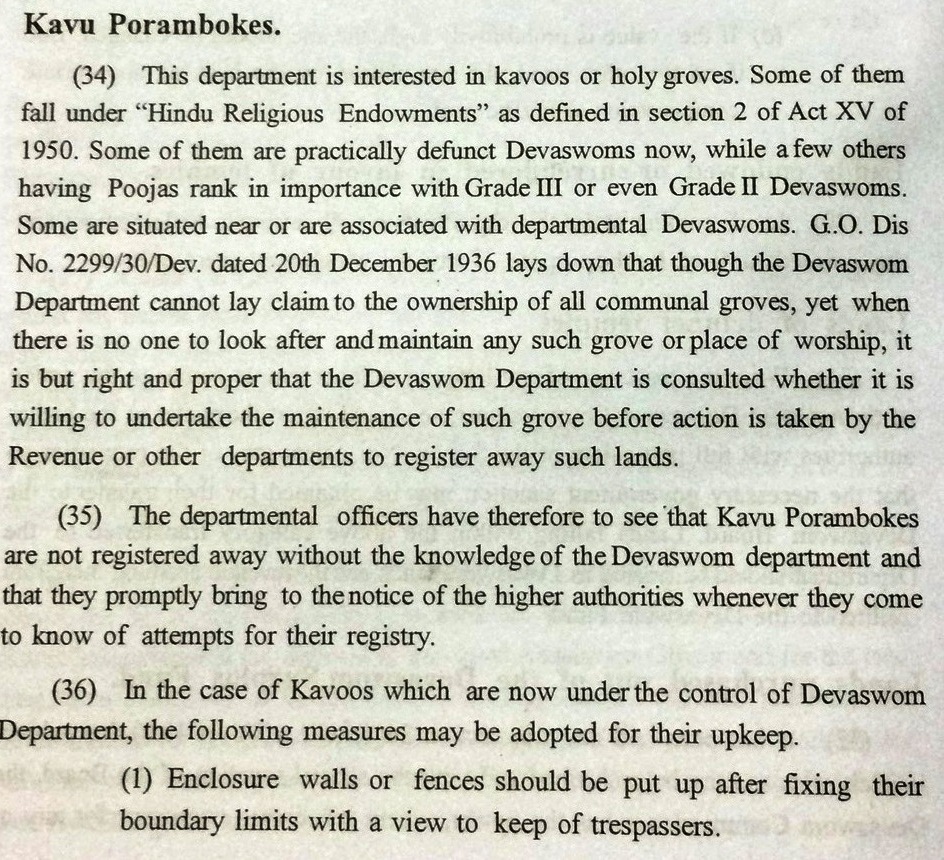 India is party to the United Nations convention on Biological Diversity, signed at Rio de Janeiro, on the 5th day of June, 1992 and where as India is rich in biological diversity and that the Government of India being a signatory of the UN Convention, “The Biological Diversity Act, 2002”was enacted.
 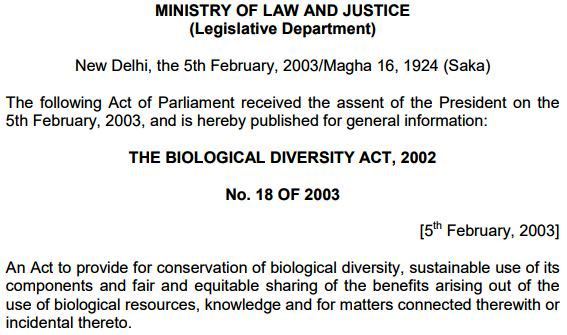 The National Forest Policy 1988 aims for 33% of the country’s geographical area under the forest cover for ecological and environment security. The “Integrated forest protection scheme” launched during the 10th Plan period has been revised and renamed in 2009 as “Intensification of Forest Management Schemes (IFMS)”. Protection and Conservation of Sacred Groves is one of the main components of Intensification of forest management scheme (IFMS). Copy of the press release of the Ministry of environment, Forest and climate change dated 03-August-2011 is enclosed herewith for your ready reference. Further the Government of Tamilnadu is also implementing this centrally sponsored scheme “Intensification of Forest Management Scheme” through its Forest Department.
Travancore Ayacut (AD 1912) Purayidam vaka Lands – an abstract :
(Purayidam vaka Lands means – புஞ்சை நிலம் / Punjai or Garden or Dry or Thoppu.)


The Serial no. 1 to 8 is Pandara vaka, Sirkar Devaswom vaka, Sree Pandara vaka, Kandukrishi vaka, Sree Padam vaka, Uoraanma Devaswom vaka, Brahmaswom vaka, Karam Ozhivu (Tax free) Lands…
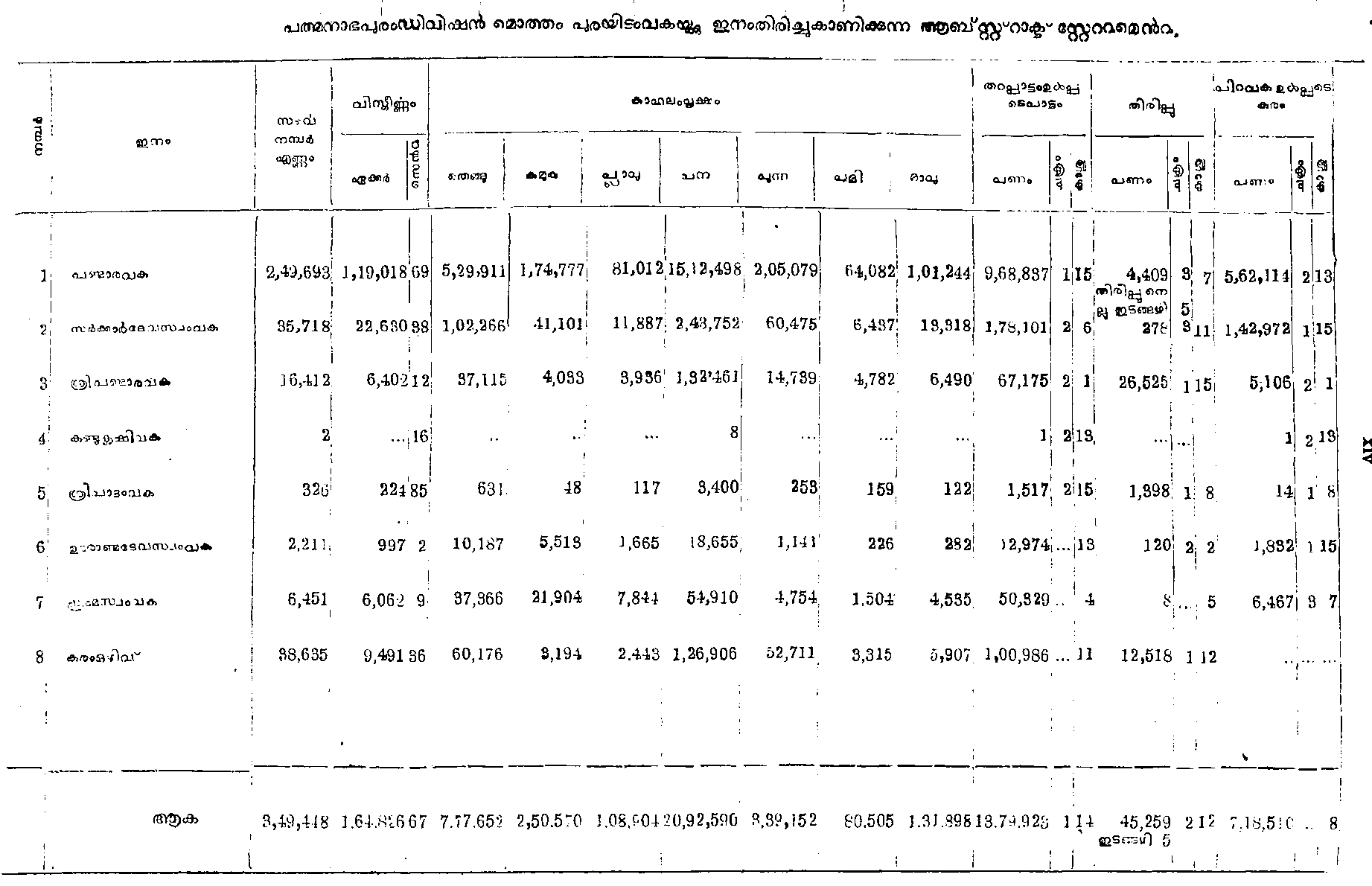
Padmanabhapuram (for Thovala, Agastheeswaram, Kalkulam & Eraniel Taluks) Division
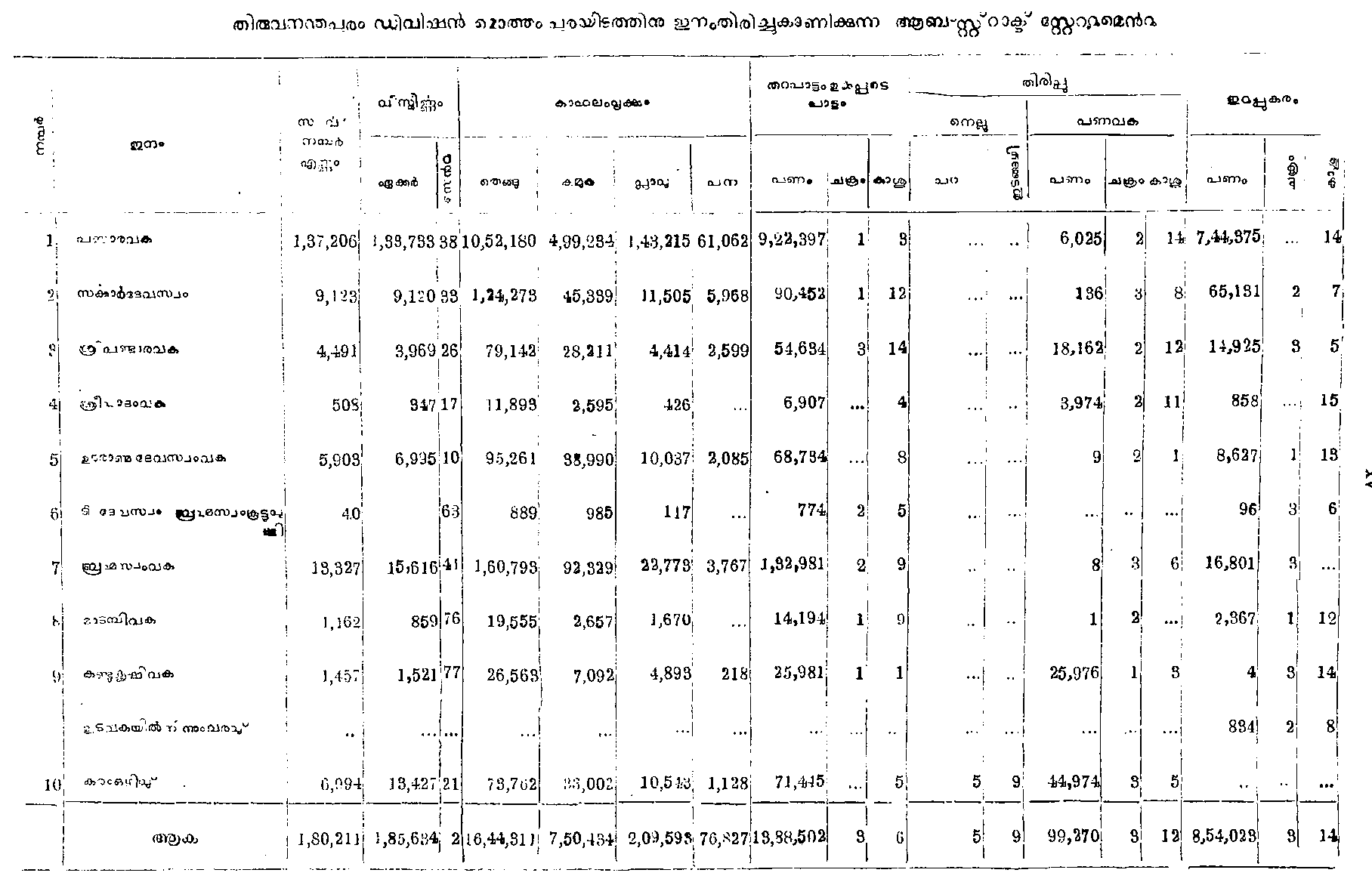
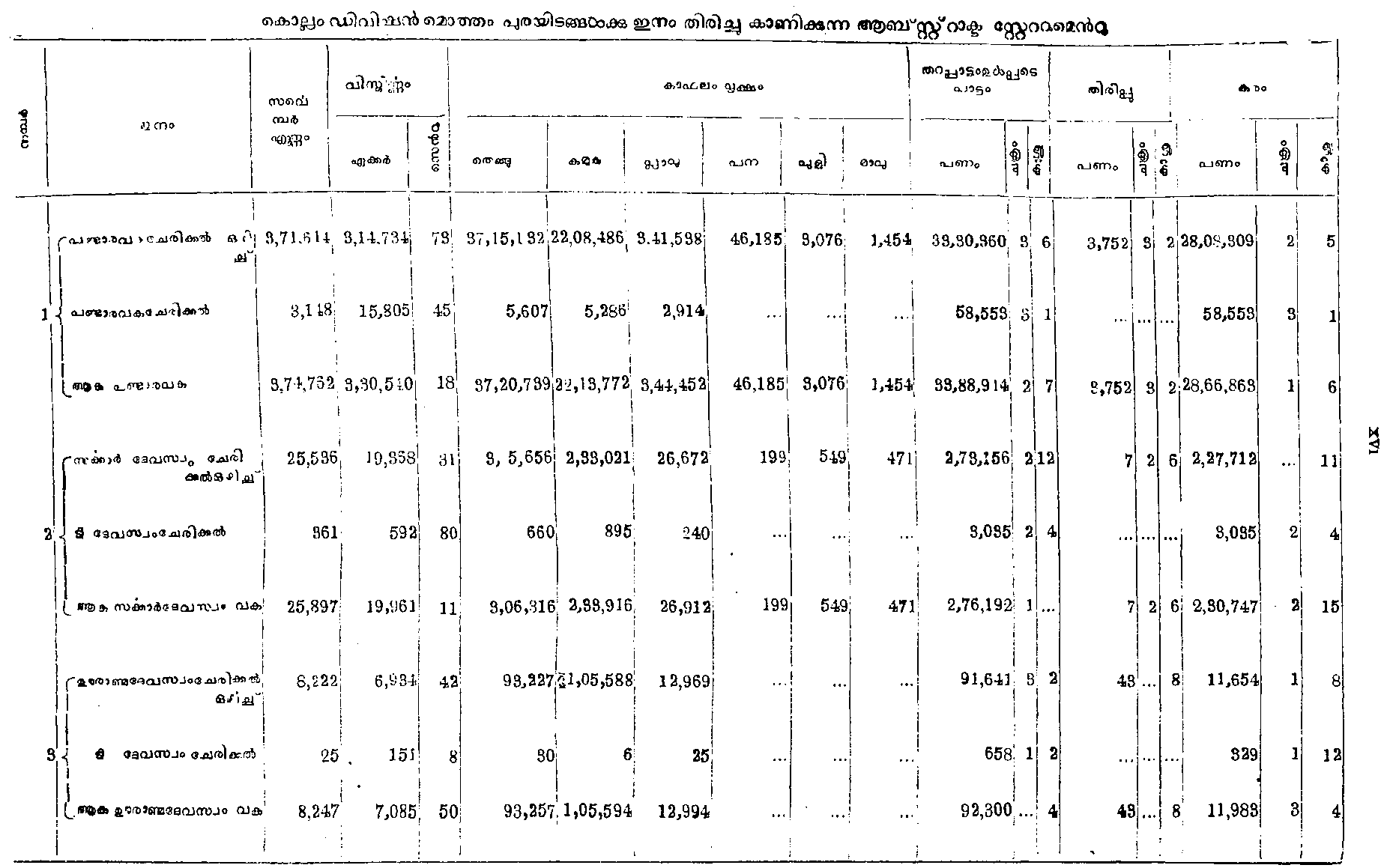
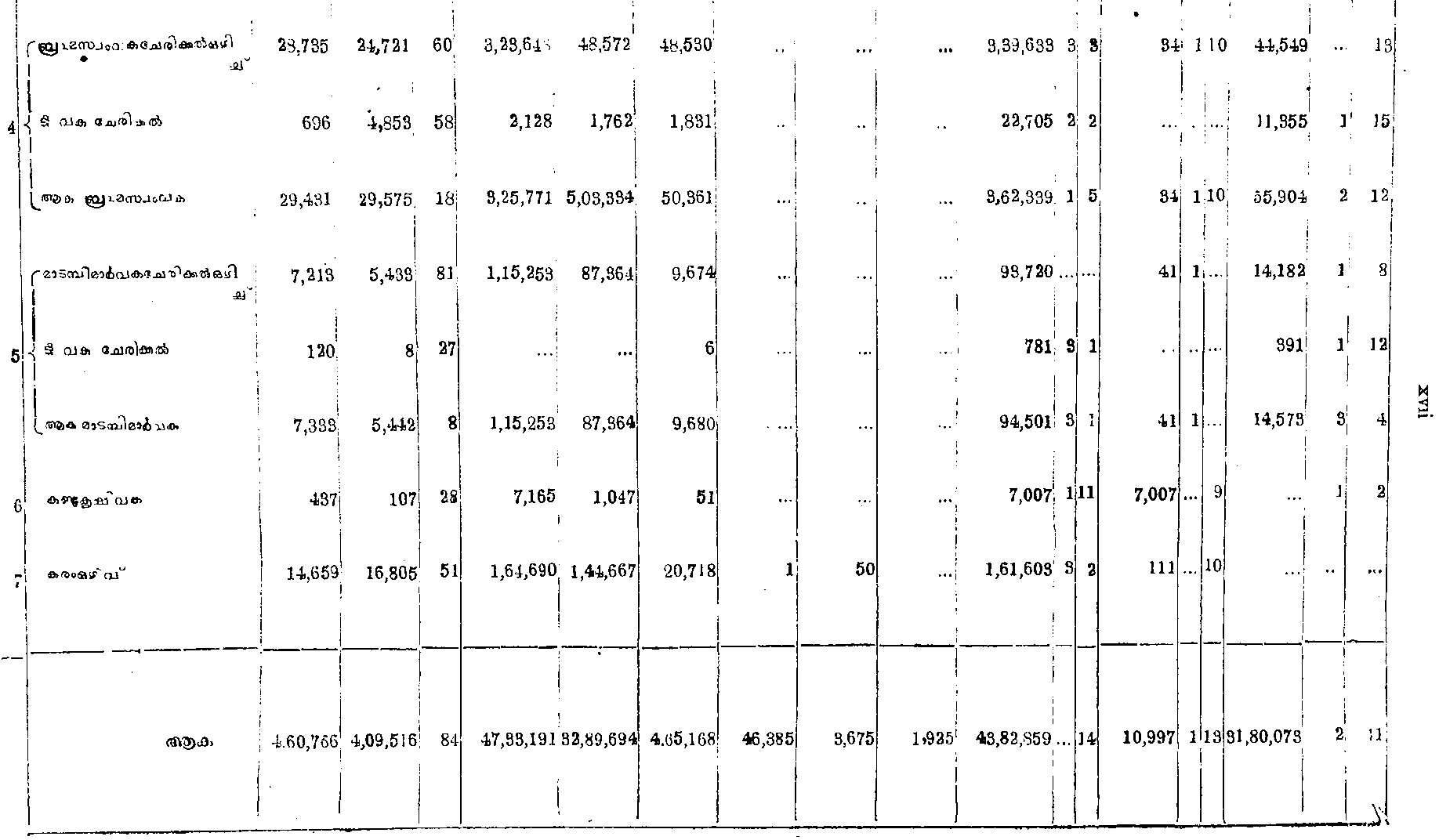
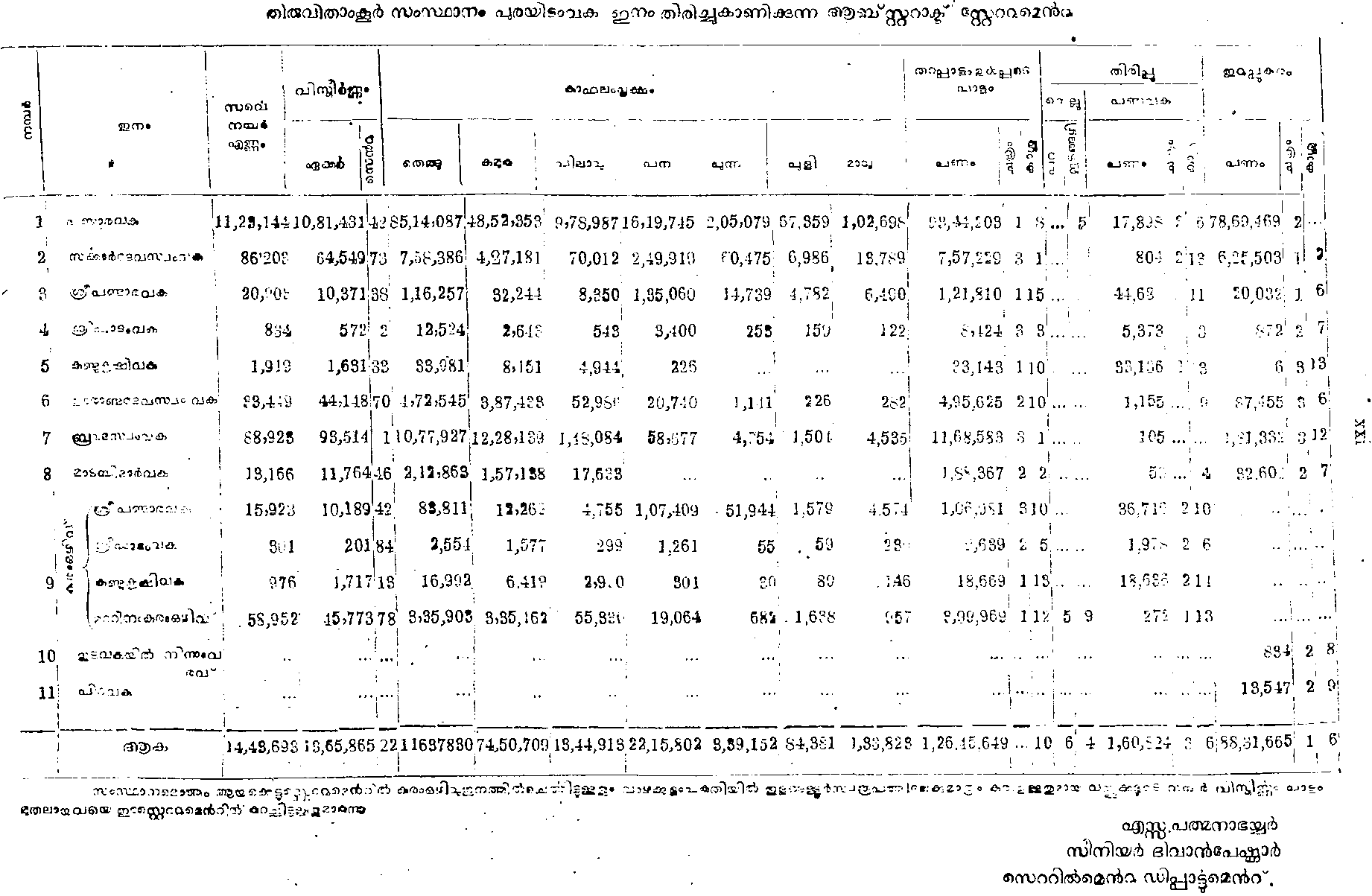
Travancore Ayacut (AD 1912) Nilam vaka Lands an abstract :
(Nilam vaka lands means நஞ்சை நிலம் or Nanjai or Vayal or Wet Land or Paddy Field)


The Serial no. 1 to 8 is Pandara vaka, Sirkar Devaswom vaka, Sree Pandara vaka, Kandukrishi vaka, Sree Padam vaka, Uoraanma Devaswom vaka, Brahmaswom vaka, Karam Ozhivu (Tax free) Lands…


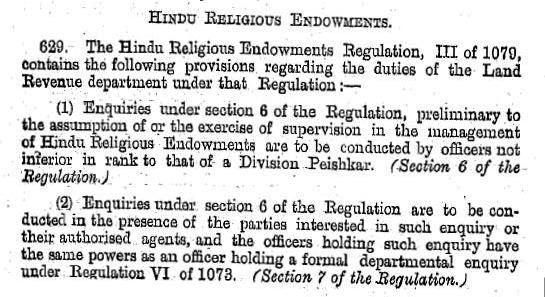
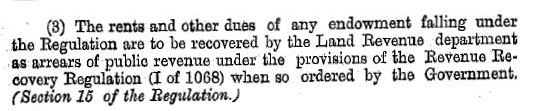
Database to be made for temple assets in Tamil Nadu:
On monday, 17th of September 2016, The Tamil Nadu government proposed to create database of movable and immovable assets of the temples in the state as part of its series of initiatives in the Hindu Religious and Charitable Endowments (HR&CE) department. Chief Minister Jayalalithaa said such assets of temples include metal and stone idols besides land and buildings. “All the information will be computerised,” she said in a statement. GIS and GPS will be used for documenting temple property, she said, adding, Enterprise Resource Planning (ERP) will be used to give a fillip to temple administration. Apart from it, 241 temples will be added to an existing scheme to ensure at least one time pooja a day is performed in these places of worship.
All over the state, Already 12,504 shrines were benefiting under this scheme where the aim is to ensure that proper pooja are conducted at least once in a day, she said. The state government will provide Rs 2.16 crore to the devotees’ contribution of Rs 24.10 lakh for conducting one time pooja, she said. Allocation of funds for making new wooden temple cars, purchase of required pooja material for a number of temples, construction of ‘Annadana’ halls and rest areas for devotees and increase in pension for temple staff were also part of the initiatives announced by the Chief Minister. By: PTI | Chennai | Published:September 19, 2016 6:29 pm
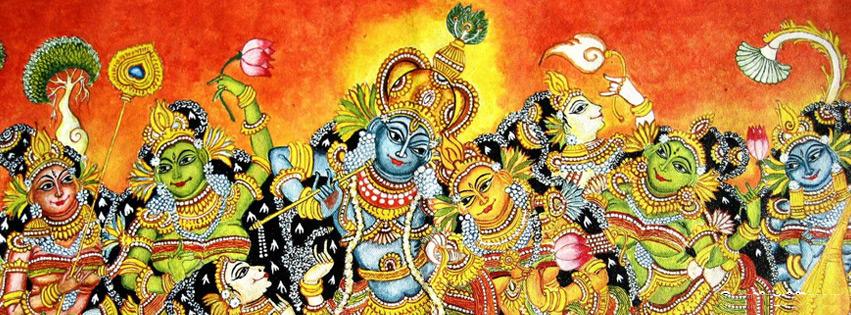 The idea behind the creation of this web site is to make the good deeds & put all 490+ KDB temples in a single platform. This is also to show the reality and painful conditions of some of the devaswom temples in Kanyakumari district & Senkottai taluk of Tirunelveli district visible to the world. This web site serves as a link between the devotees who are interested, the persons who like to participate in renovation and pooja ceremonies of these incredible ancient Hindu temples and the temple administration.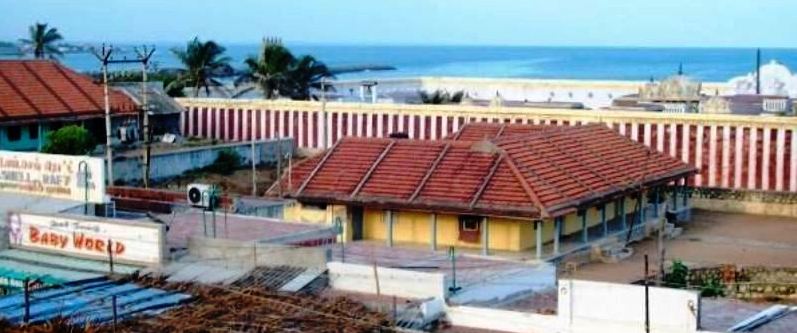
You can view the 490+ Temples by clicking the “List of Devaswoms” on the top. We have five groups of Devaswoms which are based on Devaswom Taluks; Boothapandy Devaswoms, Nagercoil Devaswoms, Padmanabhapuram Devaswoms, Kuzhithurai Devaswoms & Shencottah Devaswoms. The list of temples are added to each group, in bracket having (Green Colour) has attached pictures and related data & others are in process..Your visit, encouragement and support are a big boost for the devotees involved in this initiative. This web site is not officially affiliated. 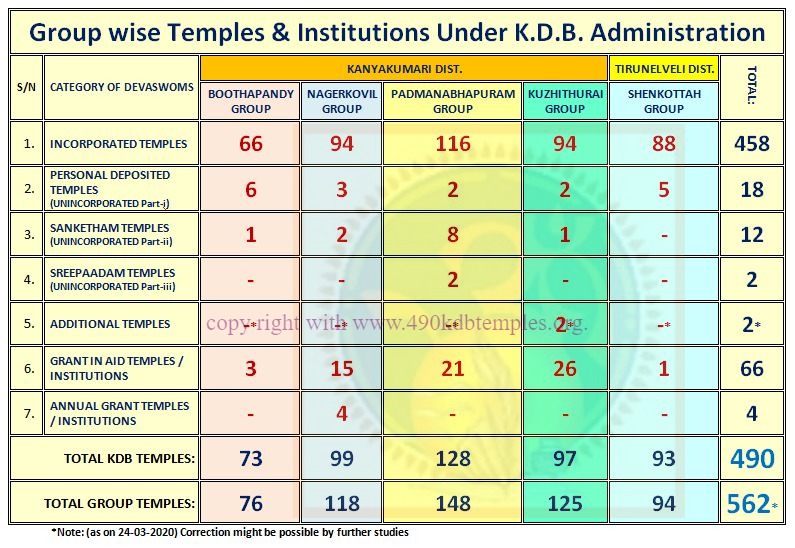
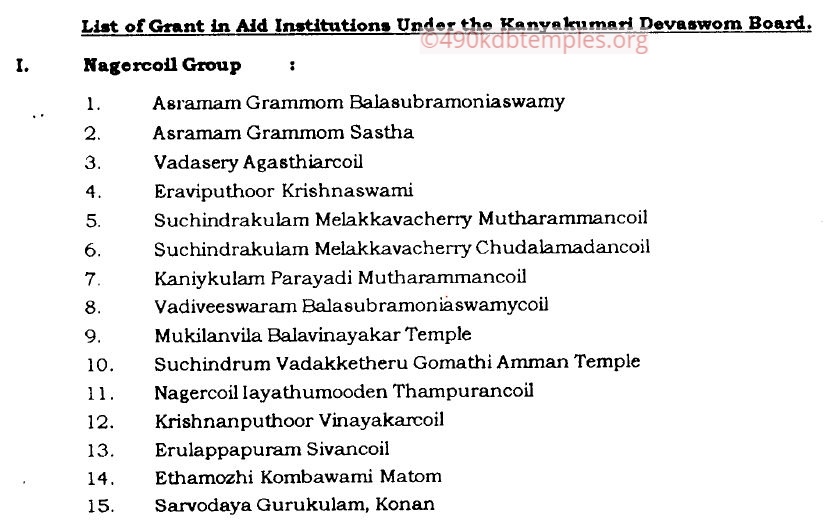
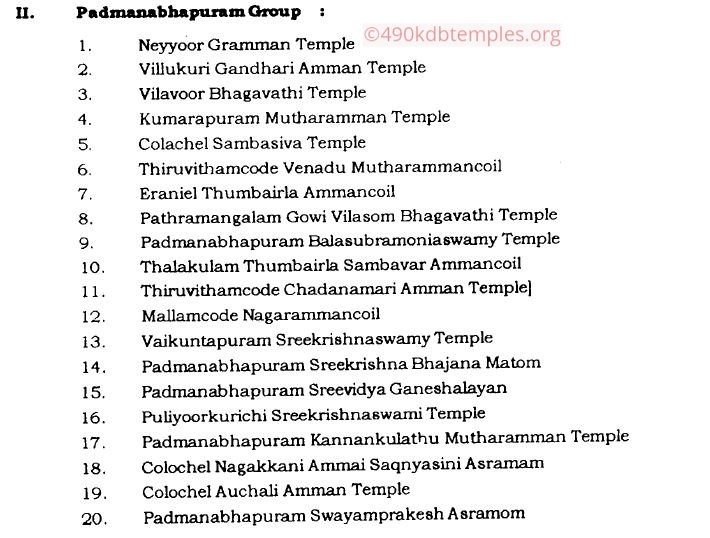

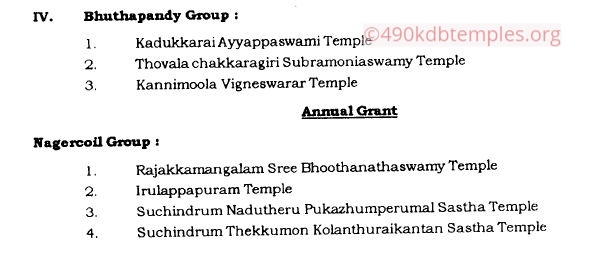
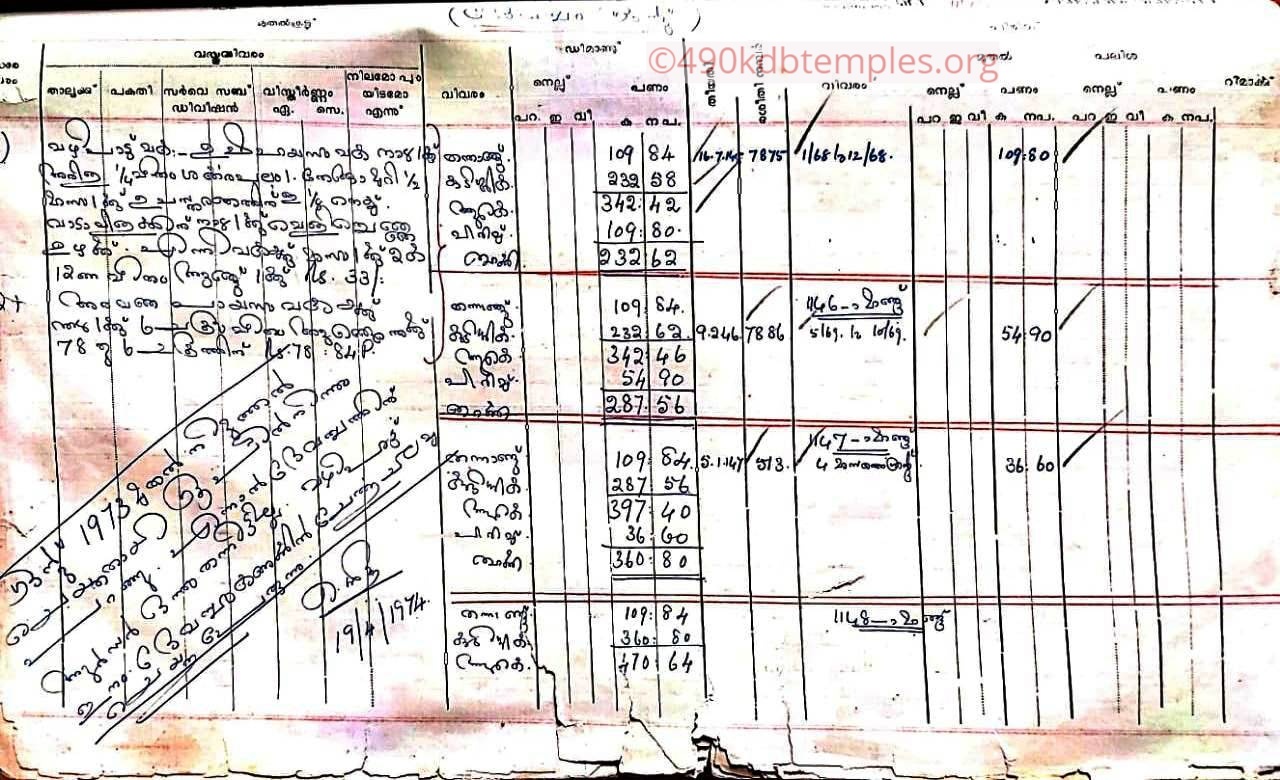
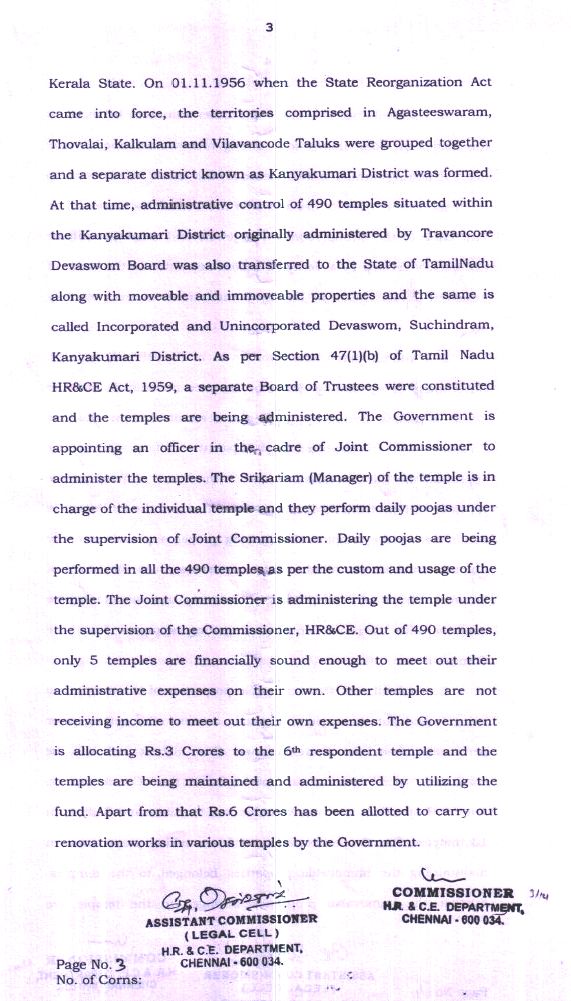
- கன்னியாகுமரி தேவசம் போர்டின் பல திருக்கோவிலையும் காணோம்;
- பல திருக்கோவில்களில் சாமியையும் காணோம்;
- பல திருக்கோவிகளில் நித்திய நிதானங்களையும் நித்திய பூஜைகளையும் காணோம்;
- போதுமான திருக்கோவில் ஊழியர்களையும் காணோம்;
- பல திருக்கோவில்களில் பாரம்பரிய ஆசார அனுஷ்டான-ங்களையும் காணோம்;
- தற்போதய திருவாபரணம் பதிவேடுகளையும் காணோம்;
- பரணிபாதிரம் பட்டும்பரிவட்டம் பதிவேடுகளையும் காணோம்;
- அரண்மனைகளையும் காணோம்;
- பரிவேட்டை திருமண்டபங்களையும் காணோம்;
- திருமடங்களையும் காணோம்;
- ஊட்டுபுரைகளையும் காணோம்;
- ஹோமப்புரைகளையும் காணோம்;
- தண்ணீர் பந்தல்களையும் காணோம்;
- கஞ்சிப்புரைகளையும் காணோம்;
- திருக்கோவில் சத்திரங்களையும் காணோம்;
- திருக்கோவில்களை பராமரிக்கும் நிதியையும் காணோம்;
- பல திருக்குளங்களையும் காணோம்;
- அசையும் மற்றும் அசையா சொத்துக்களையும் காணோம்;
- திருக்கோவில் ஆவணங்களையும் காணோம்;
- மேன்மைக்குரிய நீதிமன்றங்களின் ஆணையை செயல்படுத்த காணோம்…


- எதையுமே காணோம் எனில் எதற்கு இந்த நிர்வாகம்..???
- திருக்கோவில்களை பாரமரிக்கும் தேவஸ்வம் நிதிகள் எங்கே போகிறது..
- திருக்கோவில்களின் நிதியை அபகரித்தவர்கள் வட்டியும் முதலுமாக திரும்ப கட்டுவார்களோ ???
A Very Humble Request
(with most urgent attention of the Powerful Authorities)
-
The Honourable Chief Secretary , State Government of Tamil Nadu, Secretariat, St. George Fort, Chennai – 600 009.
-
The Honourable Principal Secretary/ The Commissioner, Tamil Nadu Hindu Religious and Charitable Endowment department, No.19, Uthamar Gandhi salai, Nungambakkam, Chennai – 600 034
The Honourable Sir(s) need a reorganisation in Kanyakumari District Incorporated and Unincorporated Devaswoms / Kanyakumari Devaswom Board / Kanyakumari District Temples Administration ; I have a proposal in this regards..
As you know we have 5 devaswom groups in our Kanyakumari Devaswom Board (KDB).
-
The Bhoothapandy Devaswom Group
-
The Nagercoil Devaswom Group
-
The Padmanabhapuram Devaswom Group
-
The Kuzhithurai Devaswom Group &
-
The Sencottah Devaswom Group
Now all these groups are under each Devaswom Superintendent but the current teams are not worth for the Administrative capability….!!! as i mentioned above, all our Devaswoms come under the Government control in the year 1811-1812 CE, because of the Title “MISMANAGEMENT OF DEVASWOMS BY THE OoRAaNMAKKAaR OR KARAKKAaR“…!!!
But What is happening in KDB for last two-three decades ?????
No pooja performance in a single day in most of the petty devaswom but recording as spending Devaswom Fund..!!!
No Permanent Sanikkar in 80% of Devaswoms…!!!
No verification of Thiruvabharanam since 1987-88…!!!
No verification of Devaswom and Devaswom properties…!!!
No Watcher in 90 % Devaswoms….!!!
No Registers available in any of the Devaswoms — RTI REPLY…!!!
and many more missings as i mentioned earlier in this web document…!!!
Mismanagement of by the Tamilnadu Government itself on our Ancient Devaswoms and related Ancient Historical Monuments which were attached to the administration of KDB….!!!!!
Proposal :
1) Each superintendent shall be replaced with Devaswom Assistant Commissioner of HR&CE Dept.
2) Shall be a maramath wing under Devaswom Assistant Commissioner of each Devaswom group.
3) Shall be a temple Land Survey wing under Devaswom Assistant Commissioner of each Devaswom group.
4) The Superintendent shall be reported to Devaswom Assistant Commissioner of particular Devaswom group.
5) The Sreekariyakkar and other temple staff shall be under the Superintendent of particular Devaswom group.
6) All the five Kanyakumari Devaswom Assistant Commissioners shall be Reported to The Kanyakumari Devaswom Joint Commissioner.
7) The JC KDB shall be empowered as same as zonal JC Tirunelveli with Legal Judiciary power (KDB HR&CE Court) and shall be directly reporting to The Honourable Commissioner TN HR&CE, Chennai.
Under Devaswom Assistant Commissioners, each devaswom group can be helpful for to solve our individual Devaswom issues and it shall be good for to save our poor Travancore Devaswoms in Kanyakumari District.
Your Highnesses, please do something to SAVE OUR POOR KDB DEVASWOMS for our upcoming Generations………
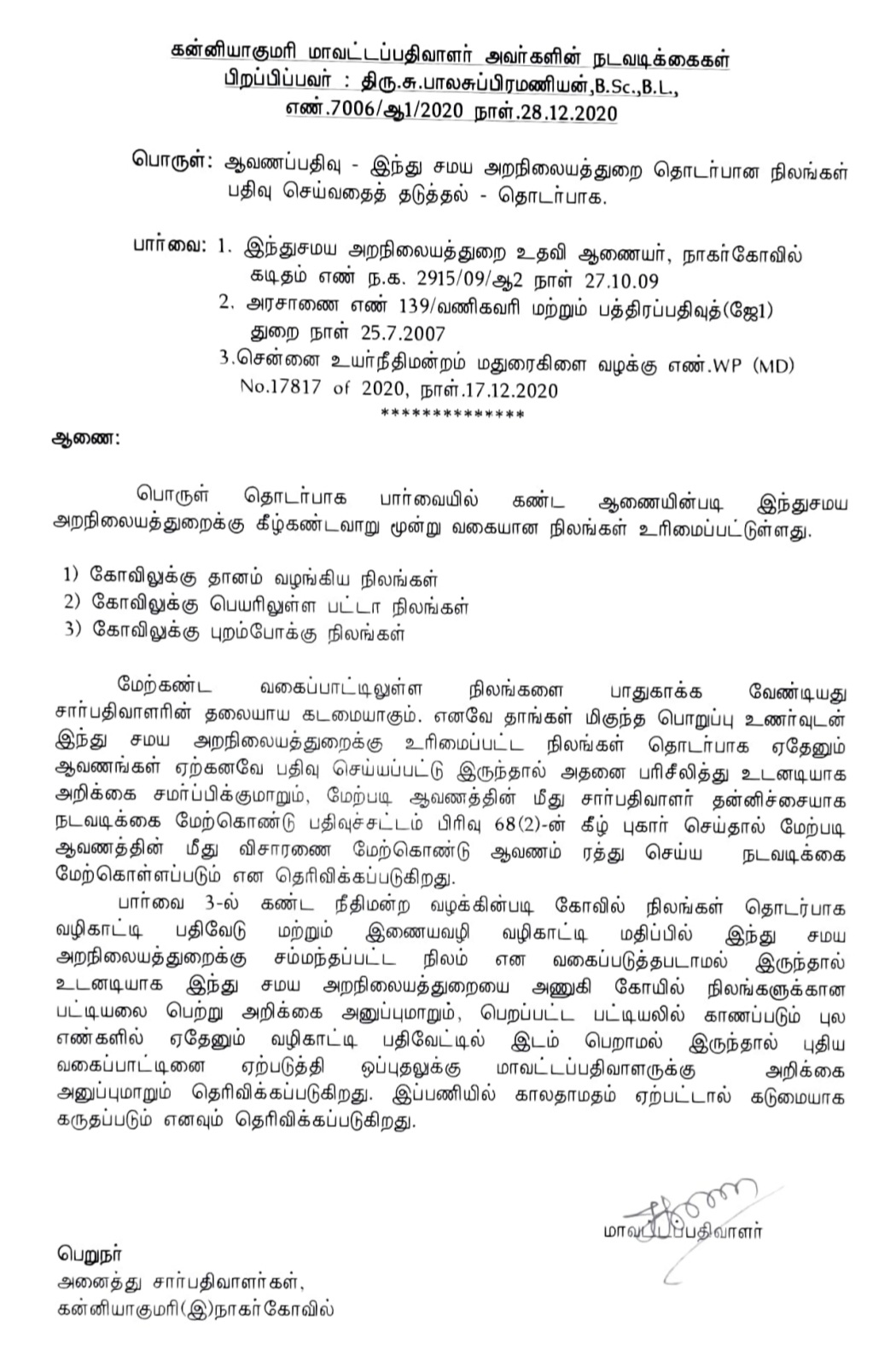
———————————————————————————————————————————
– WARNING –
IF THE AUTHORITIES NOT WILLING TO TAKE ANY ACTION TO SAVE OUR POOR TRAVANCORE DEVASWOMS IN THETERRITORY OF TAMILNADU – THE RESULT WILL BE AS – WE WILL LOSE ALL OUR EXISTING DEVASWOMS AND ITS PROPERTIES WITHIN A SPAN OF ONE OR TWO DECADES…


Kindly register your valuable observations and suggestions to improve this web document. please click here
 திருவிதாங்கூர் தேவஸ்வம் ஆவணக் காப்பகம் _ Travancore Devaswom Archives _ തിരുവിതാംങ്കൂർ ക്ഷേത്ര പുരാ രേഖകൾ
You must be logged in to post a comment.